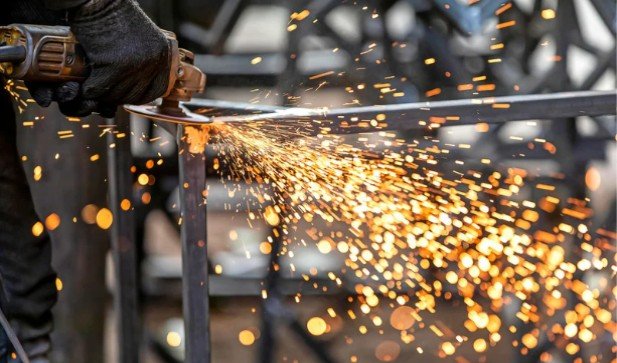
A welding arc may create the joint, but the activities surrounding that arc determine how productive a workshop truly becomes. I have noticed that businesses often focus on welding speed while overlooking time lost to poor fit-up, repeated adjustments, missing materials, excessive grinding, equipment failures and preventable repairs.
Understanding how technology improves welding productivity means examining the entire production process. Modern systems help welders maintain stable parameters, complete more acceptable parts and detect problems before they become expensive. The objective is not simply to make people work faster. It is to remove unnecessary effort while improving quality, safety and consistency.
What Does Welding Productivity Actually Mean?
Arc-on time is an important measurement, but it should never be used alone. A welder may achieve a high arc-on percentage while depositing excessive filler metal or producing joints that require repairs.
A complete evaluation should consider accepted parts per shift, deposition rate, repair frequency, setup time, consumable use, machine equipment downtime and total labor hours. Tracking several indicators together reveals whether faster production is also producing profitable results.
Technology makes these measurements easier to collect. Instead of depending on handwritten reports or estimates, supervisors can view reliable performance information and identify where time is being lost.
Robotic Welding Creates Repeatable Output
Industrial welding robots are particularly effective for repetitive, high-volume components. Once programmed correctly, a robot can maintain consistent torch position, work angle, travel speed and electrode distance across an entire production run.
This consistency reduces variations caused by fatigue and makes production schedules more predictable. Robots can also complete repetitive joints without frequent pauses, increasing arc-on time and allowing skilled employees to concentrate on programming, inspection and complicated fabrication.
Automation still depends on accurate parts and reliable fixtures. A robot cannot compensate indefinitely for inconsistent joint preparation or missing components. Successful robotic welding therefore requires good material flow and carefully controlled upstream processes.
Cobots Make Automation More Flexible
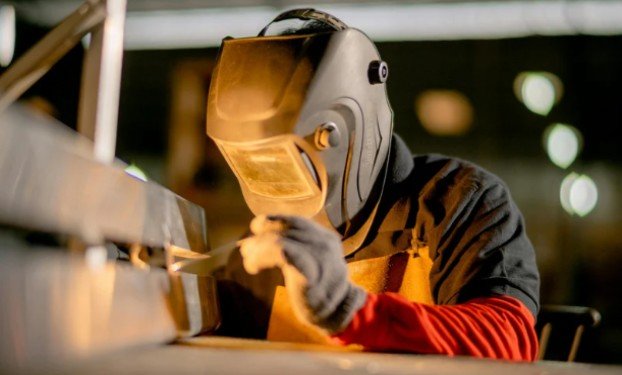
Collaborative robots provide a practical option for businesses that produce smaller batches or frequently changing parts. Many cobots can be programmed through guided movements and intuitive interfaces, reducing the need for advanced coding knowledge.
A qualified welder can select the correct parameters and teach the system a repeatable path. The cobot can then complete routine joints while the employee prepares another assembly or handles work requiring human judgment.
The greatest productivity gains occur when parts and fixtures are ready before the cobot finishes its current cycle. Without proper preparation, even a fast system may spend much of the shift waiting.
Digital Power Sources Improve Weld Control
Modern inverter-based power sources provide more precise control than many older machines. Synergic controls can coordinate voltage and wire-feed speed, while stored programs allow successful settings to be recalled for recurring jobs.
Advanced processes such as pulsed MIG regulate metal transfer and heat input more accurately. This can reduce spatter, control distortion and improve performance in vertical or overhead positions. Cleaner results require less grinding and post-weld finishing.
Digital controls also simplify parameter selection for less-experienced operators. They do not replace welding knowledge, but they reduce unnecessary trial and error when materials, thicknesses or positions change.
Data Monitoring Reveals Hidden Problems
Connected monitoring platforms can automatically record voltage, amperage, wire consumption, arc starts, deposition and active welding time. This information can be compared across machines, shifts or production areas.
Low arc-on time does not always indicate slow welding. It may reveal poor cell layout, worn fixtures, wire-feeding trouble, delayed materials or excessive consumable changes. Digital monitoring allows managers to investigate the actual constraint rather than relying on assumptions.
Advanced systems can alert operators when a weld falls outside an approved parameter range or when a required joint has been missed. Correcting the issue immediately is usually faster and less expensive than discovering it during final inspection.
Vision and Seam Tracking Reduce Errors
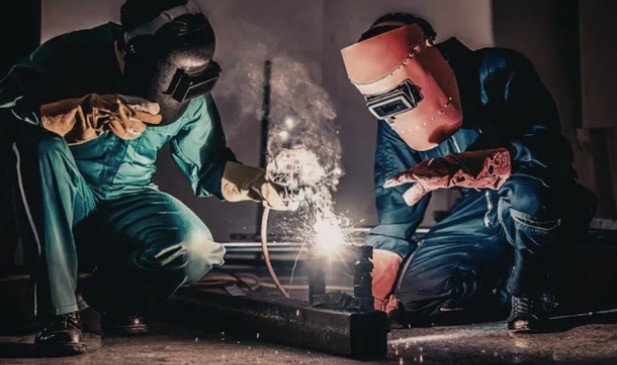
Laser seam tracking and machine-vision systems help automated equipment locate joints and maintain the correct torch path. They are valuable when part placement or joint geometry changes slightly between assemblies.
Adaptive systems can respond to measured conditions by adjusting the path or selected parameters. This reduces incorrect bead placement, inconsistent penetration and lack-of-fusion risks.
Automated visual inspection can identify surface abnormalities before a component advances through production. Early detection prevents several defective parts from being completed under the same incorrect conditions.
Software Connects the Production Workflow
Welding performance depends on engineering, cutting, forming, inventory, scheduling and inspection. Digital work instructions can display the correct sequence, filler metal, parameter range and quality requirements directly at the workstation.
Offline programming allows robotic paths to be prepared without stopping an active cell. CAD-connected software can reduce programming time, while production systems can coordinate materials and preventive maintenance.
Digital records improve traceability by connecting each joint with its operator, procedure, equipment and consumables. This information simplifies audits and helps businesses investigate quality problems more efficiently.
Training Technology Develops Skills Faster
Augmented-reality guidance and intelligent machine interfaces can support learners with visual instructions. Experienced welders can also use stored procedures to adapt more quickly to unfamiliar jobs. These systems complement hands-on training rather than replacing it. Their value comes from making practice more focused, measurable and consistent.
Frequently Asked Questions
1. How technology improves welding productivity without replacing skilled welders?
Technology handles repetitive movements, monitors performance and provides real-time guidance. Welders remain essential for setup, troubleshooting, inspection, programming and complex fabrication decisions.
2. What technology should a small workshop adopt first?
The right starting point depends on its main bottleneck. Better fixtures, modern power sources, positioners or basic monitoring software may produce a faster return than complete robotic automation.
3. Can technology improve weld quality and speed together?
Yes. Stable parameters, accurate torch movement and early defect detection help workshops increase output while reducing repairs, scrap and post-weld cleaning.
4. Which productivity measurements matter most?
Businesses should track accepted parts per labor hour, repair rates, arc-on time, deposition, setup duration, downtime and consumable use.
Final Thoughts
I believe the greatest benefit of welding technology is control rather than speed alone. When businesses can maintain reliable parameters, identify wasted time and correct errors immediately, productivity becomes easier to improve and measure.
Automation, intelligent equipment and connected software achieve the best results when they support skilled employees and organized workflows. By choosing tools that address verified production constraints, a welding business can increase output while protecting quality, safety and profitability.