When I look at how quickly field welding has changed, the biggest difference is not a single machine or process. It is the growing connection between portable equipment, intelligent controls, digital records, and better business management. Welders can now complete jobs in remote locations while accessing capabilities once limited to large fabrication facilities.
The most important technology trends affecting mobile welding are helping contractors reduce setup time, document work, improve consistency, communicate with customers, and control operating expenses. Although skilled hands remain essential, technology is making those hands more productive.
Battery-Powered Welders Expand Jobsite Access
Battery-powered welding systems are becoming increasingly practical for repairs in locations where utility power is unavailable or a generator would be inconvenient. Lightweight equipment can be carried onto rooftops, inside agricultural structures, along fences, and into restricted industrial areas.
These systems reduce noise, exhaust, fuel handling, and extension-cord problems. However, buyers should examine amperage range, duty cycle, battery capacity, charging time, electrode compatibility, and replacement battery cost. A compact battery welder may be excellent for short repairs but unsuitable for continuous structural production.
Rather than replacing engine-driven equipment, battery systems provide mobile contractors with another option. A business can select the power source that best matches access conditions and the expected workload.
Compact Inverter Machines Improve Portability
Modern inverter technology has reduced the size and weight of welding power sources while improving arc control. Multiprocess inverter machines may support stick, MIG, flux-cored, and TIG operations in one portable package.
This flexibility matters because mobile welders rarely encounter identical jobs every day. One service call may involve thin stainless steel, while the next involves a damaged steel gate or agricultural attachment. Carrying a versatile machine can reduce equipment clutter and vehicle weight.
Digital interfaces also help operators store settings and return to proven parameters. Still, field conditions, metal cleanliness, joint preparation, and operator technique remain more important than automated presets alone.
Smarter Engine-Driven Welders Reduce Downtime
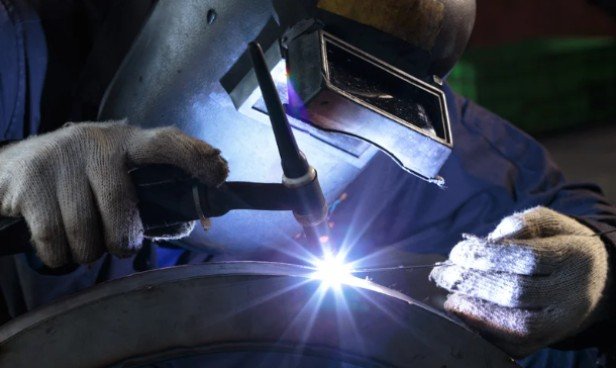
Engine-driven welders continue to play a major role on remote construction, farm, pipeline, and equipment-repair projects. Newer units offer improved fuel management, automatic idle control, quieter operation, multiprocess welding, and auxiliary power.
Auxiliary output allows a mobile crew to operate grinders, lights, drills, plasma cutters, and other tools from the same unit. Electronic diagnostics can also make troubleshooting faster when a problem develops far from a repair shop.
Contractors should compare fuel consumption, maintenance access, noise level, generator output, service support, and welding performance before purchasing. The most advanced machine is not necessarily the best investment if local parts and technical assistance are difficult to obtain.
Connected Equipment Makes Welding Measurable
Connected welding machines can collect information about voltage, amperage, wire-feed speed, arc-on time, temperature, and equipment use. This information can help a contractor identify inconsistent settings, plan maintenance, estimate consumable use, and verify that work followed the intended procedure.
Cloud-connected systems can also make selected records available to managers, inspectors, and customers. For companies serving structural, industrial, or regulated projects, searchable digital documentation may become a competitive advantage.
Remote connectivity is not perfect, however. Mobile crews may work in places with weak cellular coverage. Systems should therefore provide secure offline storage and synchronize records when a reliable connection becomes available.
Artificial Intelligence Supports Better Decisions
Artificial intelligence is entering welding through parameter recommendations, defect recognition, predictive maintenance, and process monitoring. Sensors and software can identify unusual arc behavior or suggest adjustments based on material, joint design, and welding process.
AI is especially useful when it helps operators notice a problem early. Preventing one failed weld can save labor, filler metal, gas, grinding time, and another trip to the customer’s site.
Nevertheless, AI recommendations should not override qualified procedures, applicable codes, inspection requirements, or professional judgment. Experienced welders are still needed to evaluate fit-up, contamination, access, weather, distortion, and many other variables that software may not fully understand.
Machine Vision Strengthens Field Inspection
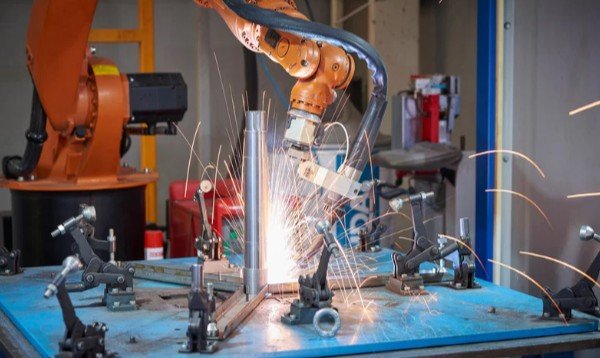
High-speed cameras, thermal sensors, and machine-vision software are making weld monitoring more precise. These tools can observe the weld pool, arc stability, heat distribution, and visible irregularities while work is being completed.
For mobile operations, the immediate opportunity is better documentation. Contractors can combine job photographs, machine readings, material details, inspection results, and repair notes in one digital record. This creates a clearer history if the customer requests evidence of completed work.
Machine vision does not replace formal nondestructive examination where it is required. Instead, it can provide another layer of process awareness and traceability.
Mobile Robots Bring Automation to the Workpiece
Traditional welding robots perform best in controlled environments with repeatable components. Large bridges, ships, tanks, and structural assemblies cannot always be moved into robotic cells. Mobile robotic platforms address this limitation by traveling to the workpiece.
Advanced systems use cameras, sensors, artificial intelligence, and adaptive controls to recognize joints and respond to variable geometry. Some mobile robots can travel across complex or uneven sites before positioning welding equipment.
This technology remains more relevant to major industrial operations than independent repair trucks. Even so, it shows where technology trends affecting mobile welding may lead: automation that adapts to the jobsite instead of requiring the jobsite to resemble a factory.
Augmented Reality Changes Training
Augmented-reality training lets welders practice movements, joints, and procedures without consuming the same volume of plate, wire, electrodes, or shielding gas. Digital feedback can help learners evaluate travel speed, work angle, arc length, and positioning.
For established businesses, simulation demonstrates how technology improves welding productivity by supporting employee onboarding and practice before complex field assignments. Future systems may also provide on-site visual guidance, equipment instructions, or remote expert assistance.
Simulation should complement hands-on practice rather than replace it. Welders must still learn to manage heat, sound, visibility, distortion, awkward positions, and unpredictable jobsite conditions.
Portable Laser Welding Creates New Possibilities
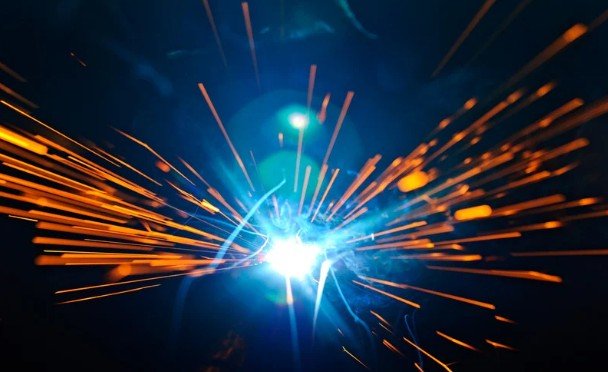
Handheld laser welding is attracting interest because it can produce fast, narrow welds with limited heat input on suitable materials. Portable systems could create opportunities in precision repair, stainless fabrication, and thin-metal work.
The technology also introduces serious responsibilities. Operators require specialized training, controlled work areas, appropriate protective equipment, reflection management, and an understanding of material and thickness limitations. Contractors should not treat a portable laser as a direct substitute for ordinary arc-welding equipment.
Field-Service Software Modernizes the Business
Some of the most valuable changes happen away from the arc. Field-service applications can manage estimates, schedules, dispatching, customer records, job photographs, employee time, invoices, payments, and follow-up messages.
GPS routing can reduce unnecessary driving, while asset trackers can help locate expensive welders, generators, trailers, and tools. Digital forms can store qualifications, procedures, inspection records, and customer approvals without relying on loose paperwork.
These systems help mobile businesses respond faster and create a more professional customer experience. Their value should be measured through hours saved, faster payment, fewer scheduling mistakes, and better job-cost visibility.
Cleaner Technology Lowers Operating Costs
Energy-efficient inverter equipment, battery power, automatic engine idling, optimized parameters, and accurate consumable tracking can reduce fuel and material waste. Cleaner operation can also make welding more practical in noise-sensitive or ventilation-limited locations.
Sustainability becomes especially meaningful when it improves profitability. Using less fuel, avoiding unnecessary travel, reducing rework, and extending equipment life can benefit both the business and the environment.
Frequently Asked Questions
1. What are the leading technology trends affecting mobile welding?
The leading developments include battery-powered welders, compact inverter machines, connected equipment, AI-assisted controls, machine vision, mobile robotics, augmented-reality training, portable laser systems, and field-service software.
2. Will technology replace mobile welders?
Technology is more likely to change their responsibilities than eliminate them. Skilled professionals will remain necessary for assessment, setup, joint preparation, code compliance, troubleshooting, inspection, and complex repairs.
3. Which technology should a small welding business adopt first?
The best starting point is usually technology that solves an existing operational problem. This may be a lighter multiprocess welder, digital estimating software, mobile invoicing, equipment tracking, or better job documentation.
4. Are battery welders suitable for every field repair?
No. They perform well for access-sensitive and shorter assignments, but runtime, output, duty cycle, and charging requirements can limit their suitability for continuous heavy welding.
The Road Ahead
I believe the strongest mobile welding companies will combine traditional skill with selective, practical technology. Buying every new system is unnecessary. The better approach is identifying where a business loses time, fuel, materials, information, or customer confidence and choosing tools that address those weaknesses.
Portable power, intelligent controls, digital records, and business software are already reshaping field work. Contractors who test these tools carefully and train their teams effectively can complete better work without losing the craftsmanship that makes mobile welding valuable.