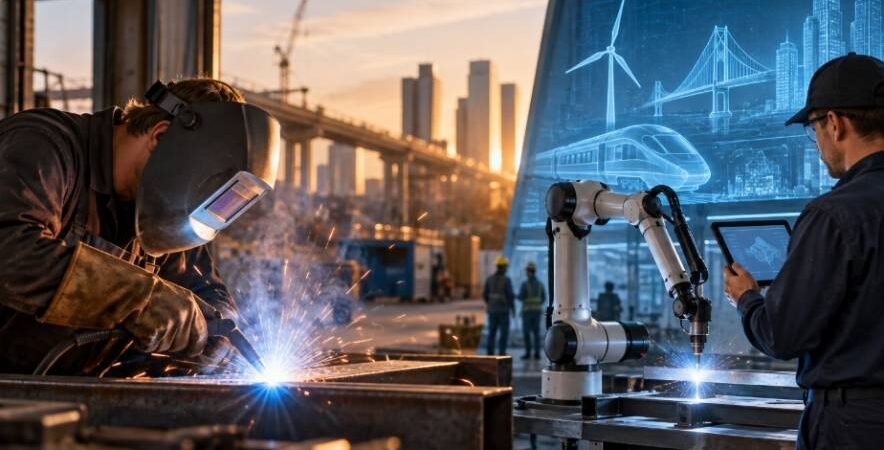
I first noticed how welding technology is changing careers when automated equipment started showing up alongside the familiar torches, fixtures, and welding booths I associated with the trade. The work still depends on skill and judgment, but the tools around the welder are becoming smarter, faster, and far more connected. That shift changes what a strong welding career can look like.
I also realized that the most useful question is not whether robots will replace welders. It is what welders will be expected to do when machines take over more repetitive work. Programming, setup, troubleshooting, inspection, and process monitoring are becoming part of the conversation, creating a trade that still values hands-on ability while rewarding people who are comfortable with technology.
Welding Is Moving Beyond the Traditional Shop
Welding remains a hands-on occupation, but modern production environments increasingly combine welding equipment with sensors, automated controls, digital records, and robotic systems. A production cell might repeat the same weld hundreds of times while a technician watches parameters, adjusts the process, checks quality, and keeps the equipment operating correctly.
Automation works best when parts are consistent, and production volumes are high. It is less useful when every job is different, access is difficult, or a repair must be completed in the field. Skilled people still have to interpret drawings, understand materials, recognize a bad joint, and decide what needs to change.
Robotics Are Changing What Welders Do
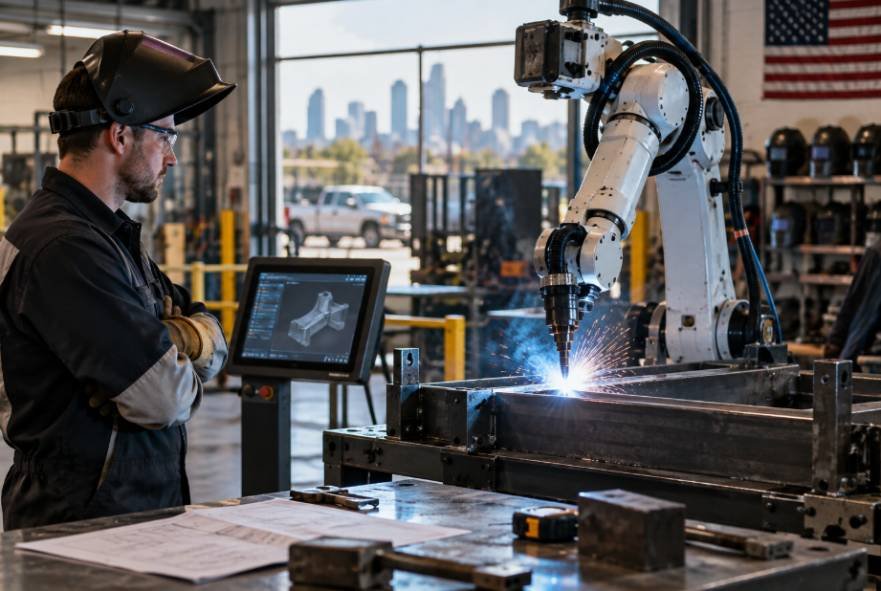
Robotic welding is one of the clearest examples of this transition. Automated systems can handle repetitive welds with consistent movement and carefully controlled parameters. That can improve repeatability and production speed, while reducing the amount of time a worker spends performing the same physical motion.
But the robot does not operate in isolation. Someone must program the system, select and adjust welding parameters, position fixtures, calibrate sensors, inspect results, and troubleshoot problems. Modern robotic welding technician roles specifically combine welding knowledge with programming, maintenance, quality monitoring, and technical problem solving.
AI and Automation Are Creating New Roles
Artificial intelligence adds another layer. Digital welding systems can collect information such as voltage, amperage, travel speed, and heat input, allowing teams to spot trends that might be difficult to identify through visual inspection alone. Connected systems can also support process tracking, alerts, and root-cause analysis.
That is where AI and automation in welding careers become more than a buzzword. The technology creates demand for people who can understand what the data means and decide what action should follow. An experienced welding professional who learns to work with digital monitoring may become valuable because they can connect production data with real-world welding behavior.
Inspection is changing too. Digital documentation and automated checks can make quality control more consistent, but human judgment remains important when a defect requires interpretation or when a process needs correction. The future is likely to involve more collaboration between welders, inspectors, technicians, engineers, and automated systems.
The Skills Future Welders Will Need
The strongest career strategy is not to abandon traditional welding skills. It is to add technology skills to them. The strongest additions include comfort with digital controls, basic programming concepts, sensors, automated equipment, troubleshooting, and data-driven quality systems.
Training and certification can formalize that progression. Welding knowledge remains the foundation, while robotics, automation, and specialized credentials add a layer. Career resources for robotic welding technicians point to combinations of welding experience, education, automation knowledge, and system experience.
What Technology Means for Welding Jobs
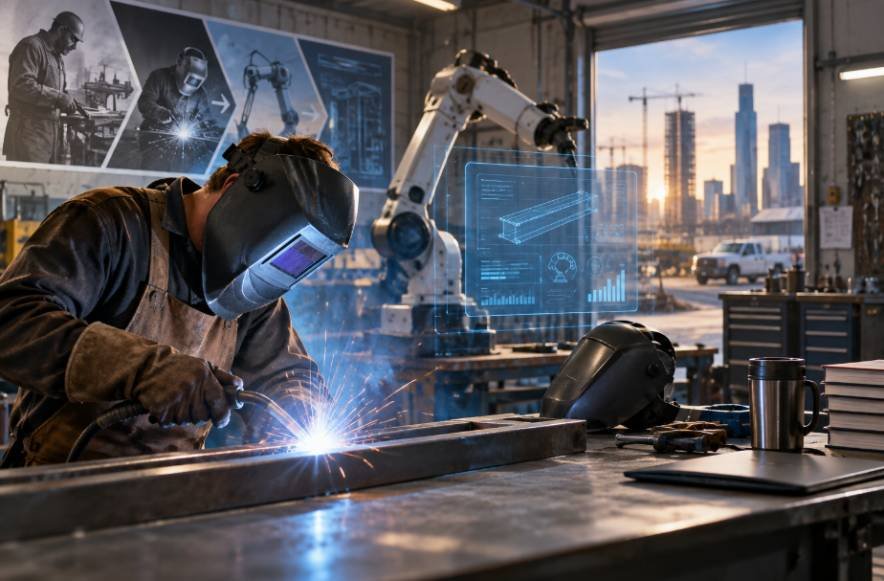
The employment outlook is more balanced than either extreme suggests. The U.S. Bureau of Labor Statistics projects 2% employment growth for welders, cutters, solderers, and brazers from 2025 through 2035, while estimating about 40,300 openings each year, largely because workers leave the occupation or retire. It also notes that manufacturing automation may limit overall demand.
That means technology will affect different welding jobs differently. High-volume manufacturing is more exposed to automation because repetitive tasks are easier to standardize. Field welding, maintenance, repair, construction, specialized fabrication, and complicated work can be harder to automate.
For workers, the practical lesson is to build the future skills for the welding workforce and become useful in multiple environments. Someone who can weld, read a blueprint, understand a procedure, operate automated equipment, identify quality problems, and troubleshoot a process has more ways to contribute than someone limited to a single repetitive task.
How Welders Can Adapt Without Starting Over
Career development does not always require a complete restart. A working welder can learn the technology already present in the shop. Ask how the robotic cells operate. Learn why particular parameters are selected. Get comfortable reading digital quality records. Volunteer for setup or troubleshooting work when possible.
It also helps to keep the fundamentals sharp. Technology cannot compensate for weak knowledge of joint design, materials, fit-up, welding processes, safety, or quality requirements. Those fundamentals become more valuable when a worker can apply them to modern equipment.
Frequently Asked Questions
1. Will robots replace welders?
Robots are likely to reduce some repetitive production tasks, but they still need people to program, maintain, monitor, and troubleshoot them. Skilled welders also remain important for complex, variable, and field work.
2. Is welding still a good career choice?
Yes. The field continues to have substantial replacement demand, while specialized skills can create opportunities in manufacturing, construction, repair, inspection, and automation.
3. What technology skills should welders learn?
Start with digital controls, robotic equipment, basic programming, sensors, troubleshooting, and digital quality systems. These skills can complement rather than replace welding expertise.
4. Can an experienced welder move into robotics?
Absolutely. Welding experience provides a strong foundation for understanding automated processes. Additional training in robotics, controls, programming, and maintenance can help make that transition.
Why Adaptability Will Matter Most
The biggest change may not be the machines themselves. It is the widening definition of what it means to be a skilled welding professional. A worker who understands both the craft and the technology surrounding it can move between hands-on production, automated systems, quality control, and technical problem solving as the workplace changes. Current industry trends point toward exactly that combination of practical experience and technical adaptability.
Welding is not disappearing. It is becoming more connected, measured, automated, and specialized. The people who keep learning can make that change work in their favor.