A light breeze can turn a clean-looking aluminum weld into a porous one before the welder realizes anything has gone wrong. That is the central challenge of field work: aluminum itself does not object to being outdoors, but the welding process is unusually sensitive to the outdoor environment.
So, can aluminum be welded outdoors? Yes. TIG and MIG aluminum welding can both be performed successfully outside, provided the weld zone is protected from wind, moisture, contamination, and unsafe working conditions. The real question is whether you can create a controlled welding environment around the joint.
Why Outdoor Aluminum Welding Is More Difficult
Aluminum conducts heat rapidly, develops an oxide layer almost immediately when exposed to air, and is particularly sensitive to hydrogen contamination during fusion welding.
Research summarized by Penn State has examined hydrogen as an important contributor to porosity in aluminum GMAW. Portland Community College welding materials similarly identify humidity, inadequate inert-gas shielding, oil, paint, and moisture-containing oxide as common porosity sources.
That makes an outdoor job different from simply moving a welding machine from the shop to the driveway.
Wind Can Strip Away the Shielding Gas
TIG and MIG welding depend on shielding gas to isolate the molten weld pool from the atmosphere.
For aluminum GMAW, the American Welding Society identifies 100% argon as the most common shielding gas. Argon-helium mixtures may be used on thicker aluminum where additional heat input is useful.
Outdoors, even modest moving air can disturb this protective gas envelope. Once atmospheric air reaches the molten pool, porosity, oxidation, an unstable arc, and poor bead appearance can follow.
The practical fix is not simply turning the regulator as high as possible. Excessive gas flow can become turbulent and pull surrounding air into the shielding stream.
A better approach is to stop the wind.
Portable welding screens, fire-resistant curtains, temporary barriers, or an appropriate canopy can create a sheltered work zone while maintaining adequate ventilation.
Moisture Is Often the Bigger Problem
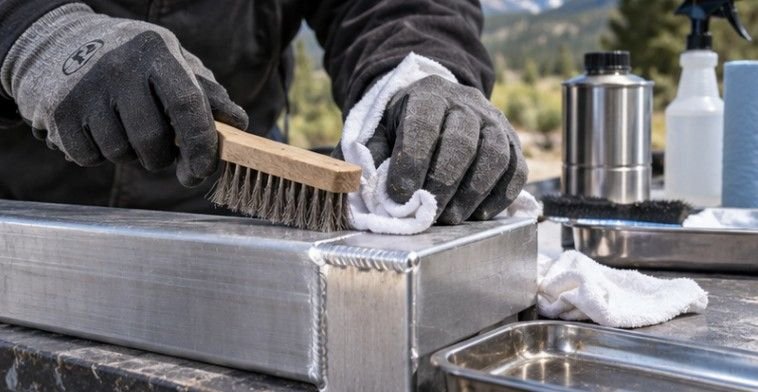
Morning dew on a trailer frame may look harmless. For aluminum welding, it can become a defect source.
Moisture and hydrocarbon contamination introduce hydrogen into the welding environment. Molten aluminum can dissolve substantially more hydrogen than solid aluminum. As the weld freezes, that hydrogen is rejected from solution; gas that cannot escape may remain trapped as pores.
Portland Community College’s welding training material specifically identifies high humidity, inadequate shielding, contaminated surfaces, and moisture-containing oxide layers as contributors to aluminum-weld porosity.
Never weld aluminum that is wet from rain, dew, condensation, washing, or melting snow. Drying only the visible joint may not be enough if crevices or filler wire remain damp.
TIG vs. MIG for Outdoor Aluminum
Both processes can work outdoors, but their field behavior is different.
| Process | Outdoor Strength | Main Limitation |
| TIG/GTAW | Excellent control and clean, precise welds | Very sensitive to wind disturbing argon coverage |
| MIG/GMAW | Faster and practical for larger repairs | Needs reliable gas coverage and proper aluminum wire feeding |
| Aluminum stick/SMAW | Does not depend on external shielding gas | Specialized electrodes, difficult control, generally poorer choice for precision work |
TIG is often preferred for thinner material, appearance-critical work, and precise repairs. Aluminum TIG welding commonly uses AC and inert shielding gas.
For larger fabrication or field repair, MIG may be more productive. Aluminum wire is soft, so a spool gun or push-pull feeding system is commonly used to prevent feeding problems.
Aluminum stick electrodes exist and can be useful in unusual situations where maintaining external shielding gas is impractical. They should not automatically be viewed as a substitute for properly shielded TIG or MIG on structural or quality-critical work.
A Five-Step Outdoor Welding Test
Before striking an arc, I would evaluate the job in this order.
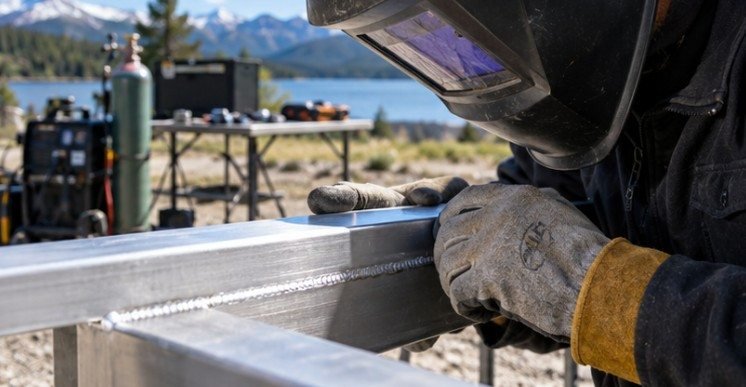
1. Check the Air Around the Joint
Watch the actual weld location rather than relying on the weather forecast. Buildings, vehicles, fences, and equipment can funnel wind directly through a work area.
If you cannot maintain a stable shielding envelope, install a windbreak or postpone the weld.
2. Confirm the Aluminum Is Completely Dry
Inspect the joint, filler wire, backside of the material, and nearby seams.
If the material has recently moved from a cold environment into warmer humid air, condensation can develop even though it has not rained.
3. Clean Immediately Before Welding
Remove oil, grease, paint, dirt, and other contaminants using a suitable cleaning procedure. A stainless-steel brush reserved exclusively for aluminum is commonly used for oxide removal.
Do not clean the metal hours earlier and assume it remains ready. Fresh contamination and moisture can return while the work sits outdoors.
4. Protect the Gas Coverage
Keep TIG tungsten stick-out appropriate for the joint and torch setup, avoid unnecessarily long arcs, and position the torch so shielding gas stays over the puddle.
With MIG, verify the gas line, nozzle, regulator, and connections before assuming porosity is being caused by the base metal.
5. Make and Inspect a Test Weld
When the job allows it, weld a scrap piece of the same alloy and thickness first.
Watch for unstable arc behavior, black contamination, excessive soot, pinholes, or obvious porosity. A bad test coupon is cheaper than discovering defects after finishing a structural repair.
Do Not Ignore the Aluminum Alloy
Outdoor conditions are only part of the decision.
Some aluminum alloys weld far more readily than others. AWS notes that alloys such as 2024 and 7075 present serious cracking and corrosion concerns and are generally unsuitable for ordinary fusion-welding approaches. Correct filler selection also depends on the base alloy and service conditions.
That matters especially for aircraft parts, highly stressed components, suspension pieces, pressure-containing equipment, and engineered structural assemblies.
In those situations, identifying the alloy and following an approved backstep welding procedure is more important than simply finding settings that produce an attractive bead.
Outdoor Welding Still Requires Safety Controls
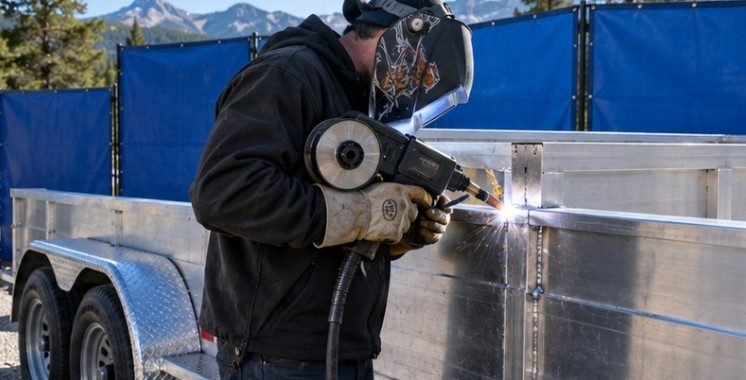
Working outside does not automatically make welding fumes harmless.
NIOSH notes that welding fumes can contain metal oxides and other substances, while aluminum arc welding can also produce ozone.
The issue becomes particularly important when a welder creates a small enclosure to block wind. OSHA specifically warns that portable welding enclosures still require sufficient ventilation. Welding areas also need appropriate PPE and control of nearby combustible materials.
Never use a wind shelter that solves the shielding-gas problem by creating a fume-exposure or fire problem.
When You Should Move the Job Indoors
There are outdoor jobs worth postponing.
Active rain, persistent gusting wind, condensation, contaminated material that cannot be properly cleaned, inadequate electrical protection, and critical welds without an approved procedure are good reasons to stop.
The same applies when the repair involves an unknown alloy or component whose failure could cause injury.
Can aluminum be welded outdoors successfully? Absolutely. But always inspect welding equipments and successful field welding comes from reproducing the conditions the weld would have had inside a controlled shop—not from expecting the arc to overcome the weather.
Frequently Asked Questions
1. Can you TIG weld aluminum outside?
Yes. TIG aluminum can be welded outside if argon shielding remains stable and the joint is clean and dry. Windbreaks are often necessary because TIG shielding is easily disturbed.
2. Can you MIG weld aluminum outdoors?
Yes. A spool gun or push-pull system is commonly used for aluminum MIG. Protect the weld from wind and confirm the base metal, wire, and shielding system are free from contamination.
3. Can aluminum be welded outside when it is humid?
It is possible, but high humidity increases contamination risk. Keep the base metal and filler dry, clean the joint immediately before welding, and carefully protect the shielding-gas envelope.
4. Should I increase argon flow when welding outside?
A slight adjustment may sometimes help, but excessive flow can create turbulence. Blocking the wind and correcting torch position are usually better solutions than simply increasing gas flow dramatically.
The Field-Welding Rule Worth Remembering
The biggest mistake in outdoor aluminum welding is treating weather as a minor inconvenience. Wind affects shielding, moisture introduces hydrogen, contaminated oxide contributes to porosity, and cold material can change how quickly heat disappears from the joint.
If the weld matters, create a small controlled environment around it before touching the pedal or trigger. Keep the aluminum dry, clean it immediately before welding, protect the shielding gas, confirm the alloy, and make a test weld whenever possible. The answer to can aluminum be welded outdoors is yes—but the quality depends on how effectively you make the outdoors behave like a welding shop.