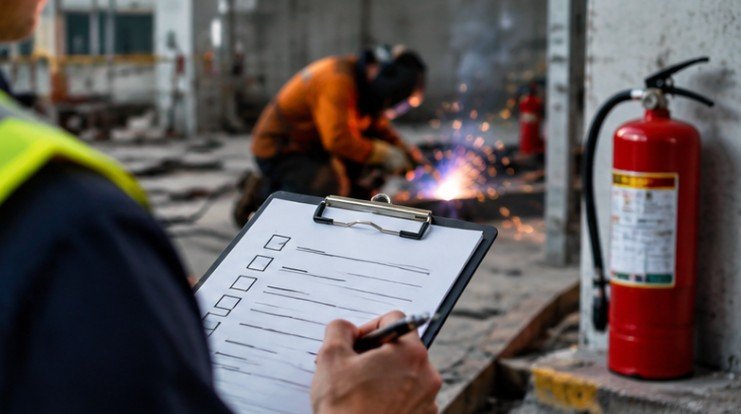
A welding spark can travel farther than most people expect, and a tiny ember hidden behind a wall or under flooring can ignite hours after the welder has packed up. That is why many workplaces require a hot work permit for welding before allowing any spark-producing job outside a controlled welding area. The permit is not just paperwork—it is a documented safety process that proves hazards were checked, fire controls were prepared, and responsible people were assigned before the first arc was struck.
According to OSHA, welding, cutting, and similar hot work operations must be inspected and authorized before starting when performed outside approved areas. OSHA also requires precautions such as fire watches when conditions create a realistic fire risk.
For contractors, maintenance teams, and facility managers, understanding when a permit applies can prevent costly fires, shutdowns, injuries, and regulatory problems.
Why welding requires a hot work permit
Hot work refers to activities that generate enough heat, flame, sparks, or molten metal to ignite combustible materials. Welding is one of the most common examples, but the category also includes cutting, brazing, grinding, soldering, and torch operations.
A permanent welding booth inside a properly designed fabrication shop is usually considered a controlled environment. The risk changes dramatically when welding moves to a warehouse, construction site, rooftop, manufacturing floor, or an occupied building.
A welding job near cardboard storage, insulation, wood framing, fuel containers, dust deposits, or hidden wall cavities can create ignition hazards even when the immediate work area appears clean.
The purpose of a permit system is to force a safety review before work begins:
- Is the location suitable for hot work?
- Are combustible materials removed or protected?
- Is fire protection available?
- Has someone been assigned to watch for fire?
- Does the work need additional controls?
The National Fire Protection Association (NFPA) addresses these risks through NFPA 51B, which provides fire prevention practices for welding, cutting, and other hot work activities.
When is a hot work permit required for welding?
A permit is generally required when welding occurs outside a designated hot work area. A designated area is a permanent location specifically built for welding, with appropriate fire protection, non-combustible construction, and controlled surroundings.
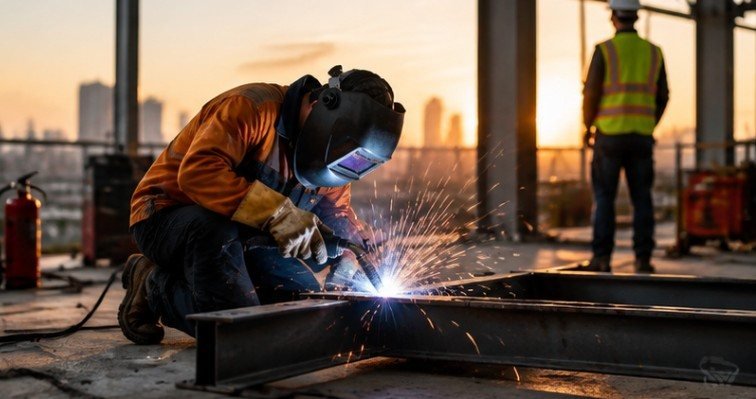
Common situations requiring a permit include:
| Work location | Permit requirement | Why it matters |
| Construction site welding | Usually required | Temporary areas often contain combustible materials |
| Welding inside an operating factory | Often required | Nearby equipment, packaging, and production materials increase risk |
| Maintenance welding in warehouses | Required in many cases | Sparks can reach stored materials |
| Welding outdoors away from combustibles | Depends on site rules | Wind can carry sparks into hidden hazards |
| Dedicated welding shop | Usually not required | Area is designed for controlled hot work |
OSHA’s welding and cutting standard states that authorization should be completed before cutting or welding begins, preferably through a written permit process.
The 35-foot rule: the most important permit inspection
One of the most recognized hot work safety practices is checking the area within 35 feet of the welding operation.
Combustible materials inside this zone should be removed whenever possible. If removal is not practical, they must be protected using suitable fire-resistant barriers, blankets, or shields.
The inspection should include more than the floor around the welder. Sparks can travel through:
- Floor openings
- Wall gaps
- Pipe penetrations
- Ceiling spaces
- Ventilation systems
A common mistake is assuming a clean-looking workspace is safe. A welding spark falling through a small opening can ignite materials in a concealed space that nobody sees until smoke appears.
What information should a welding hot work permit include?
A properly completed permit creates accountability. It identifies who approved the work, who performed it, and what precautions were verified.
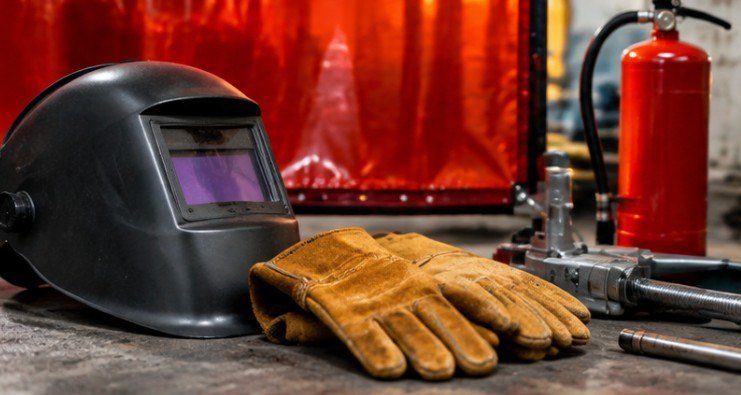
Most permits include:
Work details:
The location, welding process, equipment being used, and description of the task.
Hazard inspection:
Confirmation that combustibles were removed or protected, ventilation was checked, and fire extinguishers were available.
Responsible personnel:
Names of the permit authorizer, welding operator, supervisor, and fire watch.
Time limits:
The approved start and end period for the work.
Emergency preparation:
Information about alarms, communication methods, and emergency procedures.
Permits should not become a simple signature exercise. The person approving the job should physically inspect the area before welding begins.
The role of a fire watch during welding
A fire watch is one of the most important protections connected with hot work.
The fire watch does not assist with welding. Their responsibility is to continuously monitor the area for signs of ignition and respond quickly if a fire starts.
A qualified fire watch should:
- Understand fire hazards related to welding
- Know how to use available extinguishing equipment
- Have authority to stop unsafe work
- Monitor areas where sparks may travel
- Stay after welding ends for required observation time
OSHA requires a fire watch for situations where additional fire protection is necessary and specifies that a fire watch must continue for at least 30 minutes after welding or cutting operations are completed to detect possible smoldering fires.
Some facilities, insurers, and local fire authorities may require longer monitoring periods depending on the building, materials, and risk level.
A practical hot work permit checklist before welding
Before striking an arc, a supervisor or permit issuer should verify:
1. Inspect the area
Walk the entire work zone, including nearby rooms, floors above and below, and hidden spaces where sparks could travel.
2. Remove combustible materials
Move paper, wood, chemicals, packaging, fabrics, and other ignition sources away from the welding area.
3. Protect unavoidable hazards
Use approved welding curtains, fire blankets, or shields when combustible materials cannot be relocated.
4. Check fire protection equipment
Confirm extinguishers are accessible and fire alarms or sprinkler systems are functioning according to site requirements.
5. Assign a fire watch
Make sure the assigned person understands their responsibilities before welding begins.
6. Monitor after completion
Do not immediately leave after finishing the weld. Hidden heat can continue creating ignition risks.
Common mistakes that cause hot work fires
Many welding fires happen because workers underestimate small hazards.
One frequent mistake is welding near combustible materials because they are “a few feet away.” Sparks and slag do not always fall straight down.
Another mistake is skipping permits for short jobs. A five-minute repair can create the same ignition risk as a full-day welding project if the environment is unsafe.
Workers also sometimes confuse a fire extinguisher with a fire prevention plan. Extinguishers help control emergencies, but they do not replace hazard removal, inspection, and fire monitoring.
OSHA and safety resources for welding hot work
Modern welding professionals working permits should review recognized safety guidance from trusted organizations:
- OSHA welding, cutting, and brazing requirements:
- OSHA fire watch guidance for hot work:
- NFPA hot work safety information:
- University of Chicago hot work management practices:
These resources help companies build procedures that go beyond simply completing a form.
FAQs
1. What is a hot work permit for welding?
It is written authorization confirming that welding hazards were inspected and safety controls are in place before work begins.
2. Is a hot work permit required for all welding?
No. Welding in approved permanent hot work areas may not require a permit, depending on workplace rules.
3. How long should a fire watch remain after welding?
OSHA requires at least 30 minutes after welding ends, though some locations require longer monitoring.
4. Who can issue a hot work permit?
Usually, a trained supervisor, safety professional, or designated permit-authorizing individual.
Final thoughts
A welding permit may look like a simple document, but it represents a much bigger safety decision. The most dangerous welding fires often begin after the welder believes the job is already finished. A hidden ember, overheated material, or missed combustible can turn a routine repair into a major incident.
The safest approach is simple: inspect before welding, control the environment, assign responsibility, and never treat hot work as a quick task that does not require planning. A proper permit protects the welder, the workplace, and everyone who depends on that job being completed safely.