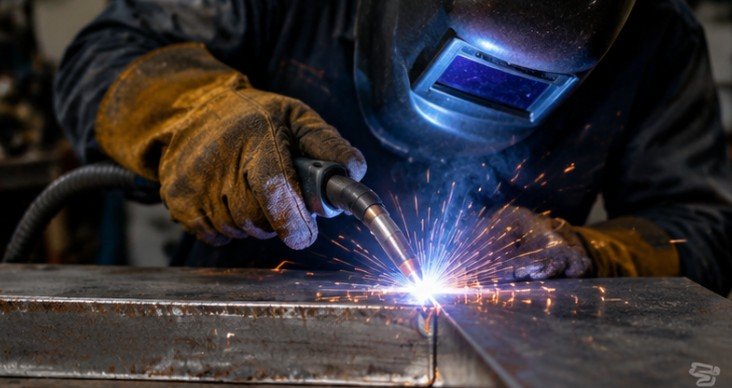
An agricultural rig breaks a structural frame beam in the middle of a remote field during harvest, threatening thousands of dollars in downtime per hour. Transporting the equipment to a stationary fabrication facility is logistically impossible. Within hours, a fully self-contained mobile welding unit arrives on-site, striking an arc outdoors to fuse heavy carbon steel in sub-zero wind.
Mobile welding delivers precision metal joining to job sites, industrial facilities, and remote locations. Mobile technicians bring generator-driven power sources, shielding gas cylinders, consumable wires, and specialized torches directly to the work site. The primary limitation in mobile fabrication is not the location, but how chemistry, environment, and portable equipment interact. Understanding what materials can mobile welders weld requires examining material metallurgy alongside field operating conditions.
| Common Ferrous | Non-Ferrous & Light Alloys |
| • Mild/Carbon Steel | • Commercial Aluminum Alloys |
| • Stainless Steel | • Copper & Brass Alloys |
| • Cast Iron Alloys | • Titanium & Nickel Superalloys |
1. Common Structural and Industrial Metals
The vast majority of field repair and structural work involves ferrous metals and common non-ferrous structural alloys. Field environments introduce wind, humidity, and temperature variations that influence process selection for these standard materials.
Mild and Low-Carbon Steel
Mild carbon steel serves as the backbone of field welding due to its weldability and forgiving metallurgical properties. Mobile welders process carbon steel using three main methods:
- Shielded Metal Arc Welding (SMAW / Stick): The preferred choice for outdoor structural work. Flux-coated electrodes generate their own shielding gas, protecting the molten puddle from ambient winds up to 35 mph.
- Flux-Cored Arc Welding (FCAW): Gas-shielded or self-shielded wire-fed processes deliver high deposition rates for heavy plate, machinery frames, and earthmoving equipment repairs.
- Gas Metal Arc Welding (MIG / GMAW): Excellent for sheet metal and trailer repairs inside controlled mobile enclosures or temporary wind shelters.
Standards like the American Welding Society AWS D1.1 Structural Welding Code govern structural steel field welding to ensure load-bearing integrity.
Stainless Steel
Mobile welders frequently repair stainless steel in agricultural equipment, food-processing transport, and chemical containment pipelines.
- Contamination Prevention: Field technicians maintain separate grinding wheels and wire brushes reserved strictly for stainless work. Carbon steel cross-contamination introduces free iron particles, causing localized surface corrosion.
- Process Selection: Gas Tungsten Arc Welding (TIG / GTAW) yields precise, sanitary welds on thin-wall stainless pipe, while specialized flux-cored or stick electrodes handle heavy structural stainless plates.
Structural Aluminum Alloys
Aluminum poses specific thermal challenges outdoors. Its high thermal conductivity draws heat rapidly away from the weld zone, while its tenacious surface oxide layer melts at $3,700^\circ\text{F}$—far above the base metal’s $1,220^\circ\text{F}$ melting point.
- Spool Guns and Push-Pull Systems: Wire-feeding soft aluminum wire through long torch leads causes bird-nesting. Mobile rigs use spool guns or push-pull wire feeders to maintain steady wire delivery.
- High-Frequency AC TIG & Pulse MIG: Engine-driven welders equipped with high-frequency Alternating Current (AC) TIG or pulsed MIG capability break up oxide layers while controlling overall heat input.
- Wind Protection: Because aluminum welding relies on pure Argon or Argon/Helium shielding gas, field sites require temporary wind tents to prevent porosity caused by blown-away gas protection.
Guidelines from the AWS D1.2 Structural Aluminum Code establish procedure requirements for aluminum structural field joints.
Cast Iron
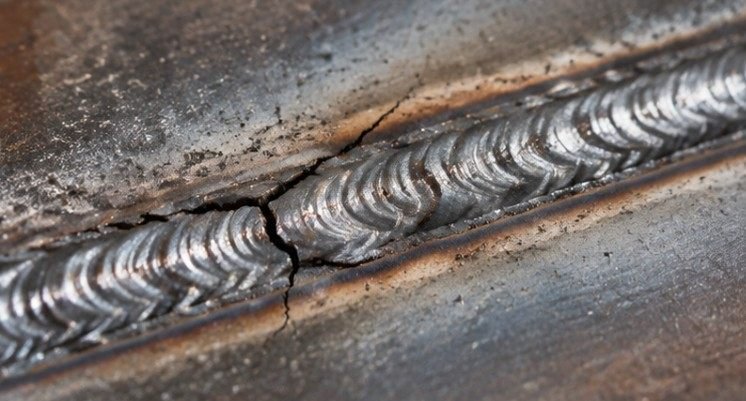
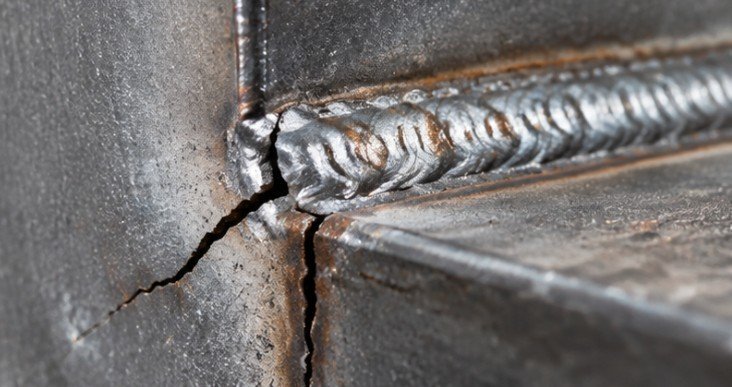
Repairing cast iron manifolds, pump housings, and gearbox casings requires strict thermal management. Cast iron contains 2% to 4% carbon, making it brittle and susceptible to stress cracking during rapid cooling.
Mobile welders use high-nickel stick electrodes (ENi-CI or ENiFe-CI) combined with precise pre-heating using propane torches. Post-weld slow cooling in insulating blankets prevents cold cracking across the heat-affected zone (HAZ).
2. Specialty and Advanced Metal Alloys
High-performance alloys require precise atmospheric protection and environmental control during field operations.
| Material Type | Primary Process | Shielding Requirement | Field Wind Tolerance |
| Mild Steel | SMAW / FCAW | Flux/Gas | High |
| Stainless | TIG / GMAW | Argon Blend | Moderate |
| Aluminum | Pulse MIG / AC TIG | Pure Argon | Low (Needs Enclosure) |
| Cast Iron | SMAW (Ni) | None (Flux) | High |
| Copper/Brass | TIG | Argon/Helium | Low |
| Titanium | TIG | Dual Shield (Trailing) | Very Low (Purge Tent) |
Copper and Brass Alloys
Non-ferrous copper alloys require high heat input due to their high thermal conductivity. Mobile welders use DC TIG with helium-gas mixtures to concentrate heat into heavy copper bus bars or commercial plumbing headers.
Titanium and Nickel Superalloys
Titanium and nickel alloys (such as Inconel) react with oxygen, nitrogen, and hydrogen at temperatures above. Welding these materials outdoors requires specialized preparation:
- Trailing Shielding Cups: Secondary gas nozzles flood cooling weld metal with pure argon behind the primary torch.
- Back Purging: Pipe interiors must be sealed and purged with inert gas to protect the root side from atmosphere.
- Portable Environmental Containment: Portable purge chambers or wind enclosures isolate the work zone to avoid atmospheric contamination.
3. Field Verification: Material Identification Checklist
Before striking an arc on unfamiliar metal, mobile welders use various welding techniques to perform quick field diagnostic tests to select the correct process and filler material:
- Magnet Test:
- Strongly Magnetic: Carbon steel, cast steel, ferrite stainless (400 series).
- Non-Magnetic / Weakly Magnetic: Austenitic stainless steel (300 series), aluminum, copper, titanium.
- Spark Test (Angle Grinder):
- Long yellow sparks with bursts: Carbon steel.
- Short, reddish-orange streams: Cast iron.
- White, bright, fast sparks: Titanium.
- No sparks: Aluminum, copper, brass.
- Chemical / Acid Spot Test:
- A drop of copper sulfate solution turns carbon steel copper-colored within seconds, while stainless steel remains unaffected.
- Weight and Thermal Inspection:
- Aluminum weighs roughly one-third the weight of steel per volume and dissipates torch heat rapidly.
Worksite health and safety regulations, including OSHA General Safety Guidelines for Ventilation (1910.252), require proper ventilation or respiratory protection when heating galvanized steel, stainless steel, or brass alloys in the field.
Frequently Asked Questions
1.Can a mobile welder weld aluminum outside in the wind?
Yes, but wind protection is required. Gas-shielded processes (MIG/TIG) require a physical wind shelter or welding tent to keep shielding gas over the puddle.
2. Can rusted or dirty structural steel be welded on-site?
Welders must clean surface rust, oil, and paint using angle grinders or wire wheels before welding. Heavy rust causes weld porosity and structural defects.
3. Is field welding as strong as shop welding?
Yes. Whether you are doing stick or debating mig welding cursive e vs crescent pattern, a stable platform controls consistency more than hand speed. When performed by a certified mobile welder following appropriate codes (like AWS D1.1), field welds match the mechanical strength of shop-fabricated welds.
Mobile welding brings versatile repair capability directly to job sites. Mobile technicians join materials ranging from structural carbon steel to specialized aluminum and cast iron components by matching process selection, shielding strategy, and thermal management to each material’s metallurgical needs.