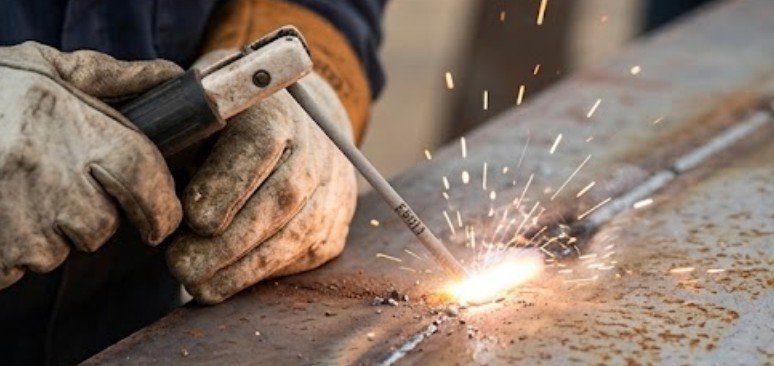
Trying to weld through rust is one of the fastest ways to destroy a joint’s structural integrity, yet farm equipment, exhaust pipes, and emergency trail repairs are stuck together over corrosion every day. The short answer to whether can rusted metal be welded is technically yes, but doing so compromises weld strength, creates severe safety risks, and almost guarantees long-term joint failure.
Understanding what happens at a molecular level when heat hits iron oxide—and knowing when you can get away with a temporary fix—is critical for any fabricator, mechanic, or DIY enthusiast.
What Actually Happens When Heat Hits Rust
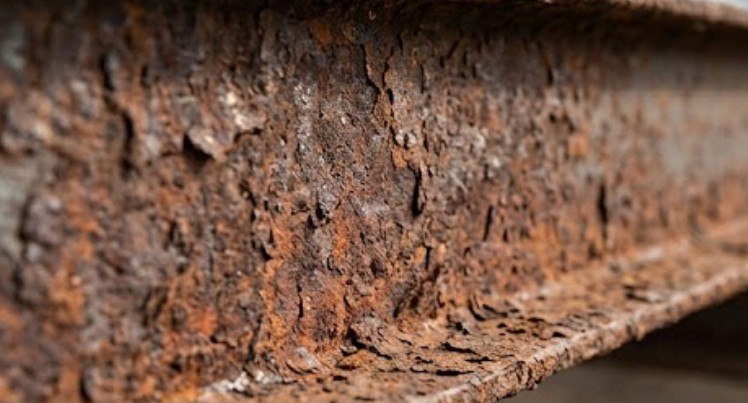
Rust is not just a dirty surface stain; it is iron oxide ($Fe_2O_3$), a chemical compound formed when iron reacts with oxygen and moisture. When an electric welding arc hits this surface at temperatures exceeding 6,000°F, it triggers a catastrophic chemical reaction inside the molten weld pool.
The Physics of Weld Contamination
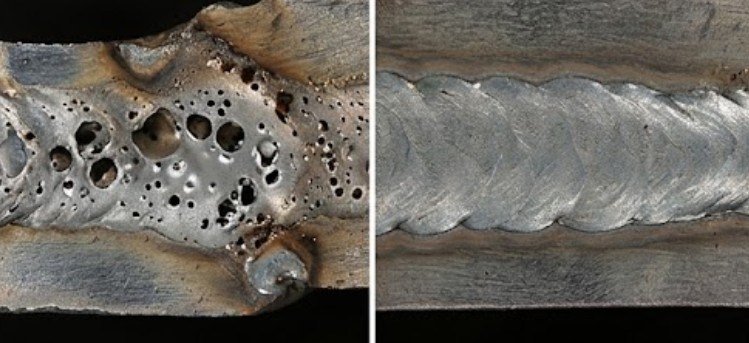
- Gas Porosity: Moisture trapped inside the porous lattice of iron oxide instantly vaporizes into hydrogen and oxygen gas. These escaping bubbles get trapped as the molten metal solidifies, creating tiny internal voids that resemble a Swiss cheese structure.
- Lack of Fusion: Iron oxide melts at roughly 2,800°F—significantly higher than raw steel’s melting point of around 2,500°F. The rust acts as a thermal barrier, preventing the base metals from liquefying and fusing together evenly.
- Electrical Resistance: Corrosion creates a high-resistance barrier. This disrupts your ground clamp connection, causing arc instability, excessive spatter, and cold laps where filler metal sits on top of the plate without bonding.
- Hazardous Fume Generation: Vaporizing heavy rust, scale, and underlying coatings releases concentrated particulate matter and hazardous gases. According to safety guidelines published by the Occupational Safety and Health Administration (OSHA), breathing welding fumes contaminated with heavy metal oxides presents severe respiratory risks without localized exhaust ventilation.
The Exception Rule: Electrode Selection in the Field
While shop standards always require bare metal, field operators faced with emergency repairs rely on specific processes designed to handle light surface oxidation.
Not all welding processes perform equally on contaminated surfaces. Gas Metal Arc Welding (MIG) and Gas Tungsten Arc Welding (TIG) rely on external shielding gas (such as pure Argon or $CO_2$ blends). Rust interferes directly with this gas envelope, resulting in immediate porosity and severe soot buildup.
Conversely, Shielded Metal Arc Welding (SMAW/Stick) and Flux-Cored Arc Welding (FCAW) utilize aggressive chemical fluxes that contain deoxidizers like silicon, manganese, and aluminum.
- E6010 & E6011 Electrodes: These deep-penetrating cellulose-coated stick rods burn through thin paint, light surface rust, and mill scale. Their violent arc digs through surface contaminants to reach solid base metal underneath.
- E7018 Electrodes: Low-hydrogen rods should never be used on rust. Moisture trapped in the corrosion introduces hydrogen into the weld metal, causing cracking.
- Flux-Cored Wire (E71T-GS): Self-shielded flux-core wire handles light scale far better than standard MIG wire, making it a staple for outdoor repairs.
| Welding Method | Tolerance to Light Rust | Recommended Electrode / Wire | Primary Failure Mode |
| SMAW (Stick) | High | E6010 / E6011 | Slag inclusions if heavy |
| FCAW (Flux-Core) | Moderate | E71T-11 / E71T-GS | Wormholes, erratic arc |
| GMAW (MIG) | Poor | ER70S-6 (Light scale only) | Severe surface porosity |
| GTAW (TIG) | Zero Tolerance | N/A | Immediate tungsten contamination |
Evaluating Corrosion: Is Your Metal Salvageable?
Before firing up a grinder or striking an arc, you must follow best welding process for outdoor welding. Determine whether the base metal retains enough structural density to hold a weld. Corrosion falls into three distinct classifications:
[Level 1: Surface Rust] —-> Light abrasive / Wire wheel —-> Weldable
[Level 2: Scale & Pitting] —> Deep grinding to sound steel -> Evaluate thickness
[Level 3: Flaking/Rot-Through] -> Cut out affected area ——-> Replace plate
- Surface Flash Oxidation: Discoloration that wipes away with light sandpaper. Can be welded with aggressive flux processes, though cleaning is still recommended.
- Pitting and Heavy Scale: Deep, cratered rust that eats into the material’s thickness. Requires mechanical removal down to clean metal before welding.
- Flaking and Rot-Through (Structural Failure): The metal has lost its original gauge thickness. Attempting to weld this will simply blow holes through the material. The affected section must be completely cut out and fresh steel spliced in.
Structural guidance from the American Welding Society (AWS) strictly prohibits welding over uncleaned, pitted, or heavy mill-scale steel on load-bearing components, pressure vessels, or safety-critical assemblies like vehicle frames. It is quite necessary to prepare metal for welding repair.
Step-by-Step Metal Preparation Method
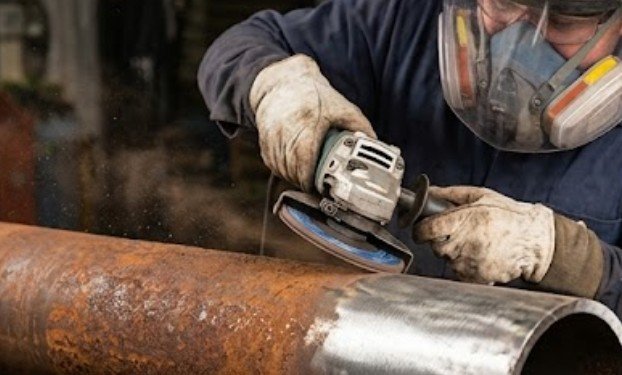
Achieving a code-compliant, full-strength weld requires mechanical or chemical intervention to restore the surface back to bare steel.
When grinding thick rust, angle your grinding disc slightly to avoid smearing oxides deeper into the microscopic valleys of the steel. Weld preparation should expose bright, reflective metal at least one inch back from both sides of the weld joint.
Health, Safety, and Environmental Considerations
Welding over rusty, painted, or galvanized metal releases fine particulate matter containing iron oxide, zinc, and silica.
According to long-term health studies hosted by the National Institutes of Health (NIH), chronic inhalation of iron oxide fumes can lead to a benign occupational lung condition known as siderosis. Furthermore, rusted agricultural or automotive parts frequently harbor chemical residues, oils, and toxic primers that decompose into hazardous compounds when exposed to ultraviolet light and high heat.
Always use a half-mask respirator fitted with P100 particulate filters under your welding helmet, even when working in open outdoor spaces.
Frequently Asked Questions
1. Can you MIG weld over light surface rust?
You can, but it is not recommended. MIG welding requires pristine base metal; even minor surface scale causes cracking, spatter, and severe internal porosity that weakens the joint.
2. What happens if you weld over heavy rust?
The intense heat turns trapped moisture and oxides into gas, creating severe porosity. The weld metal will fail to fuse with the base steel, causing immediate or structural joint failure under load.
3. Which welding rod is best for rusty metal?
An E6010 or E6011 cellulosic stick electrode is best. Its aggressive, digging arc burns through light surface oxidation and scale far better than low-hydrogen or solid MIG wires.
4. Does rust converter paint need to be removed before welding?
Yes. Rust converters contain phosphoric acid and synthetic polymers. Burning through these chemical coatings produces hazardous fumes and ruins the chemical composition of the molten weld pool.
While field work sometimes demands welding over minor surface oxidation using aggressive cellulosic electrodes like E6010, doing so remains a temporary compromise rather than a standard practice. The extreme heat of the arc turns trapped moisture and iron oxides into internal porosity, weak fusion, and dangerous fumes.
For any load-bearing, automotive, or safety-critical project, taking the extra few minutes to grind the joint back to bright, bare steel is the only way to ensure structural integrity and a clean, reliable bond. Cutting corners on surface preparation always costs more time in repairs down the road, so make mechanical cleaning an automatic first step before striking your arc.