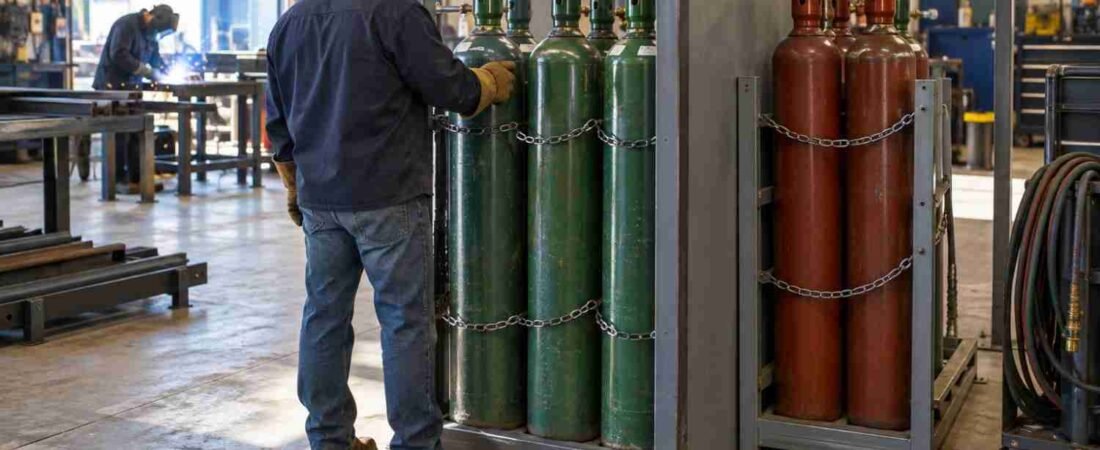
I used to think welding gas safety was mostly about remembering to close the valve when a job was finished. After seeing how much pressure sits inside a cylinder, I started paying closer attention to where bottles were parked, how they were secured, and what was happening around their valves. A cylinder can look harmless while still carrying enough stored energy to turn a small mistake into a serious incident.
I also noticed that the riskiest moments are often ordinary ones: moving a cylinder, connecting a regulator, leaving a bottle near sparks, or storing an empty cylinder incorrectly. Safe storage and handling of welding gases comes down to making those routine actions deliberate.
Know What Is Inside the Cylinder
Different welding gases create different hazards, so storage should begin with identification. Argon, helium, and other shielding gases are generally nonflammable, but they can displace oxygen in poorly ventilated spaces. Carbon dioxide can create a similar oxygen-displacement concern at elevated concentrations.
Fuel gases such as acetylene and hydrogen introduce fire and explosion hazards. Oxygen does not burn by itself, but it strongly supports combustion. Oil, grease, and oxygen should never be treated as a harmless combination.
That distinction matters because storage needs vary by gas. Check the cylinder label and supplier safety information before deciding where it should be stored.
Build a Proper Cylinder Storage Area
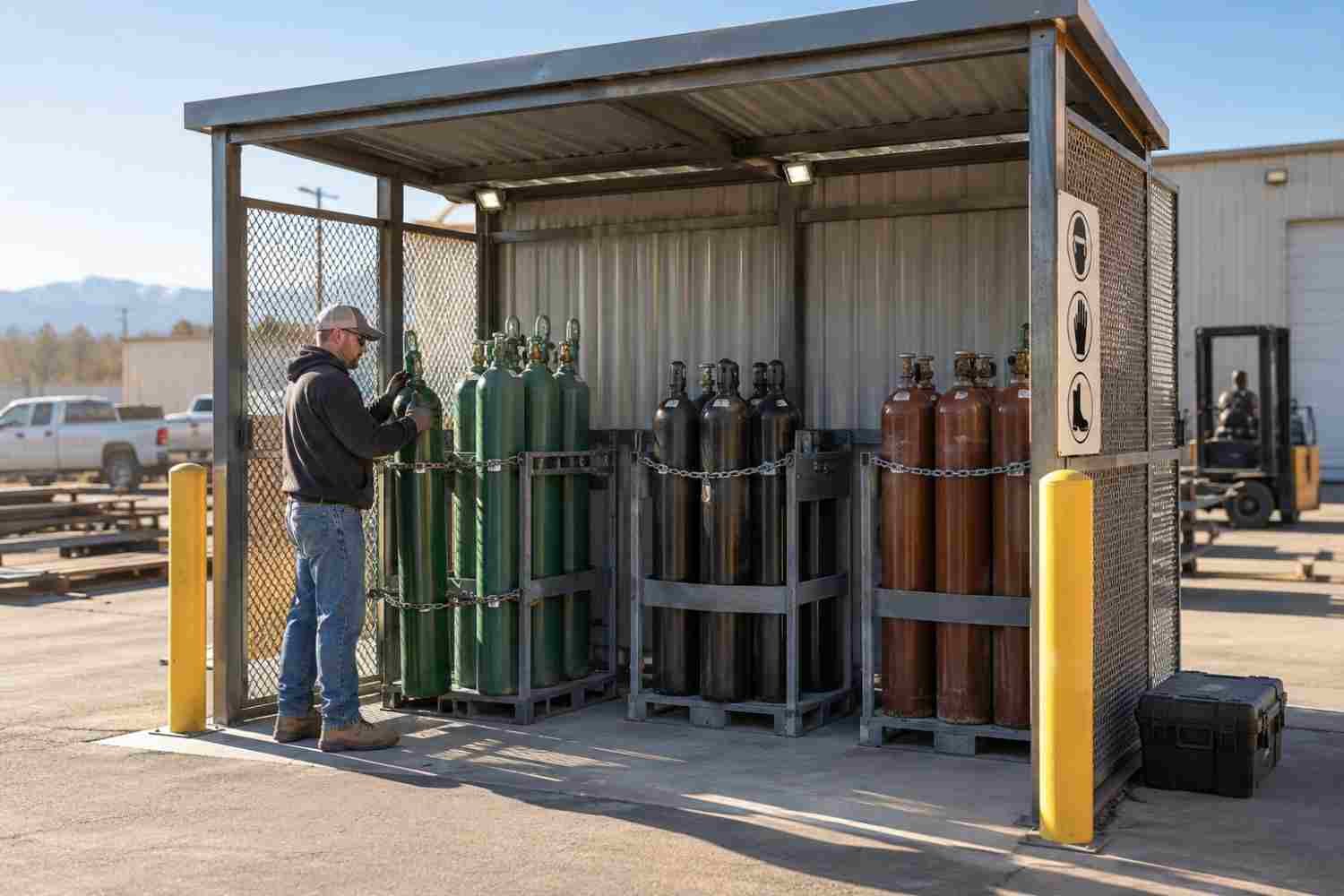
Cylinders should stand upright and be secured so they cannot tip or fall. A chain, strap, or suitable restraint attached to a stable support or cylinder rack is preferable to simply leaning a bottle against a wall.
Choose a dry, well-ventilated location away from traffic, heat, sparks, and combustible materials. Keep cylinders out of direct sunlight and protected from impact. Keep storage orderly so workers can identify each cylinder easily.
Protective valve caps should stay in place whenever cylinders are not connected for use. The valve is vulnerable to damage that can release gas.
Oxygen and fuel-gas cylinders require particular separation when stored. OSHA commonly calls for at least 20 feet of separation, or a noncombustible barrier, in applicable storage situations. Check the requirements for the specific facility and jurisdiction rather than assuming every setup is identical.
Move Cylinders Like Pressure Vessels
A cylinder is not shop equipment that should be dragged wherever it is needed. Use a purpose-built cylinder cart or hand truck, secure the cylinder to the cart, and keep its valve protected during movement.
Never drop, drag, or casually roll a cylinder across the floor. Avoid carrying cylinders by their valve, regulator, or hoses. When transporting a cylinder, secure the load, protect the valves, and provide appropriate ventilation. Never place a compressed-gas cylinder loose inside a passenger compartment.
Before connecting a regulator, inspect the cylinder, valve, threads, and regulator for damage. Use equipment designed for that gas. Keep oxygen equipment free of oil and grease.
Make Connection and Leak Checks Routine
Connect the correct regulator carefully and keep your face away from the valve outlet when opening it. Open valves slowly rather than snapping them open against a high-pressure system. Follow the manufacturer’s instructions for valve position and pressure, especially with fuel gases such as acetylene.
Check connections, regulators, and hoses for leaks using an approved leak-detection solution or soapy water where appropriate. Bubbles indicate a problem. Never use an open flame to find a gas leak.
A damaged hose, regulator, valve, or fitting should not be patched and forgotten. Take faulty equipment out of service and follow the manufacturer’s or gas supplier’s instructions for replacement.
Keep the Welding Area Under Control
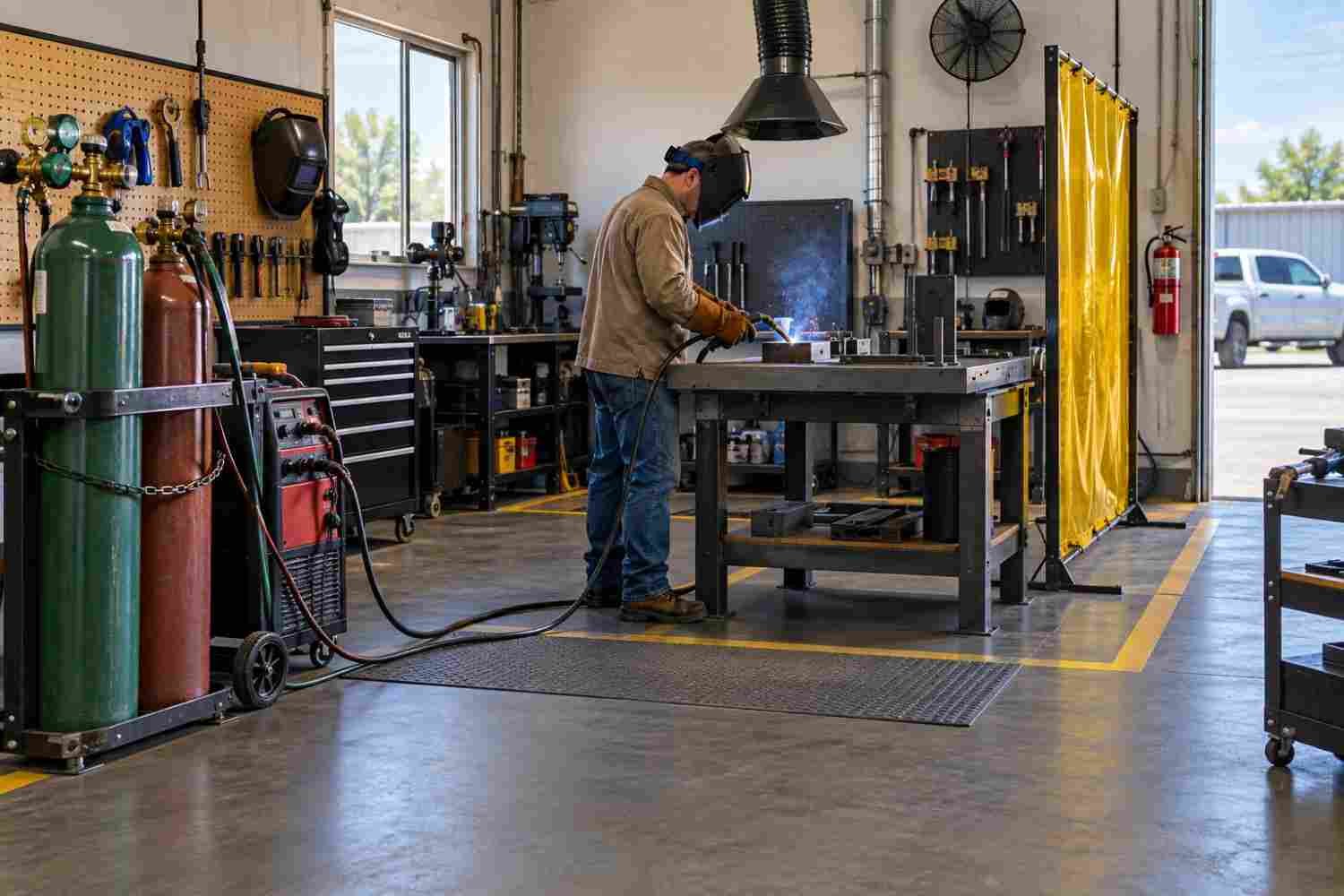
Cylinder safety does not stop at the storage rack. Once a cylinder is connected for use, keep it upright and secured to a suitable cart or stationary support. Keep it away from sparks, hot slag, electrical circuits, and moving equipment.
Good ventilation also matters. Shielding gases can displace oxygen, while welding operations produce fumes and gases that require appropriate controls. If the welding area needs additional protection, respiratory protection for welding fumes can be part of a broader exposure-control plan, alongside ventilation and local exhaust.
A tidy work area helps too. Keep hoses out of walkways, cylinders away from exits, and combustibles away from hot work. For job-site practices, welding gas cylinder safety on job sites provides another layer of protection when cylinders move beyond a fixed shop setup.
Shut Down the System Properly
When welding ends, do not simply walk away from a pressurized setup. Close cylinder valves, then relieve downstream pressure as directed by the manufacturer.
For oxy-fuel equipment, the shutdown sequence can include bleeding residual gas from the lines and backing off regulator adjusting screws after pressure is relieved. Follow the torch, regulator, and gas supplier instructions because equipment designs vary.
Empty cylinders still need attention. Mark them according to shop procedures, close their valves, replace protective caps where applicable, and store them in the designated area.
FAQs: Safe Storage and Handling of Welding Gases: Tips for Everyday Welding Safety
1. How should welding gas cylinders be stored?
Keep cylinders upright, secured, capped when not connected for use, protected from heat and physical damage, and stored in a dry, ventilated, designated area.
2. Can oxygen and fuel-gas cylinders be stored together?
They generally need separation in storage. OSHA commonly specifies 20 feet or a noncombustible barrier for applicable situations.
3. What is the safest way to move a gas cylinder?
Use a proper cylinder cart or hand truck. Secure the cylinder, protect its valve, and never drag, drop, or handle it by the valve or regulator.
4. How can I check a welding gas connection for leaks?
Use an appropriate leak-detection solution or soapy water where suitable. Never use an open flame to locate a leak.
The Habits Worth Keeping
The safest welding shops are rarely the ones with the most complicated procedures. They are the ones where basic habits happen every time: cylinders stay secured, valves stay protected, incompatible hazards stay separated, leaks get investigated, and damaged equipment is removed from service. Those habits reduce the chance that a routine task becomes an emergency.
Good cylinder handling is ultimately about respecting what is inside the bottle. Pressure, fuel, oxygen, and confined gases all deserve deliberate treatment. Once those habits become part of the normal welding routine, safer storage and handling becomes simply part of doing the job right.