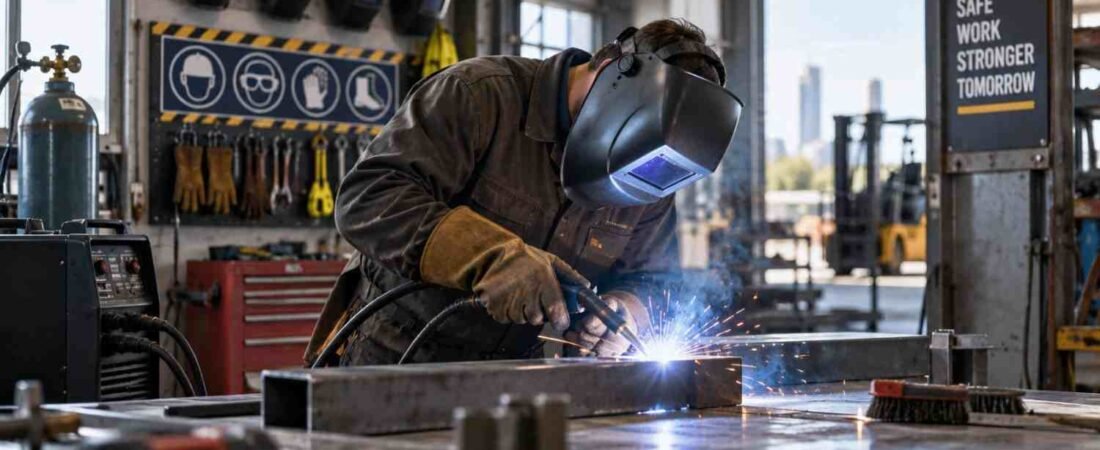
I noticed that welding safety conversations often focus on helmets, gloves, and fire hazards while the electrical side gets less attention. I realized how quickly a damaged lead, damp glove, or poorly placed electrode holder can turn familiar equipment into a serious shock hazard.
Then, I started seeing welding electrical safety practices differently once I understood that the welder is part of the electrical environment, not simply someone holding an electrode. Small habits around grounding, dry equipment, cable inspection, and shutdown procedures can create a safer routine without slowing productive work.
Why Electrical Safety Deserves More Attention
Arc welding sends substantial electrical current through a controlled circuit, but that control depends on sound equipment and correct setup. A welder can be exposed when insulation fails, a connection is loose, moisture creates an easier path through the body, or a holder contacts a conductive surface unexpectedly.
A routine electrode change can become hazardous if the machine remains energized. OSHA requires welding equipment to be safely installed, properly grounded, and operated by workers who have been instructed and qualified.
Start With the Equipment Before Striking an Arc
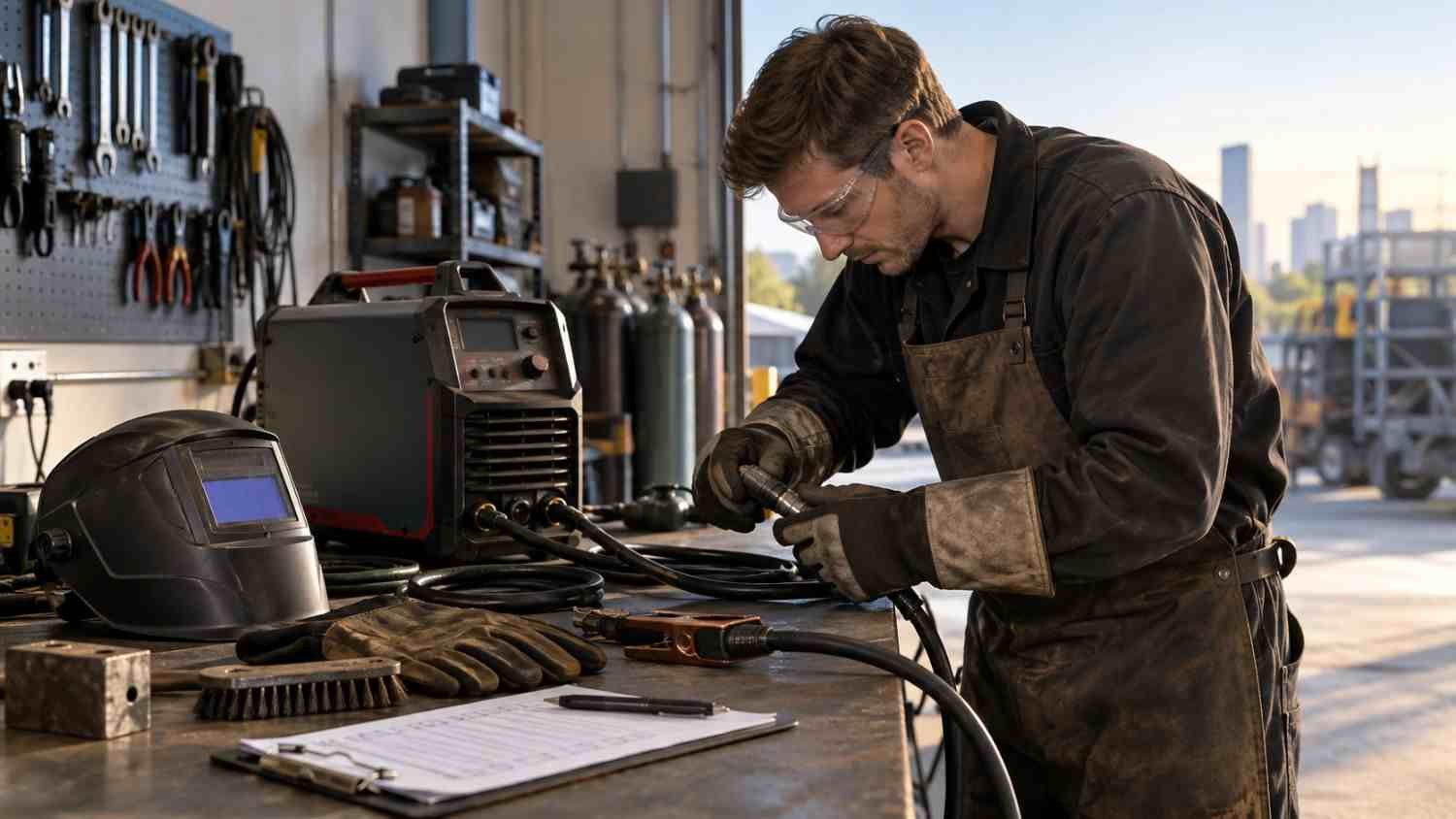
A quick inspection should happen before welding begins on every job. Look over electrode cables, work leads, holders, plugs, terminals, and insulation for cuts, burns, exposed conductors, loose connections, or other damage. Pay attention to heat damage, flattened sections, improvised repairs, and connectors that no longer fit firmly. These small warning signs can reveal problems before the welding circuit is energized.
The work lead should be firmly attached to the work, with the contact surface clean enough to make a reliable electrical connection. This matters when spatter, paint, rust, or other material interferes with contact. Keeping the clamp close to the welding area can also help keep the intended return path controlled.
Coiled welding cable should be spread out before use. Heat can build in tightly coiled cable. If equipment develops a defect, stop using it rather than improvising a repair. Damaged insulation and exposed conductors should be replaced.
Keep Your Body Out of the Circuit
Electricity becomes especially dangerous when the human body provides a path between energized components and ground. Dry, intact gloves provide an important barrier, but they do not replace safe work practices.
Moisture raises the stakes. Water can make accidental contact more consequential by improving conductivity and reducing the protection provided by dry surfaces and clothing. Keep equipment dry, avoid leaning against wet conductive surfaces, and use appropriate insulating protection when conditions require it. OSHA specifically recognizes wet conditions and perspiration as factors that can increase electrical shock hazards during welding.
The same principle applies to positioning. Do not rest your body against the workpiece while welding, and avoid creating a situation where your body bridges the electrode and grounded metal.
Grounding, Holders, and Power Controls
Grounding is central to safe welding equipment. The welding machine frame needs an appropriate ground, while the work lead needs a sound connection to the work.
Handle the electrode holder carefully. When it is not in use, place it where it cannot accidentally contact a person, conductive material, fuel, or a compressed-gas cylinder. Never allow an energized holder to become an unattended electrical contact point.
Multiple welding machines require extra care. Different voltage potentials can create dangerous conditions when equipment is connected incorrectly. Follow manufacturer instructions and site procedures.
Before changing electrodes, cleaning equipment, or performing maintenance, use proper shutdown and electrical disconnect procedures. Power isolation should be part of the task, not an optional cleanup step.
Conditions That Increase the Risk
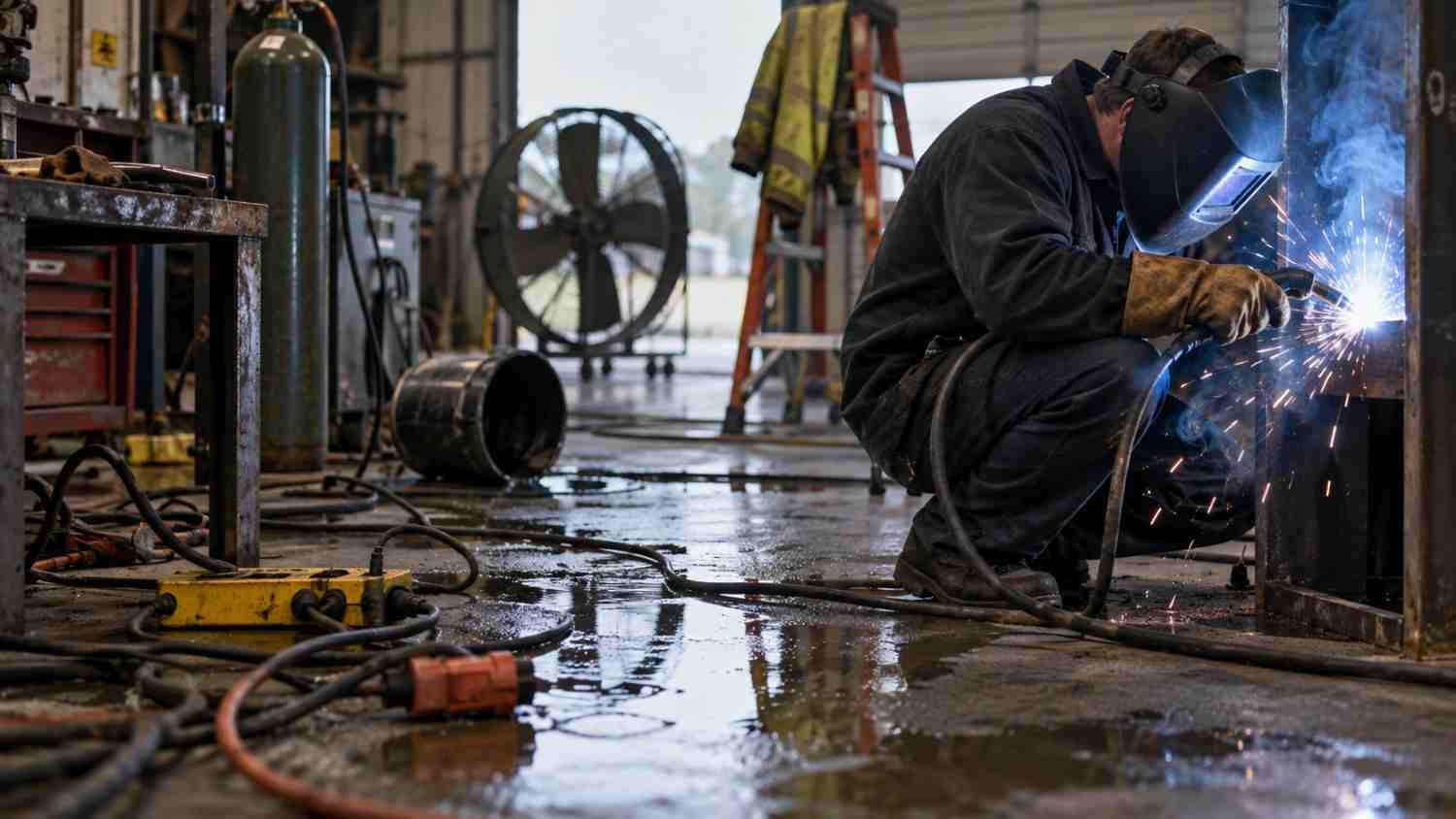
Wet locations, high humidity, confined spaces, tight working positions, and unusual welding setups can reduce the margin for error.
Confined spaces require additional planning. Ventilation, rescue planning, equipment placement, and electrical protection must be considered together. Welding machines and gas cylinders may need to remain outside the confined space. OSHA also requires appropriate ventilation for welding operations and gives additional requirements for confined spaces.
The broader welding environment matters too. Electrical protection does not replace other controls. If the work produces significant fumes, appropriate welding fumes safety and ventilation measures should be established before the arc is started and work begins.
Build Safety Into the Welding Routine
Before each job, inspect the equipment, confirm connections, check the work area, and make sure protective equipment is dry and intact.
Training matters. A worker who understands why a grounding connection matters is more likely to recognize a problem than someone who has memorized a checklist. Training can also clarify career pathways, including how to become a certified welder.
Safety also includes knowing when not to proceed. If a machine becomes wet, a cable exposes bare conductor, a holder is damaged, or a connection cannot be made securely, stopping the job is the productive decision.
FAQs: Welding Electrical Safety Practices That Help Prevent Serious Accidents
1. What is the biggest electrical hazard when welding?
Electric shock is a major concern, especially when the welder contacts energized components while providing a path to ground. Moisture, damaged insulation, poor positioning, and faulty connections can increase exposure.
2. Why should welding cables be inspected?
Damaged insulation, exposed conductors, and poor connections can create shock and fire hazards. Problems should be corrected before the equipment returns to service.
3. Can welding equipment be used in wet conditions?
Extra precautions are necessary. Moisture can increase shock risk, so equipment should be kept dry, and appropriate protective measures should be used. Wet machines should be dried and tested before use.
4. When should a welder stop using equipment?
Stop when there is damaged insulation, exposed wiring, a faulty holder, unsafe grounding, or another equipment defect. The equipment should remain out of service until its safety has been assured.
The Habits That Protect Every Weld
Reliable electrical safety rarely comes from one dramatic precaution. It comes from ordinary decisions made consistently: checking a lead before work, keeping gloves dry, placing a holder safely, confirming the work connection, and shutting down power before maintenance. Those habits create layers of protection around a process that can become dangerous quickly.
Good welding is not only about controlling an arc or producing a clean joint. It is also about controlling the conditions around it. When electrical safety becomes part of the normal workflow, safer decisions stop feeling like extra steps and become part of professional craftsmanship. Good habits help people notice hazards early and stop work before an incident.