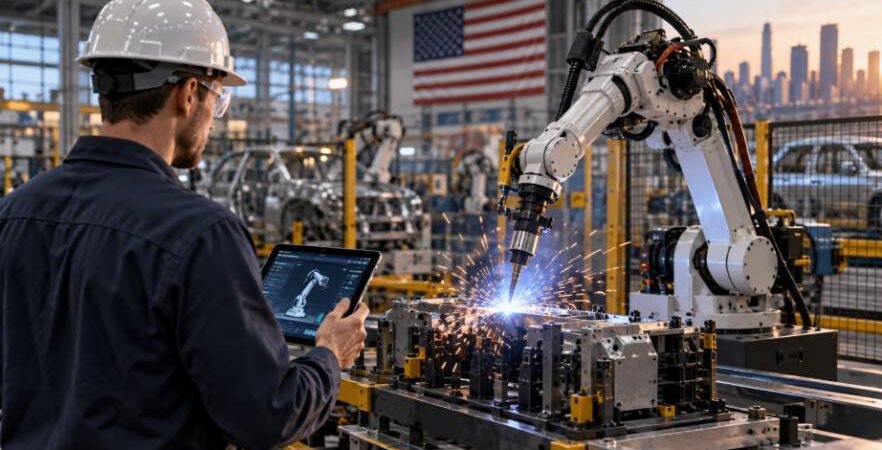
I first noticed how different a modern welding floor feels when a robot cell works beside traditional welding stations. Someone still has to understand fit-up, heat, penetration, distortion, joint design, and what a good weld should look like. That mix made me realize that robotic welding career opportunities are less about abandoning welding and more about adding another layer of technical skill.
I also found that the most interesting opportunities sit between the trades and automation. A person who can weld but also understands robot movement, welding parameters, fixtures, and troubleshooting can bring practical knowledge that a purely technical background may not provide. That combination is useful as manufacturers automate production.
Why Robotic Welding Is Reshaping Manufacturing Careers
Robotic welding is valuable when manufacturers produce large volumes of similar parts. A programmed cell can repeat a weld path consistently, reducing variation and supporting production targets. The human role changes.
Poor fit-up, worn contact tips, shifted fixtures, contamination, or incorrect settings can quickly disrupt production. Someone must prepare the cell, load and position parts, verify programs, monitor the process, identify defects, adjust parameters, and respond when something goes wrong.
This is where welding experience becomes valuable. Automation works best when the people running it understand what the process is supposed to accomplish.
The Robotic Welding Roles Worth Knowing
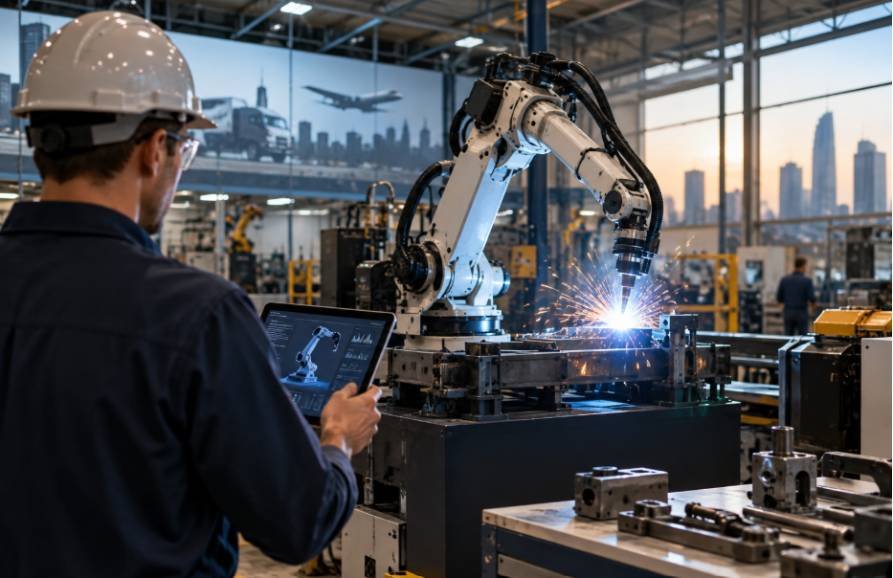
The phrase robotic welding technician can cover several levels of responsibility. An operator may load parts, start programs, inspect completed welds, and make routine adjustments. A technician usually goes deeper, working with setup, programming, troubleshooting, maintenance, and process improvements.
More experienced professionals may become robotic welding programmers or automation specialists. They create and refine robot paths, set welding parameters, coordinate positioners, adjust tooling, and reduce unnecessary movement. Some move into integration roles, helping design robotic cells and connect welding equipment with controls and sensors.
That creates a career ladder rather than a single job title. Employers also value workers who can document changes, communicate with maintenance teams, and recognize when a process needs engineering review instead of another quick adjustment at work.
Skills That Give Welders an Edge
Strong candidates combine welding fundamentals with comfort around technology. They should understand welding symbols, joint preparation, materials, shielding gas, wire selection, voltage, wire feed speed, and travel speed.
Robot-specific knowledge adds another layer. Workers may need to understand teach pendants, coordinate systems, torch positioning, fixtures, sensors, and basic PLC concepts. Troubleshooting matters just as much. A robot that stops, misses a seam, produces inconsistent penetration, or collides with tooling requires someone who can investigate the cause rather than simply restart the machine.
Quality knowledge is another advantage. Understanding weld inspection, visual examination, dimensions, and welding procedure specifications helps technicians catch problems early.
For welders building that foundation, learning how to build experience as a professional welder can provide useful direction before moving toward specialized automation work.
Moving From Manual Welding Into Robotics
The transition does not have to happen all at once. A working welder can begin by learning how the robotic cell at a current workplace operates. Pay attention to fixtures, programming changes, parameter adjustments, common faults, and how technicians solve production problems.
Hands-on exposure can be more useful than collecting unrelated credentials. Assist with setup, learn the controls, study manuals, and become comfortable with process documentation. Technical schools and employer training can help, especially when they provide access to industrial robots.
Certification can strengthen that foundation. Robotic arc welding qualifications can reinforce skills in programming, setup, welding processes, safety, and inspection. Certification is not a substitute for experience, but it can demonstrate deliberate skill development beyond conventional welding.
Where These Careers Can Lead
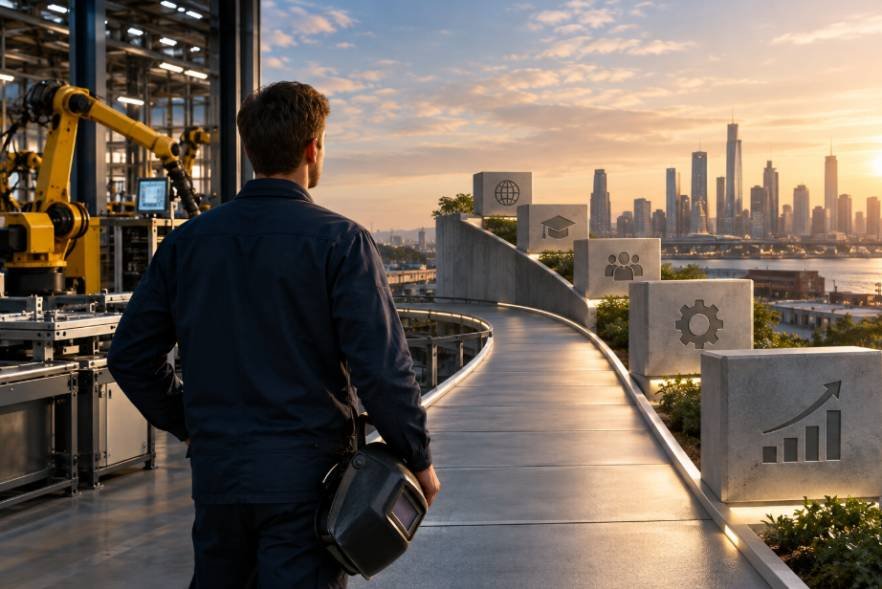
Automated welding appears across industries that manufacture repeatable metal assemblies, including automotive and transportation equipment, heavy equipment, structural products, agricultural machinery, and general fabrication. Manufacturers need reliable production, consistent quality, and workers who solve problems quickly.
Career progression can move in several directions. A technician may specialize in programming, become a lead technician, move into robotics integration, or develop deeper expertise in welding quality. Others may shift toward maintenance, controls, manufacturing engineering, or supervision.
Salary varies rather than following a guaranteed ladder. Pay depends on region, industry, experience, shift schedules, certifications, and responsibility. Automation skills can improve earning potential, while technical depth and problem-solving support long-term growth.
Welding Knowledge Still Matters
It is easy to look at a robotic cell and assume the robot is doing all the skilled work. The system still depends on human decisions. A robot can repeat a poorly designed process with impressive consistency.
That is why fundamentals remain important. A technician who understands why a weld is undercut, why porosity appears, or why distortion changes after a fixture adjustment can diagnose a problem faster. Someone who only knows the controls may struggle when conditions change.
This also creates opportunities outside direct robot programming. Workers with strong quality backgrounds can pursue welding inspection career opportunities, while those with mechanical interests can move toward equipment maintenance, millwright work, or industrial service. Automation rewards people who understand how manufacturing systems interact.
Frequently Asked Questions
1. Do I need welding experience to work with welding robots?
Not always. Some entry-level operator roles provide training, but welding experience gives candidates a stronger understanding of materials, joint preparation, weld quality, and production problems.
2. Is robotic welding a good career choice?
It can be a strong option for people who enjoy welding and technology. Automation creates roles involving programming, troubleshooting, maintenance, quality, and process improvement.
3. What should I learn first?
Start with welding fundamentals, blueprint reading, safety, and weld inspection. Then add robot operation, programming, fixtures, welding parameters, and basic automation concepts.
4. Can robotic welding lead to engineering work?
Yes. Experienced technicians can move toward robotics integration, controls, manufacturing engineering, programming, or supervisory positions, especially when they build additional technical education and project experience.
The Skills That Keep Opening Doors
The lasting opportunity is not simply knowing how to operate a machine. It is understanding what the machine is doing, why the process works, and what to change when reality does not match the program. That mindset can turn production work into a technical career. As manufacturing becomes more automated, people who can connect welding knowledge with robotics, quality, and troubleshooting should remain valuable.
The robot may perform repeated motion, but people still make the process work. That is where the career opportunity really begins.