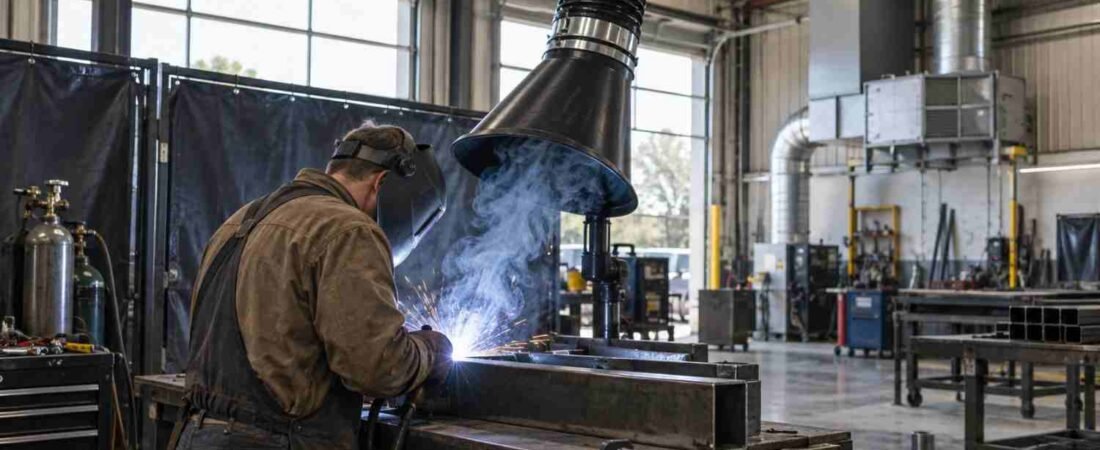
I used to think welding fumes were mostly a visibility problem. If the plume drifted away quickly, the shop seemed fine. Over time, I realized that clear air at eye level does not necessarily mean clean air in a welder’s breathing zone. Position, airflow, or material can change exposure dramatically.
I also found that ventilation works best when it is treated as part of the welding setup, not something switched on after the arc starts. Keeping your head out of the plume matters, but so does capturing fumes close to the source, preparing surfaces properly, and knowing when respiratory protection is needed. Those habits make a welding shop healthier without making the work unnecessarily complicated.
Why Welding Fumes Deserve Attention
Welding creates a mixture of airborne particles and gases. What ends up in that mixture depends on the welding process, base metal, filler metal, coatings, and contaminants on the workpiece. Stainless steel, galvanized steel, painted surfaces, and certain alloys can introduce additional hazards.
Manganese is one concern because it can be present in welding fumes and, with sufficient exposure, affect the nervous system. Other welding operations can produce contaminants involving chromium, nickel, zinc, or other metals. Smoke visibility is not a reliable measure of exposure.
That is why welding fumes safety and ventilation should begin with exposure control rather than relying on appearance. The goal is to keep fumes out of the breathing zone.
Start With the Fume Source
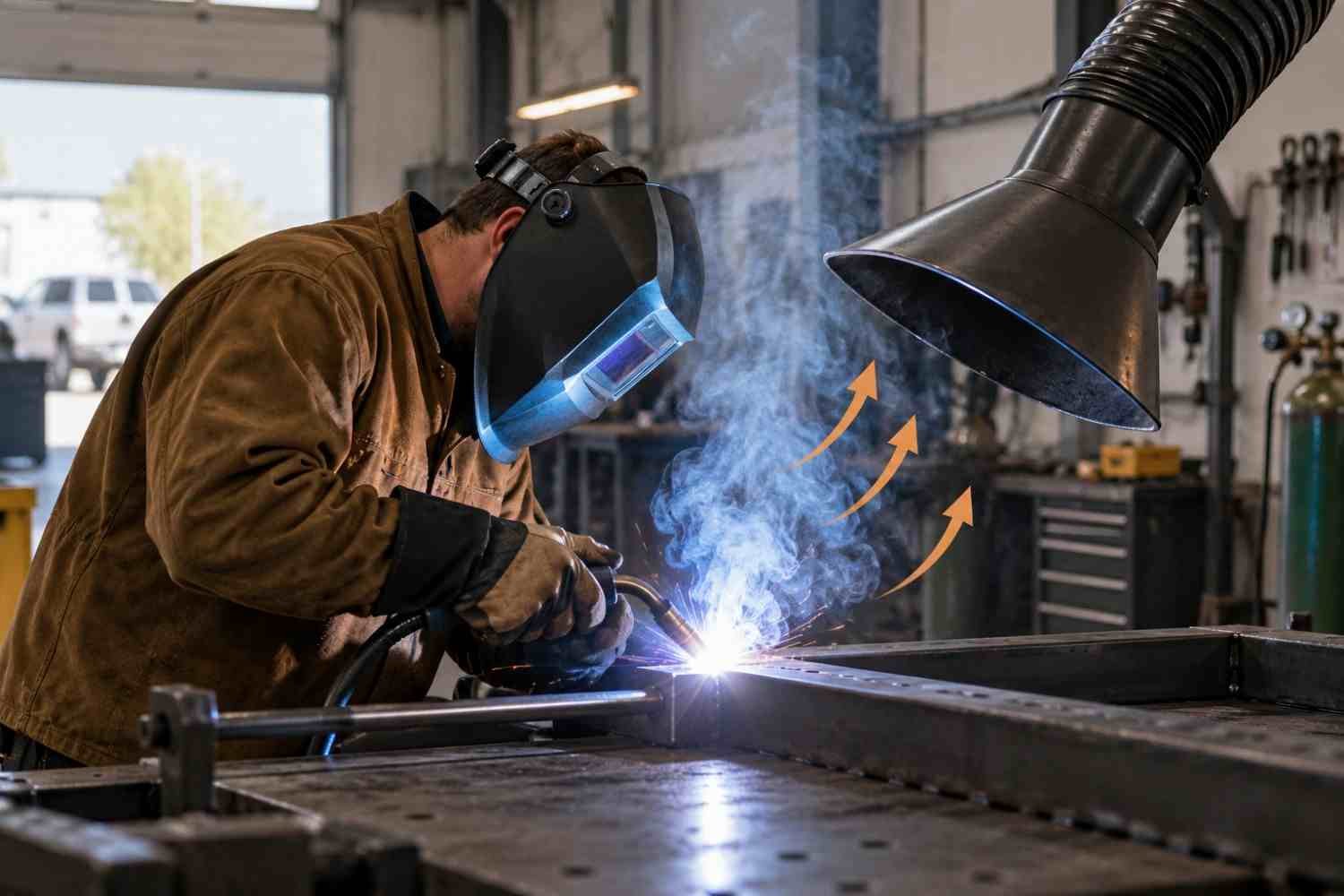
Local exhaust ventilation, or LEV, is one of the most effective engineering controls because it captures fumes near where they are generated. A movable extraction hood, source-capture arm, or properly designed extraction system can pull the plume away before it spreads through the shop.
Placement matters. An extractor positioned too far away may capture little of the plume, while poor airflow can push fumes across the welder’s face. The extraction point should stay close enough to the work to capture contaminants while remaining practical for welding movement.
General ventilation still has a role. Fans and mechanical air movement can dilute contaminants and provide replacement air, but they should not blow contaminated air toward another worker. Natural airflow is unpredictable around walls, doors, machinery, and changing outdoor conditions.
A healthy shop therefore needs airflow that supports source capture rather than fighting it.
Simple Changes That Improve Shop Air
Good ventilation becomes much easier when the work area is arranged around the direction of the fume plume. Keep your head out of the plume and avoid leaning over the weld while watching the puddle. When conditions allow, position yourself so cleaner air reaches your breathing zone before the plume passes away from you.
Surface preparation is another overlooked control. Remove paint, oil, grease, rust inhibitors, and other coatings when the job allows, using appropriate cleaning methods. Heating coatings can generate additional fumes or gases that were never part of the welding consumable itself.
Ventilation equipment also needs attention. A clogged filter, damaged duct, weak fan, or obstructed hood can reduce capture performance even when the system appears to be operating. Routine inspection and maintenance help ensure that the equipment continues doing the job it was installed to do.
For people entering the trade, safety knowledge belongs alongside technical skill. Learning how to become a certified welder can build familiarity with welding procedures, equipment, hazards, and professional shop practices.
Know When Ventilation Is Not Enough
Some welding situations require more than ordinary shop airflow. Confined spaces deserve particular caution because fumes and gases can accumulate, oxygen levels can change, and escape can become difficult. These environments require atmospheric evaluation, ventilation, and entry controls.
Material can also change the control strategy. Welding galvanized metal, stainless steel, or painted and coated components may create different exposure concerns. A worker should know what is being heated and what contaminants may be released before beginning the job.
Respiratory protection can provide another layer of defense when engineering and work-practice controls do not adequately control exposure. The appropriate respirator depends on the hazard and workplace assessment. Fit, selection, maintenance, training, and proper use all matter.
The same mindset applies to welding equipment. Before starting, workers should confirm that leads, connections, hoses, torches, grounding, and related equipment are in suitable condition. Reviewing how to inspect welding equipment before use can reinforce those checks before the arc is struck.
Build Safety Into the Routine
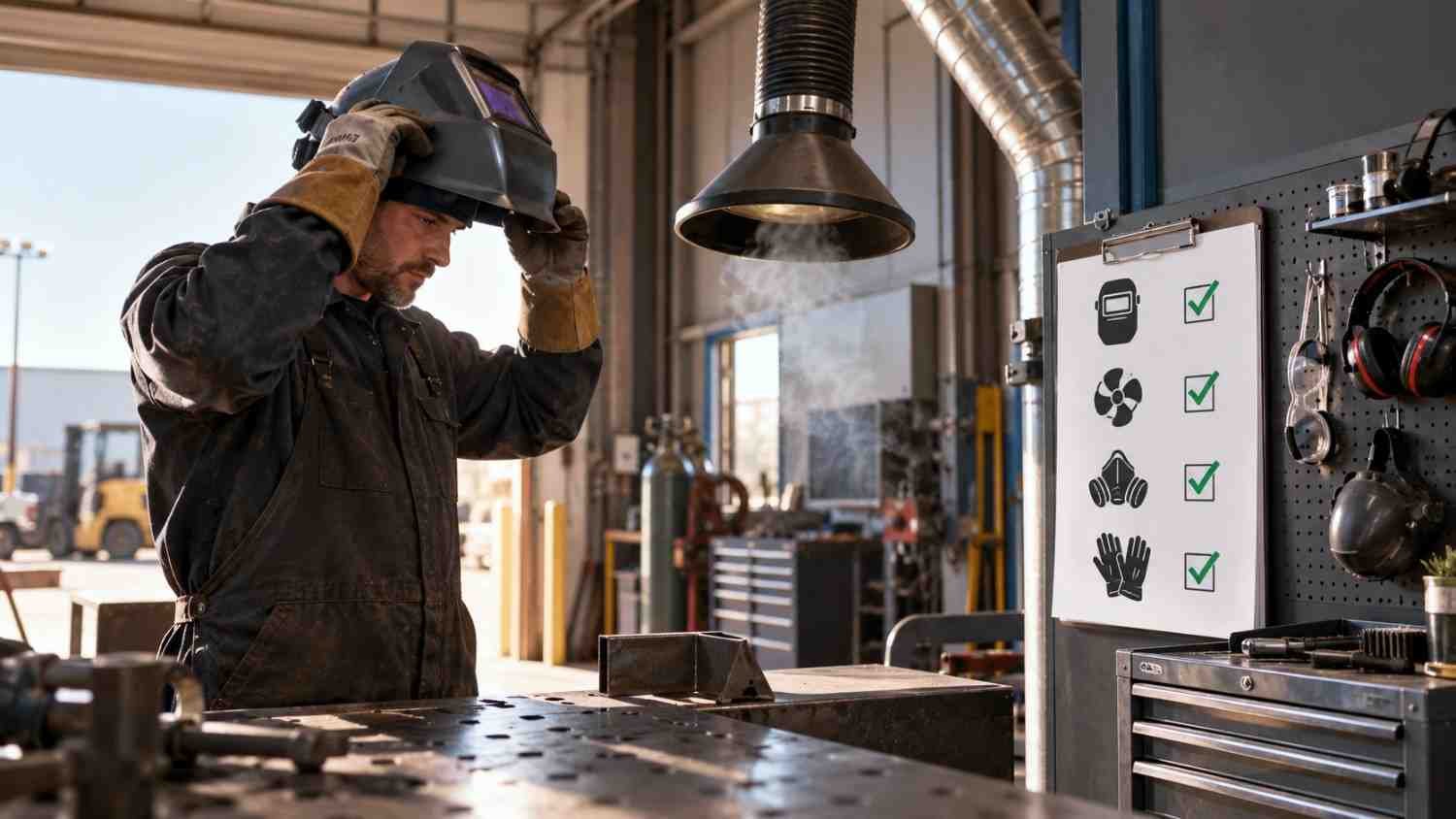
The strongest welding safety habits are usually the least dramatic. Position the extractor correctly. Keep your face away from the plume. Check the airflow. Prepare the metal. Understand the material and coating. Inspect equipment. Use the required protective equipment.
These steps work together. Ventilation cannot compensate for placing your face over the plume, and a respirator should not replace a properly designed extraction system. Effective exposure control is layered, with engineering controls doing as much work as reasonably possible.
FAQs: Welding Fumes Safety and Ventilation Tips for a Healthier Welding Shop
1. What is the best way to control welding fumes?
Local exhaust ventilation that captures fumes close to the source is generally one of the strongest controls. Good positioning and general ventilation can support it.
2. Is a shop fan enough for welding fumes?
Not necessarily. A fan may move air without capturing contaminants and can sometimes push fumes through another worker’s breathing zone. Source capture is preferable when practical.
3. When should a welder use a respirator?
Respiratory protection may be needed when ventilation and other controls cannot adequately reduce exposure, or when the hazard assessment requires it. The respirator must be appropriate for the specific hazard.
4. Are welding fumes dangerous if they are barely visible?
Yes. Visibility is not a reliable measure of exposure. Welding fumes can contain hazardous particles and gases even when the plume looks minor.
Why Better Air Quality Becomes Part of Better Welding
A safer welding shop is not created by one fan or one respirator. It comes from ordinary decisions repeated consistently: controlling fumes at the source, arranging airflow intelligently, keeping the breathing zone clear, preparing materials, maintaining equipment, and recognizing when a job presents unusual hazards. Those choices protect the welder and everyone working nearby. That approach protects productivity too, because cleaner air supports comfortable work.
Good ventilation may become invisible when it works properly. That is exactly the point. The goal is not to make fumes look harmless. It is to keep unnecessary exposure from becoming part of the job.