A welder may look like just another garage tool, but plugging one in is not as simple as plugging in a drill or shop light. If you are wondering whether you can plug a welder into a regular outlet, the answer depends on the machine’s input voltage, amperage demand, and the capacity of the circuit behind that outlet.
Many 120V welders are built for home use, but the wrong circuit, shared loads, or an unsuitable extension cord can still cause breaker trips, poor performance, or overheating. Before striking an arc, I always check the welder’s electrical requirements first.
Can a 120V Welder Run on a Normal US Wall Outlet?
Most standard residential receptacles in the United States supply about 120 volts and are connected to 15-amp or 20-amp branch circuits. Many compact MIG, flux-core, TIG, and stick welders are designed for this type of power.
Forney lists its Easy Weld 141 FC-i as a 120V machine with a 13.4A input-current specification. That shows why welding output and wall-current demand are different. A 140-amp welder does not necessarily draw 140 amps from the outlet.
Miller’s Multimatic 220 manual also allows 120V operation and specifies a 15- or 20-amp individual branch circuit for 120V input. Dual-voltage welders may also run on 240V when connected as the manufacturer directs.
Will a Welder Trip a 15-Amp Breaker?
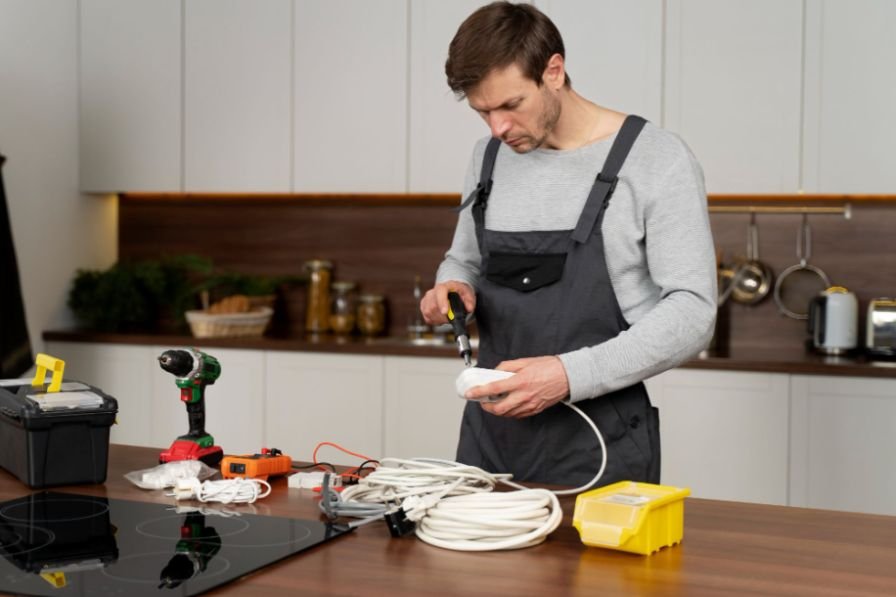
It can. A 120V welder may work at some settings but trip a 15-amp breaker when its input demand rises or when other equipment shares the circuit.
A garage circuit may also power lights, chargers, a refrigerator, a shop vacuum, or other tools. Those loads reduce the capacity available to the welder.
I would never treat a tripped breaker as something to bypass. If one keeps tripping, find the cause instead of repeatedly resetting it.
Is a 20-Amp Outlet Better for Welding at Home?
A 20-amp circuit provides more capacity than a 15-amp circuit, and some 120V welders specifically require 20A service. A T-shaped slot can indicate a 20-amp receptacle, but I would not rely on appearance alone.
Verify the breaker, wiring, receptacle, and manufacturer requirements. Never replace a 15-amp breaker with a 20-amp breaker just to stop trips. If the conductors are not rated for the higher current, overheating and fire can result.
Should a Welder Have Its Own Circuit?
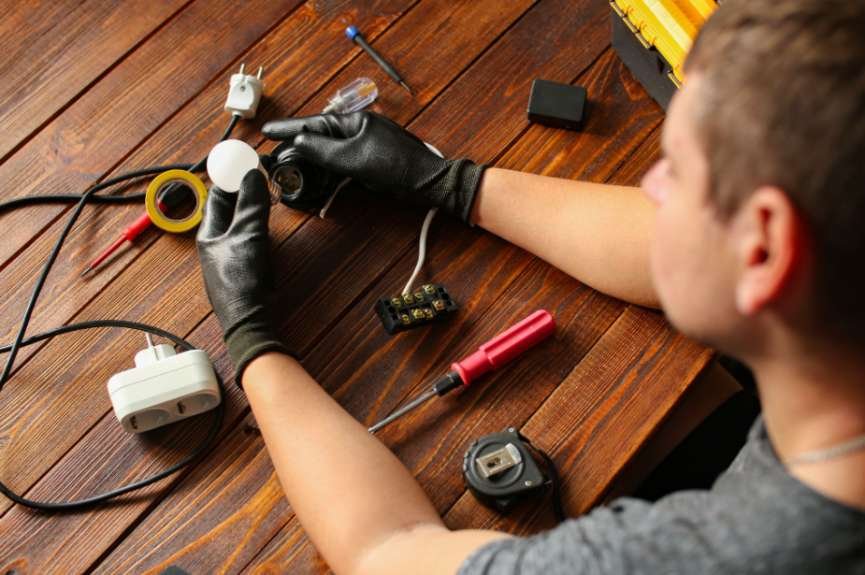
When practical, an individual or dedicated branch circuit is a better workshop setup because the welder is not competing with other high-demand equipment.
For a home welding workspace, the right table setup also matters, including choosing a welding table hole size for clamps that works with your fixturing needs.
If you use an existing household circuit, avoid operating other heavy loads on it while welding. The owner’s manual should determine the requirement. If the manufacturer calls for an individual 20A circuit, follow that specification.
Can Turning Down the Welder Stop Breaker Trips?
Lower welding output may reduce input demand on some machines, but turning the output down does not make an undersized circuit acceptable.
I also would not assume every 120V welder is limited to sheet metal. Forney rates its 120V Easy Weld 141 FC-i for single-pass mild steel from 24 gauge through 1/4 inch. Actual capacity varies with the machine, process, joint preparation, consumables, and settings.
Can I Use an Extension Cord With a Welder?
Extension cords can create voltage drop, especially when they are long or undersized. That can hurt welder performance, while an overloaded cord can become hot.
Some welding guidance recommends short, heavy-duty 10- or 12-gauge cords for high-current applications, but I would not treat either size as universal.
The correct extension cord gauge for a welder depends on input current, voltage, cord length, and the manufacturer’s requirements
The correct cord depends on input current, voltage, length, plug configuration, and manufacturer instructions.
Whenever possible, I prefer plugging the machine directly into a suitable receptacle.
Can a 240V Welder Plug Into a Standard 120V Outlet?
No. A 240V-only welder requires an appropriate 240V supply. A simple plug adapter cannot turn a standard 120V circuit into the correct electrical source.
US homes commonly use 240V circuits for equipment such as electric dryers and ranges, but an existing 240V receptacle does not automatically work for a welder. The receptacle, breaker, wiring capacity, grounding, and welder requirements all need to match.
For frequent welding or higher-output work, a properly installed dedicated 240V circuit may be the better long-term option.
Why Is My Welder Making the Outlet Hot?
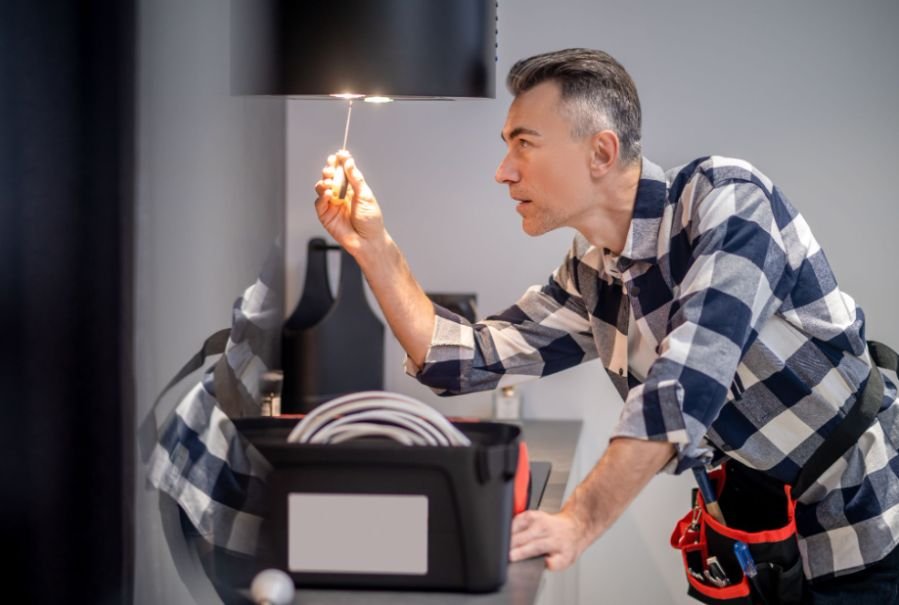
A warm, discolored, loose, buzzing, or burning-smelling receptacle is a warning sign. The Electrical Safety Foundation International identifies frequent breaker trips, warm or discolored wall plates, buzzing, and burning odors as signs of possible electrical overload or wiring problems.
If you notice those symptoms, stop using the circuit and have a qualified electrician inspect it.
Frequently Asked Questions
1. Can a 110V welder plug into a normal outlet?
Usually, a welder described as 110V or 120V may be designed for household power, but you still need to confirm its input current and circuit requirements.
2. Why does my welder trip the breaker when I strike an arc?
The welder may be drawing more input current, another device may share the circuit, or the circuit or equipment may have a problem. Repeated trips should be investigated.
3. Do MIG welders need a special outlet?
Some compact 120V MIG welders use household receptacles. Larger or 240V MIG welders may require a dedicated circuit and a different receptacle.
4. Is 120V or 240V better for a home welder?
I like 120V for portability and light home-shop work. A compatible 240V setup usually makes more sense when the machine needs greater input capacity, or you regularly weld at higher output.
Final Answer
When readers ask me whether I can plug a welder into a regular outlet, my answer is yes only when the welder is rated for the available voltage and the entire circuit meets its electrical requirements. Check input voltage, input amperage, breaker requirements, plug type, and the owner’s manual first.
A properly matched 120V setup can be convenient for home repairs and light fabrication. If you have repeated breaker trips, need a new 240V circuit, or are unsure about the wiring, I would have a qualified electrician evaluate the setup rather than forcing the welder onto an unsuitable outlet.