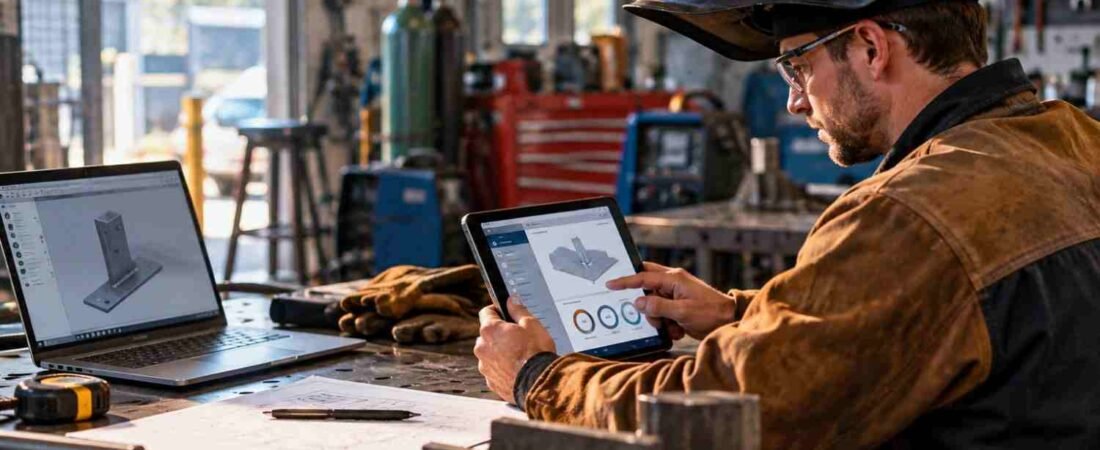
I have noticed how often welding work now involves a screen alongside the hood, gloves, and torch. A welder may check a procedure on a tablet, review machine settings on a display, or record a completed joint before moving to the next task. The craft is still hands-on, but the workflow around it is becoming more connected.
I have also found that digital tools make the most sense when they solve a real problem. Faster documentation, better parameter control, easier training, and clearer quality records can save time without taking practical judgment out of welding. The useful question is not whether a shop has the newest technology, but whether it helps people work more consistently.
Welding Machines Are Becoming Data Tools
Modern power sources can do more than generate an arc. Advanced systems can store programs, display operating information, and connect with software that captures data such as voltage, amperage, wire feed speed, and arc-on time.
That data gives welding professionals a clearer picture of production. A shop can identify trends, investigate unusual results, and compare performance with established procedures. Real-time welding data is useful where traceability and proof of specifications matter.
The value is not the number of data points collected. It is what people do with them. If a recurring parameter variation points to a training issue, equipment problem, or process bottleneck, the information becomes actionable.
Digital Documentation Keeps Quality Records Organized
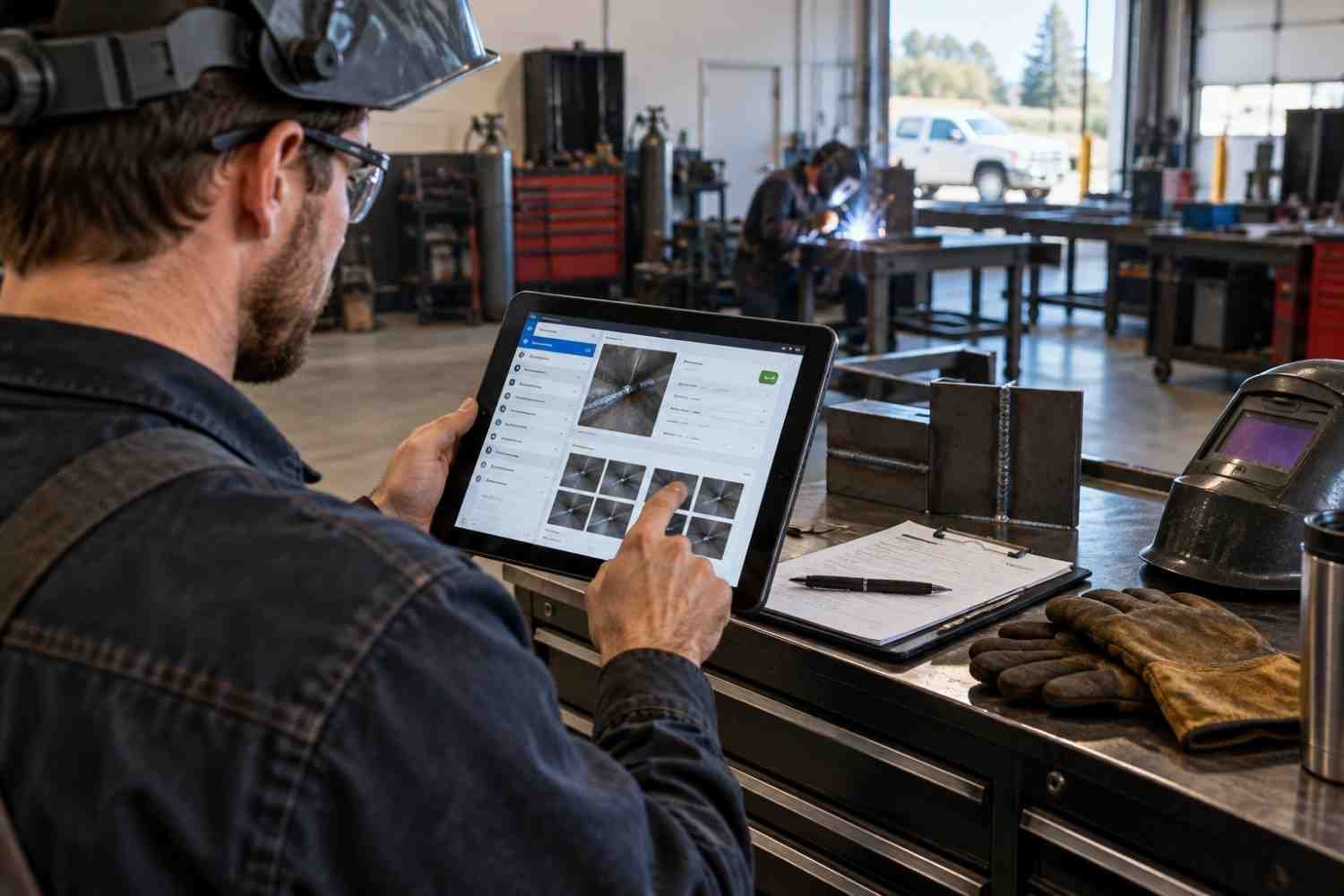
Paper records can work, but they become difficult to manage on large projects. Digital documentation can connect a weld joint with its procedure, inspection results, photographs, repair history, and other records.
Digital WPS and PQR management can simplify revision control. Authorized users can access current procedures and qualification information from a centralized system, reducing administrative mistakes.
Digital inspection also helps. An inspector can enter findings, attach photographs, and associate results with a specific job or weld identifier, creating a searchable history.
Mobile Tools Put Useful Information Within Reach
A smartphone or tablet can become a practical reference tool. Welding calculator apps can help with settings based on material, thickness, process, or consumable. Other tools assist with filler metal estimates, gas calculations, equipment information, or troubleshooting.
The advantage is simple: less time spent hunting through manuals. Still, digital recommendations should support professional judgment, not replace it. Joint design, material condition, procedures, and site conditions still matter.
Connected equipment adds another layer. Moving machine and production data into software can reveal idle time, maintenance needs, or delays that are difficult to spot from the welding booth.
Simulation Makes Training More Efficient
Welding training consumes coupons, wire, gas, electricity, and instructor time. Virtual and augmented reality systems can reduce some of that cost while giving beginners a place to practice fundamentals.
Simulation can help users practice travel speed, torch angle, positioning, and hand coordination before live welding. Some systems provide immediate feedback on technique.
These tools do not replace real welding experience. Metal behaves differently under an actual arc, and experienced welders develop judgment that cannot be reduced to a screen score. Simulation simply provides more practice before expensive materials are involved.
Digital Skills Are Becoming Part of the Trade
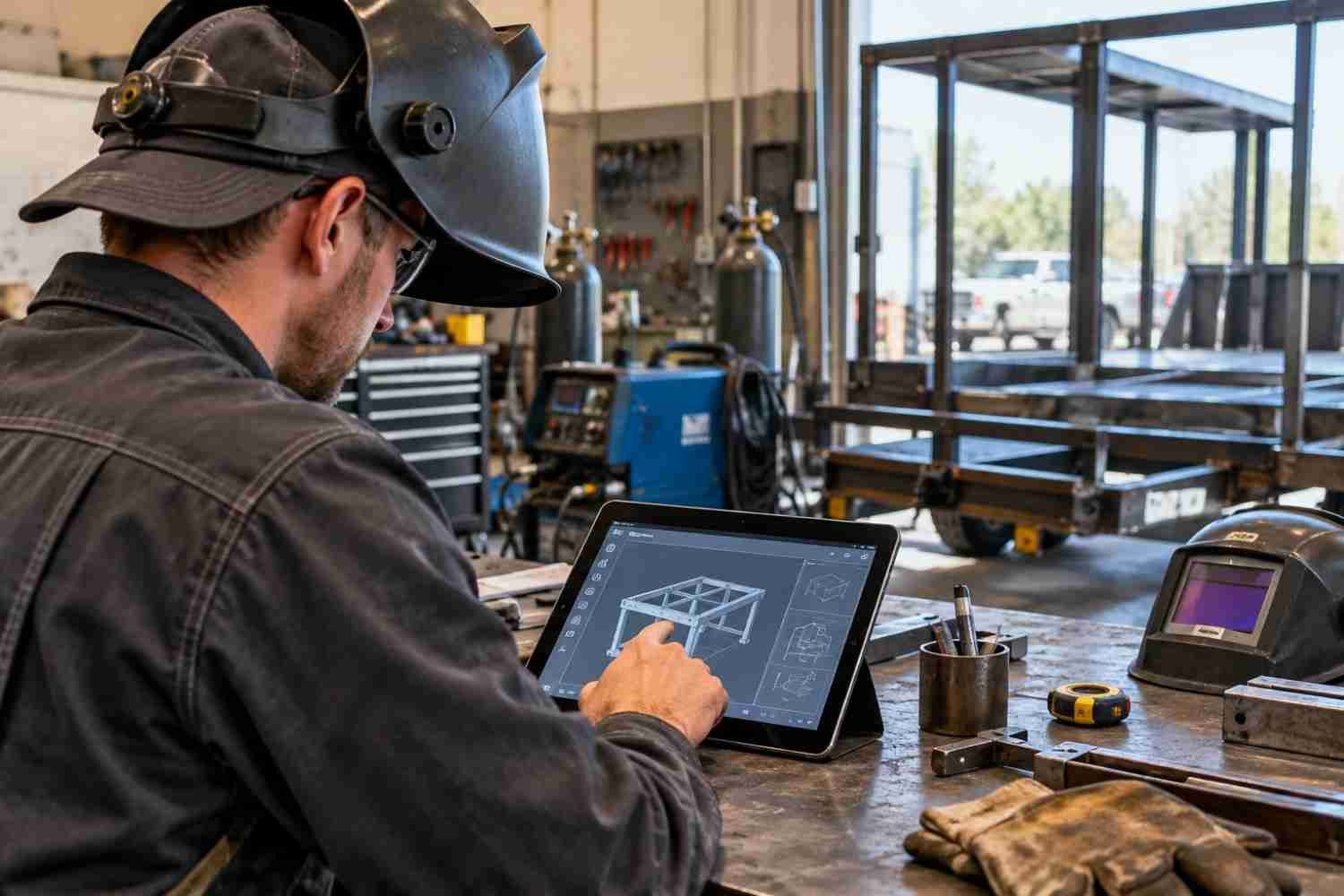
Technical welding ability remains essential, but digital confidence is increasingly useful. Professionals may need to interpret machine data, navigate a digital WPS, enter inspection information, or troubleshoot connected equipment.
That is why technology skills modern welders need increasingly include data interpretation, mobile technology, digital documentation, and familiarity with connected equipment. These skills help professionals understand what is happening around the weld.
Strong workers will not necessarily know every new app. They will combine technology with welding fundamentals and recognize when a digital recommendation does not match the physical situation.
Technology Should Never Replace Safety
More connected equipment does not make welding automatically safer. A machine can monitor parameters, but electrical risks, fumes, radiation, heat, and fire still require proper controls.
That makes welding electrical safety practices especially relevant as equipment becomes more sophisticated. Welders still need to inspect leads and connections, use proper protective equipment, follow manufacturer instructions, and maintain equipment. Digital features should complement safety procedures, not encourage shortcuts.
A screen warning helps, but it does not replace checking the work area or understanding job hazards.
Choosing Digital Tools That Earn Their Place
The best technology is not always the most expensive. A small fabrication shop may gain more from a reliable mobile calculator and organized digital records than a complex platform it rarely uses.
Before adopting a tool, teams should ask what problem it solves, who will use it, whether it works with existing equipment, and how the information will be used. Training also matters.
A practical rollout usually works better than changing everything at once. Start with one workflow, measure results, then expand if the improvement is clear.
Why Practical Skill Still Leads the Way
Digital technology is changing how welding professionals measure, document, inspect, train, and manage work, but the trade remains hands-on. A clean weld still depends on preparation, technique, materials, settings, and judgment. A screen can provide information, but someone must understand it.
The most useful digital tools make skilled work easier to repeat, verify, and improve. When technology stays connected to practical experience, it becomes a quiet advantage.
FAQs: A Practical Look at Digital Tools for Modern Welding Professionals
1. What digital tools do welders use most often?
Common tools include connected machines, parameter calculators, digital WPS systems, inspection apps, maintenance platforms, and welding data software. The right combination depends on the job, production scale, type of work being performed, and shop workflow in practice.
2. Can digital tools improve weld quality?
Yes. Monitoring parameters and keeping accurate records can identify deviations, support consistent procedures, and make quality problems easier to investigate. They work best with experienced oversight and established welding procedures and quality requirements for projects.
3. Are welding apps useful for field work?
They can be. Calculator and reference apps provide quick access to settings, consumable information, and technical guidance. Users should verify recommendations against approved procedures and actual job requirements before welding or changing settings during production.
4. Will digital technology replace skilled welders?
No. Automation may change some tasks, but skilled welders remain essential for setup, judgment, troubleshooting, fit-up, quality decisions, and real-world adaptation. Human judgment remains especially important when conditions change unexpectedly or equipment behaves differently than expected.