Hot work in the field accounts for thousands of job site fires each year, yet the vast majority of these incidents stem from simple, preventable oversights. Performing high-energy arc welding outdoors or on an active construction site inherently introduces unpredictable environmental variables—from shifting wind gusts to damp surfaces. Deploying a structured field welding safety checklist transforms a chaotic, hazard-prone work environment into a controlled, highly compliant zone before the first arc strikes.
Field fabrication removes the controlled boundaries of a shop floor. Out in the elements, minor oversights carry major consequences: a stray spark traveling across a windy clearing can easily ignite nearby brush, or an ungrounded lead draped across damp soil can deliver a lethal shock. Standardizing pre-operational checks protects personnel, secures surrounding infrastructure, and keeps field operations aligned with federal mandates.
The Reality of Field Welding Risks
Outdoor and job-site welding involves extreme heat, high voltages, toxic fumes, and intense ultraviolet radiation. The National Fire Protection Association (NFPA) reports that hot work operations cause thousands of industrial fires annually, resulting in millions of dollars in direct property damage.
Unlike shop environments built with fireproof isolation booths and dedicated fume extraction, open-air jobsites demand constant risk reassessment.
FIELD HOT WORK HAZARDS
│
┌───────────────────┬────────────┴────────────┬───────────────────┐
▼ ▼ ▼ ▼
Fire Hazards Electrical Shock Fume Exposure Radiant Energy
(Sparks, Slag) (Wet Soil, Leads) (Coated Metals) (UV Arc Flash)
The Occupational Safety and Health Administration (OSHA) explicitly enforces strict precautions for hot work under standard 29 CFR 1910.252. Failing to properly inspect gas equipment, clear job-site debris, or supply clean air during field operations directly exposes workers to acute respiratory trauma and severe burns.
Essential Field Welding Safety Checklist
Executing a comprehensive checklist prior to striking an arc ensures every critical safety system remains fully operational.
1. Worksite Containment & Fire Safeguards
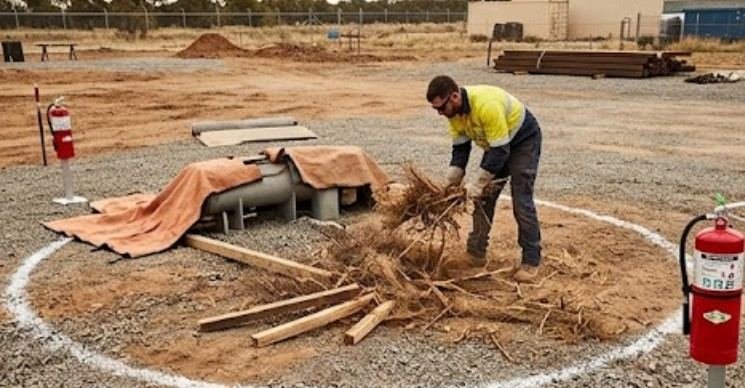
- Establish a 35-Foot Clear Zone: Remove all combustible items—including timber, dry brush, trash, trash bins, and fuel cans—within a 35-foot radius of the work area.
- Deploy Protective Coverings: If static combustibles cannot be moved, cover them entirely with certified flame-retardant fire blankets or welding pads.
- Fire Suppression Readiness: Station a fully charged, inspected ABC-rated dry chemical fire extinguisher within immediate physical reach of the welder and fire watch personnel.
- Mitigate Weather Hazards: Assess ambient conditions. Wind speeds exceeding 10 mph can blow away shield gas and carry hot slag beyond the clear zone. Damp ground requires non-conductive rubber matting to prevent electrical shock.
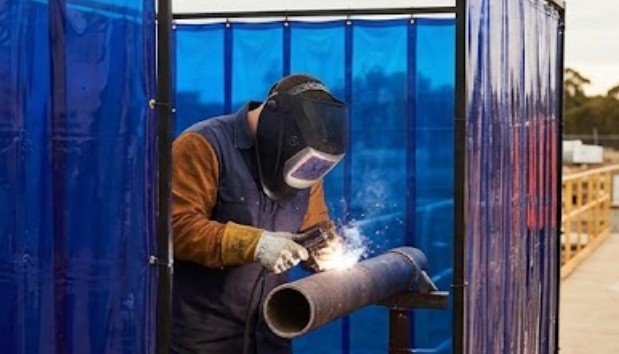
- Erect Arc Flash Shielding: Enclose the immediate welding station with non-combustible UV-blocking screens or heavy-duty curtains to shield surrounding site personnel from flash burns.
2. Gas Cylinders, Lines, and Power Delivery
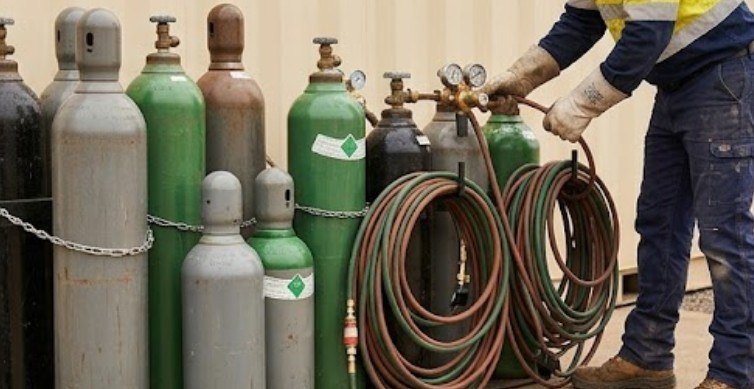
- Secure Cylinder Storage: Ensure all compressed gas cylinders remain chained upright to an engineered cart or structural column, with protective safety caps screwed tight when not actively connected.
- Inspect Hoses and Regulator Gauges: Test lines for wear, cracking, or dry rot. Check all connections using a non-corrosive leak detection solution, and verify dual-line flashback arrestors are securely installed at both the regulator and torch ends.
- Verify Direct Metal Grounding: Secure the work clamp directly to clean, bare metal on the target workpiece to establish a low-resistance path back to the power source.
- Manage Lead Routing: Route primary electrical leads and gas hoses overhead or along designated pathways to eliminate trip hazards and prevent heavy equipment from crushing lines.
3. Personal Protective Gear & Respiratory Controls
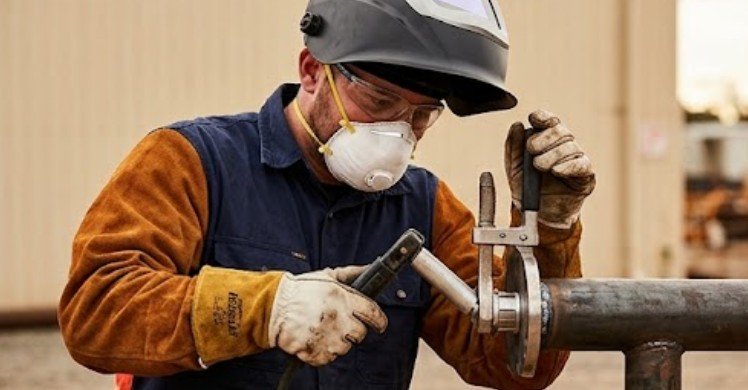
- Select the Correct Shade Helmet: Utilize an auto-darkening helmet equipped with the proper shade rating (typically shade 9 to 13) matched to your specific process and amperage, verified alongside safety glasses worn underneath.
- Wear Flame-Resistant Apparel: Wear heavy-weight leather, Kevlar, or treated cotton long-sleeve apparel. Eliminate rolled cuffs, open pockets, or frayed edges where hot metal can nest.
- Put On Specialized Boots and Gloves: Put on high-top leather work boots (laced securely to keep sparks out) alongside durable, flame-resistant leather welding gloves.
- Employ Respiratory Protection: Use a NIOSH-approved particulate respirator (such as an N95 or P100 mask) under the welding hood, particularly when working with stainless steel, galvanized pipe, or lead-painted structures.
Equipment & Environment Safety Standards
Selecting appropriate eye protection and managing thermal hazards depends entirely on your process and working conditions.
| Parameter / Hazard | Standard Requirement | Recommended Action / Value |
| Combustible Clearance Zone | OSHA 1910.252(a)(2)(vii) | Minimum 35-foot perimeter around hot work |
| SMAW (Stick) Filter Lens | ANSI Z87.1 | Shade 10 to 12 (for 80–500 Amps) |
| GMAW/FCAW Filter Lens | ANSI Z87.1 | Shade 10 to 13 (for 60–500 Amps) |
| GTAW (TIG) Filter Lens | ANSI Z87.1 | Shade 10 to 12 (for 50–500 Amps) |
| Post-Welding Fire Watch | NFPA 51B | Minimum 30-minute continuous monitoring |
Critical Execution Steps Before Striking the Arc
Safety controls require strict sequence management to be effective.
[ Step 1: Obtain Hot Work Permit & Inspect Area ]
│
▼
[ Step 2: Establish 35-ft Buffer & Fire Blanket Covers ]
│
▼
[ Step 3: Inspect Cables, Cylinders & Flashback Arrestors ]
│
▼
[ Step 4: Don Respiratory & Flame-Resistant PPE ]
│
▼
[ Step 5: Strike Arc & Initiate Continuous Fire Watch ]
- Conduct a Formal Site Assessment: Verify the location matches all specifications detailed on your daily hot work permit.
- Isolate Potential Fuel Sources: Sweep the floor, wet down wooden decking if permitted, and seal floor drains or wall openings within the 35-foot radius.
- Inspect the Torch and Leads: Ensure zero copper wire is exposed through cracked insulation. Replace damaged leads immediately rather than patching them with electrical tape.
- Equip Fit-Tested Respiratory Gear: Review metal safety data sheets (SDS) to confirm if heavy metals like cadmium, beryllium, or hexavalent chromium are present, requiring specialized air-purifying respirators.
- Assign a Dedicated Fire Watch: Ensure a trained individual remains positioned near the site during the operation and stays with welding safety for on-site for at least 30 minutes after all hot work concludes.
Advanced Field Considerations and Common Pitfalls
While standard checklists cover basic preparation, complex field sites introduce subtle variables that easily compromise safety if overlooked.
- Confined Space Hazards: When welding inside tanks, vaults, or trenches, atmospheric testing is mandatory under the National Institute for Occupational Safety and Health (NIOSH) guidelines. Welding gases displace breathable air, turning enclosed spaces into oxygen-deficient environments rapidly.
- Coated and Galvanized Metals: Heating zinc-coated (galvanized) steel releases zinc oxide fumes, leading to acute metal fume fever. Always grind away protective coatings 1 to 2 inches back from the weld zone before applying heat.
- Grounding Loop Mistakes: Clamping a grounding lead to a secondary structure instead of directly to the workpiece forces electrical current to return through unexpected paths—potentially frying crane cables, pipe hangers, or sensitive digital sensors.
- Weather Distortions: Strong gusting winds disrupt shielding gas coverage, leading to internal weld porosity. If structural integrity is paramount, install rigid weather huts rather than lightweight tarps that blow away easily.
Proper safety preparation directly impacts execution quality. Using an efficient system for job management, such as a specialized field service management application, helps teams schedule inspections, complete compliance forms digitally, and keep field crews aligned with safety protocols.
Frequently Asked Questions
1. What is the 35-foot rule in welding safety?
The 35-foot rule requires clearing or protecting all combustible materials within a 35-foot radius of hot work to prevent stray sparks and slag from starting fires.
2. How long must a fire watch stay after welding ends?
A trained fire watch must remain at the work area for at least 30 minutes after welding finishes to detect and extinguish smoldering embers.
3. Do I need a respirator for outdoor field welding?
Yes, if you are welding galvanized steel, stainless steel, or coated alloys, or if natural ventilation is insufficient to keep fumes out of your breathing zone.
4. What filter shade is required for outdoor field welding?
Most outdoor arc welding requires a shade 10 to 13 filter, depending on the welding process (SMAW, GMAW, FCAW) and the operating amperage.
A thorough field welding safety checklist serves as your front-line defense against fire, structural failure, and serious workplace injury. By carefully inspecting your surroundings, securing gas cylinders, isolating electrical leads, and wearing proper respiratory gear, you reduce field risks to manageable levels. Consistency is key: run through these crucial checks before every shift to ensure every worker goes home safe at the end of the day.