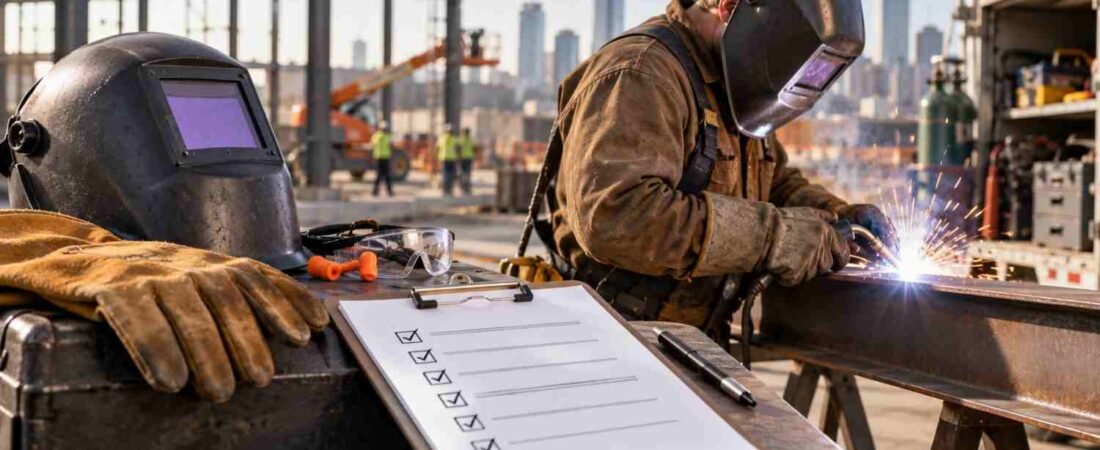
I’ve noticed that welding jobs rarely become dangerous because someone forgot what a welding helmet does. The bigger problem is often what happens around the weld: a combustible box, damaged lead, poor ventilation, or another worker walking into the arc. A practical welding safety checklist helps catch those details before they become incidents.
I’ve also found that a checklist works best when it follows the job itself. Checking PPE after the machine is running is too late, just as shutting down without checking for hidden heat can leave a risk behind. A good routine moves from site preparation to equipment inspection, active welding, and the final walk-through.
Start With a Job-Site Hazard Check
Before striking an arc, inspect the entire work area, not just the piece being welded. Identify combustible materials, flammable liquids, coatings, openings, electrical hazards, unstable surfaces, and paths where sparks or hot slag could travel.
OSHA requires fire prevention measures and says hazards that cannot be removed must be protected from heat, sparks, and slag. Suitable extinguishing equipment must be immediately available. Confirm whether the site requires a hot work permit or authorization.
Conditions can change during the job. Wind can carry sparks, another crew may move materials nearby, and temporary barriers can shift. Reassess when the work location or surrounding activity changes.
Prepare the Area for Fire Prevention
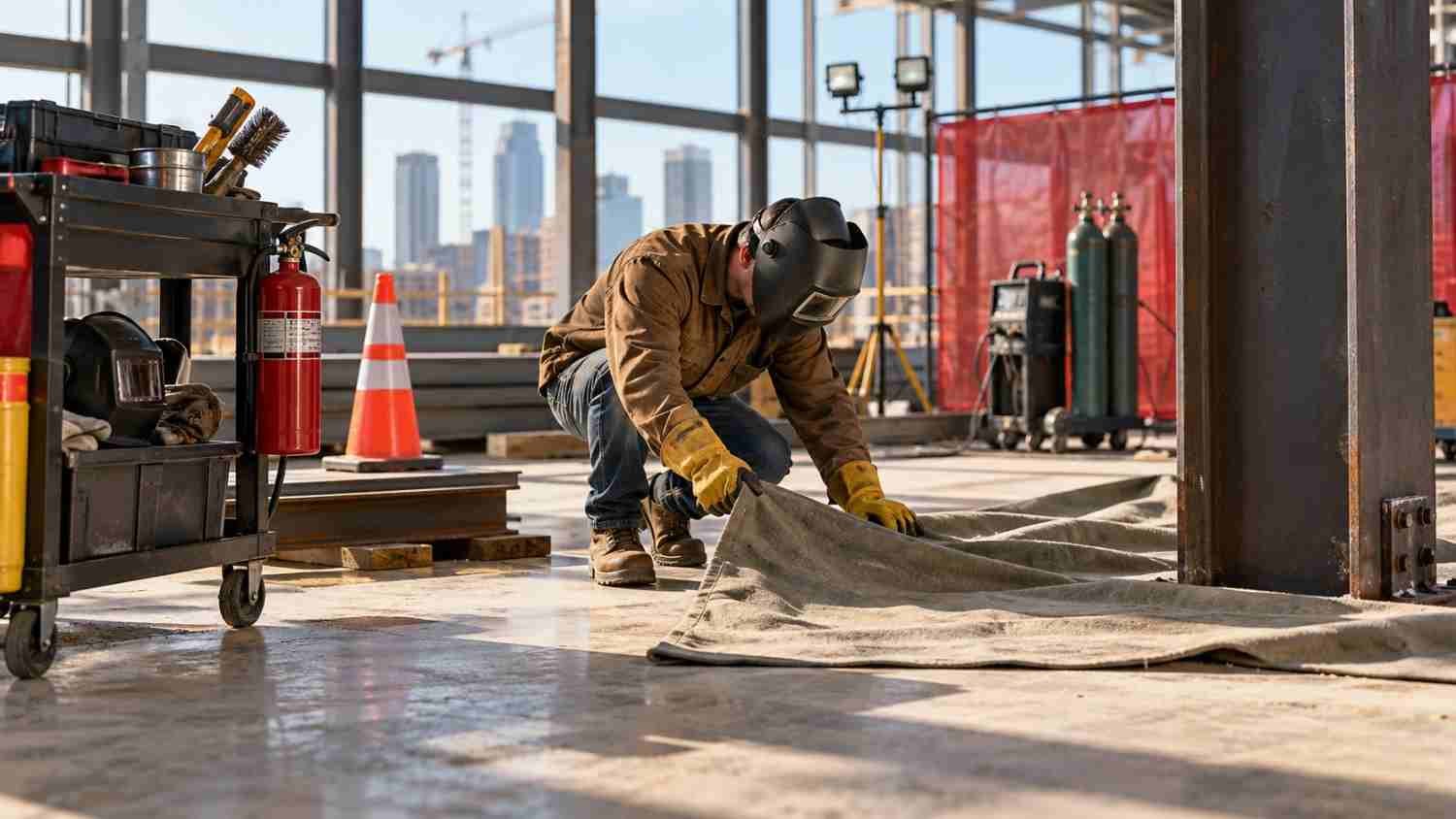
The familiar 35-foot clearance is a useful starting point for hot work. OSHA identifies combustible materials within 35 feet as a condition that can require a fire watch, particularly when sparks can reach them. Remove movable combustibles or use fire-resistant barriers when they cannot be moved.
Set up welding screens where other workers could be exposed to arc radiation. Keep an appropriate fire extinguisher ready and accessible. Dry floors, organized tools, and clear walkways reduce hazards while helping the crew spot sparks or smoldering material.
Do not weld where flammable vapors, heavy dust, or similar conditions create an ignition risk.
Inspect Welding Equipment Before Use
A welding machine can look fine while having a damaged cable, loose connection, or compromised insulation. Inspect leads, cords, electrode holders, torches, connectors, and grounding connections. Stop with equipment showing exposed conductors, severe damage, overheating, or other defects.
Check that the power source and accessories fit the job. Keep electrical connections dry and protected, especially in wet conditions.
Gas equipment needs its own inspection. Secure cylinders upright, protect valve assemblies, and inspect regulators and hoses for damage. If a leak is suspected, use an approved detection method, never an open flame. Follow site requirements for gas separation and handling.
Wear PPE That Matches the Work
PPE should match the process, material, position, and surrounding hazards. A welding helmet with the correct filter shade protects against radiation, while safety glasses add protection from flying particles.
Wear sound welding gloves and flame-resistant clothing that covers exposed skin. Avoid features that can trap sparks. Leather footwear helps protect against hot metal, while hearing protection may be needed during grinding.
Respiratory protection is not a substitute for controlling fumes at their source. OSHA emphasizes mechanical or local exhaust ventilation when needed, with additional controls for certain toxic metals and confined spaces. Required respiratory protection should be selected and used under the employer’s respiratory protection program.
Control Fumes, Arc Radiation, and Nearby Exposure
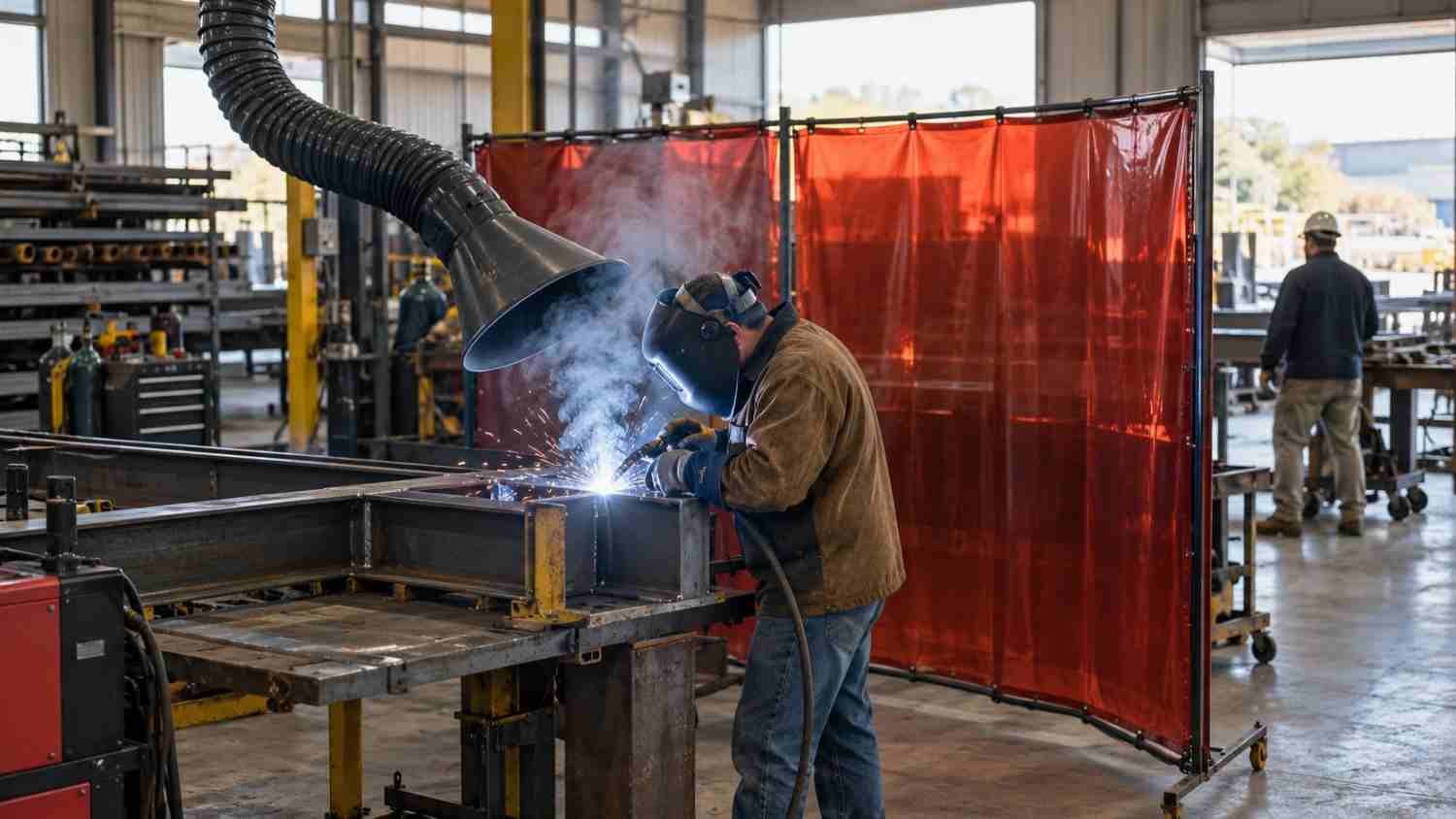
Ventilation means more than opening a door. Position local exhaust close to the welding point and make sure contaminated air is not pulled toward workers. In confined spaces, ventilation and emergency planning become especially important.
Protect people who are not wearing welding protection. Screens, barriers, and controlled access can prevent bystanders from viewing the arc or getting hit by sparks and spatter. Keep nearby crews informed when welding is active.
If the job involves coated, painted, galvanized, stainless, or other hazardous materials, identify the material before heating it. The material can change the required controls.
Build Safer Habits Into Mobile Work
A changing job location can make safety checks easier to overlook. When equipment moves between projects, confirm ventilation, fire protection, electrical conditions, cylinder placement, access, and barriers instead of assuming the previous setup still applies.
That is where mobile welding safety procedures can become part of the normal workflow. The goal is making essential checks happen consistently when the environment changes from a shop floor to a construction site, roadside repair, or temporary work area.
Shut Down and Check the Area Again
The final weld does not automatically mean the hazard is gone. Turn off equipment according to site procedures, close gas valves when appropriate, and store leads and hoses so they do not create trip hazards.
Remove hot scraps and electrode stubs safely, then inspect nearby surfaces, openings, and concealed spaces for heat or smoldering material. OSHA calls for a fire watch for at least 30 minutes after welding or cutting when specified conditions apply. Site rules may require longer monitoring. Follow the stricter site rule when conditions remain hazardous.
Why Consistency Matters on Every Job Site
The strongest welding safety checklist is one workers can actually use. It should be clear enough for every task, yet flexible enough for different materials, locations, equipment, and crews. More importantly, it should encourage workers to stop when conditions change rather than treating a completed checklist as permission to continue.
Safety becomes more reliable when preparation, inspection, protection, and shutdown work as one process. A few deliberate checks before the first arc can prevent a damaged cable, uncontrolled spark, or unnoticed hot spot from becoming the most memorable part of the job.
FAQs: A Practical Welding Safety Checklist for Job Sites
1. What should be checked before welding starts?
Inspect the work area, remove or protect combustibles, confirm fire protection, check ventilation, inspect equipment, and make sure required PPE and permits are in place.
2. Why is a 35-foot clearance important?
It helps reduce the chance that sparks, slag, or heat will ignite combustible materials. The exact controls depend on site conditions and applicable requirements.
3. Is ventilation always required for welding?
Ventilation needs depend on the location, material, process, and exposure conditions. Confined spaces and certain metals can require stronger controls.
4. How long should a fire watch continue?
OSHA’s general industry rule specifies at least 30 minutes after welding or cutting when fire-watch conditions apply. A site may require longer monitoring. Follow the stricter site rule when conditions remain hazardous.