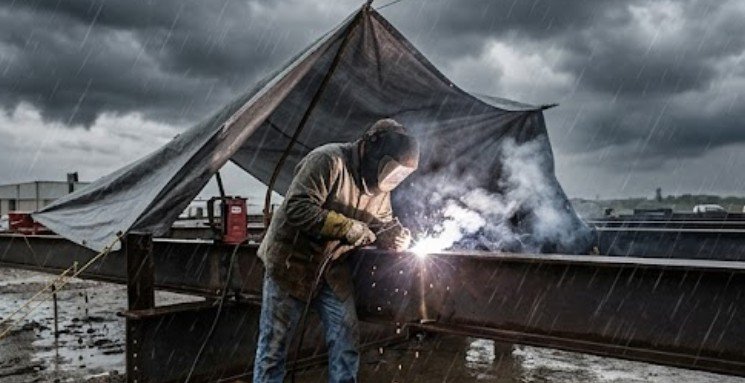
According to insurance industry data and fire safety audits, nearly 60% of field welding structural defects and project delays stem not from operator error, but from uncontrolled environmental variables and field equipment constraints.
Mobile welding delivers essential fabrication, repair, and emergency structural work directly to job sites across the United States. However, taking a rig out of a controlled facility introduces a complex matrix of operational bottlenecks. Understanding what are the limitations of mobile welding helps project managers, site supervisors, and equipment owners make smarter decisions about when to call a mobile rig and when to transport components to a dedicated shop.
1. Environmental Hazards and Uncontrolled Weather
When welding occurs inside a fabrication shop, ambient temperature, air velocity, and atmospheric moisture are tightly regulated. On a field site, nature dictates the working conditions.
Shielding Gas Displacement
Gas Metal Arc Welding (GMAW/MIG) and Gas Tungsten Arc Welding (GTAW/TIG) rely on an uninterrupted shield of inert gas (such as argon or carbon dioxide mixes) to protect the molten weld pool from atmospheric contamination.
Even a mild breeze of 4 to 5 miles per hour can blow away shielding gas. This introduces oxygen and nitrogen into the weld puddle, causing severe porosity, embrittlement, and immediate structural failure. Field welders must either construct temporary wind baffles or switch to self-shielded flux-cored arc welding (FCAW-S) or shielded metal arc welding (SMAW/stick), both of which tolerate higher ambient air movement but require extensive post-weld slag cleanup.
Thermal Shock and Hydrogen Cracking
Sub-zero temperatures and high humidity create distinct metallurgical risks:
- Rapid Quenching: Cold base metals pull heat away from the weld zone too quickly, resulting in brittle microstructures like martensite.
- Hydrogen-Induced Cracking: Moisture from rain, dew, or frost breaks down in the arc to release free hydrogen, which lodges in the weld grain boundaries and causes cold cracking hours later.
- AWS Code Restrictions: The American Welding Society (AWS) D1.1 Structural Welding Code prohibits welding on base metals below $0^\circ\text{F}$ ($-18^\circ\text{C}$) and mandates strict preheat and interpass temperature maintenance whenever ambient conditions fall below $32^\circ\text{F}$ ($0^\circ\text{C}$).
2. Equipment, Power, and Capability Bottlenecks
A 10,000-pound service truck might look like a workshop on wheels, but it cannot carry the heavy industrial machinery found in a brick-and-mortar facility.
| Operational Factor | Fixed Fabrication Shop | Mobile Welding Rig |
| Primary Power Source | High-voltage three-phase grid | Engine-driven generator (DC/AC) |
| Max Material Thickness | Unlimited (via high-amp submerged arc or multi-head GMAW) | Limited by generator kVA output |
| Material Prep Equipment | Heavy hydraulic shears, CNC plasma tables, 100-ton presses | Angle grinders, beveling tools, handheld oxy-fuel torches |
| Precision Positioning | Hydraulic rotators, overhead cranes, precision manipulators | Manual chain falls, jacks, portable rigging |
Generator Output Limitations
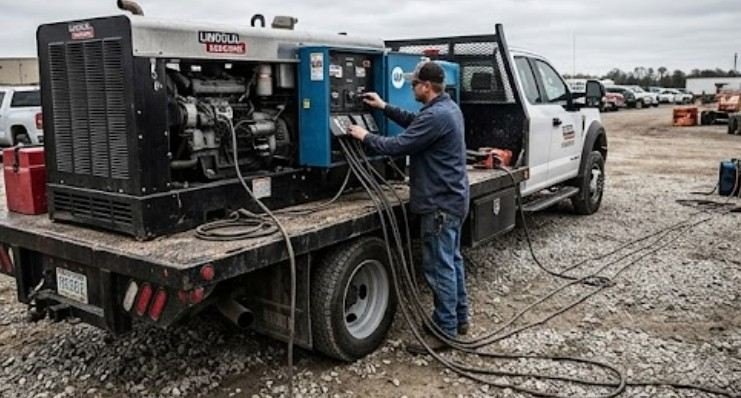
Shop welders draw continuous high-amperage power from three-phase industrial electrical grids. Mobile operations depend on engine-driven generators.
If a field repair requires gouging thick plate or running high-duty-cycle submerged arc welding, a standard 10kW to 12kW generator rig will quickly run out of headroom. Lower amperage availability caps the maximum deposition rate, making thick-section structural joins significantly slower and more expensive in the field.
Heavy Processing Gear Deficit
Field operators cannot bring CNC plasma tables, heavy plate rolls, or high-tonnage hydraulic press brakes to a job site. Complex joint preparations, precision beveling, and major structural straightening must be performed manually using oxy-fuel torches and angle grinders, which increases labor hours and variability.
3. Spatial, Spatial-Reach, and Accessibility Limits
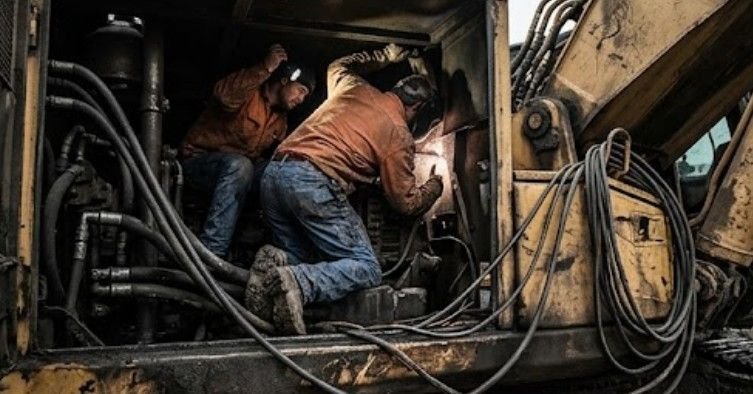
Mobile welding frequently means working in cramped quarters, under heavy earthmoving equipment, or elevated on staging.
Torch Angles and Physical Clearances
To establish a sound weld bead, an operator needs a clear torch angle (typically $10^\circ$ to $15^\circ$ travel angle) and a work envelope with roughly 12 to 18 inches of unobstructed clearance.
Inside crowded engine bays, structural trusses, or subterranean utility vaults, physical obstruction often prevents the welder from properly viewing the puddle or maintaining correct torch alignment. This increases the risk of defects like undercut and incomplete sidewall fusion.
Power Source (Rig) ===[ Voltage Drop Across Extended Lead ]===> Welding Torch (Work Site)
(Loss of Arc Stability)
Lead Length and Voltage Drop
When a mobile truck cannot park directly adjacent to the work area, operators run long welding leads (cables). Electrical resistance over distance causes a significant voltage drop.
Running 200 feet or more of standard welding cable can drop output voltage by several volts at the arc. This forces the operator to manually recalibrate machine settings or use heavier-gauge, expensive copper leads to prevent arc instability and inconsistent penetration.
4. Compliance, Site Safety, and Permitting Delays
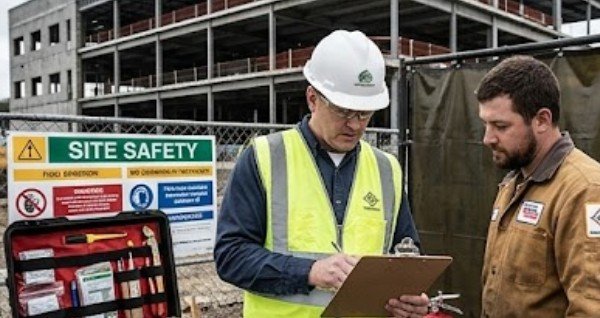
Working outside a controlled safe welding facility job site triggers strict regulatory and safety frameworks that can pause operations before an arc is ever struck.
[ Arrive On Site ]
│
▼
[ Site Inspection (35-ft Radius) ]
│
▼
[ Relocate/Cover Combustible Materials ]
│
▼
[ Authorize Hot Work Permit ]
│
▼
[ Execute Mobile Weld ]
│
▼
[ Mandatory Fire Watch (30–60 Mins) ]
Hot Work Permits and Clearance Zones
Under rules enforced by the Occupational Safety and Health Administration (OSHA) under 29 CFR 1910.252, and guidance from the National Fire Protection Association (NFPA) via NFPA 51B, field welding outside designated safe shop areas requires a formal Hot Work Permit. Requirements include:
- Clearing or shielding all flammable materials within a 35-foot radius.
- Covering floor openings, cracks, and wall ducts.
- Assigning a dedicated fire watch who performs no other duties during welding and remains on site for 30 to 60 minutes after hot work finishes.
Commercial Insurance and Site Certification
Industrial and municipal worksites regularly prohibit mobile contractors from starting work without proving specific certifications. Welder performance qualifications (such as AWS 3G/4G or ASME Section IX pipe certifications) must match the exact joint geometry and material grade. Furthermore, commercial general liability and rig insurance coverage must often meet multi-million-dollar limits before access is granted.
Practical Decision Matrix: Mobile Rig vs. In-Shop Fabrication
Evaluating whether to bring a mobile rig to the site or transport the assembly to a fixed workshop comes down to weight, scope, precision, and environment:
- Choose Mobile Welding If:
- The structure is stationary, embedded, or too large to transport legally (e.g., building frames, heavy bridge girders, storage tanks).
- Emergency equipment downtime costs exceed the higher hourly rates of mobile service.
- Work involves straightforward structural repairs, hardfacing, or field tie-ins.
- Choose a Fixed Shop If:
- Tight geometric tolerances are required.
- Highly reactive metals (like titanium, aluminum, or stainless alloys) require controlled shielding or cleanroom-like environments.
- High-volume repetitive manufacturing is needed where automation and CNC machinery drastically drop unit costs.
Frequently Asked Questions
1. Can you weld in the rain with a mobile setup?
No. Welding in active rain presents extreme risk of electric shock to the operator. Water also introduces hydrogen into the molten weld pool, causing severe micro-cracking and immediate structural failure.
2. What is the maximum distance a mobile welder can run leads?
Most engine-driven rigs can run leads up to 150–200 feet using standard #2/0 cable. Beyond 200 feet, voltage drop requires stepping up to larger #3/0 or #4/0 cable to prevent arc degradation.
3. Why is field TIG welding rare for heavy mobile repairs?
TIG welding requires immaculate metal cleanliness and complete shielding gas coverage. Field winds readily disperse the gas, and outdoor surface rust makes the process slow and prone to contamination compared to stick or flux-core welding.
4. What safety gear is unique to mobile welding rigs?
In addition to standard helmets and leathers, mobile rigs must carry portable fire extinguishers, temporary welding screens to shield bystanders from UV flash, toxic fume extraction fans, and gas detectors for confined spaces.
While mobile welding provides incredible versatility and rapid field response, it operates under real technical constraints. Environmental exposure, power caps, tool limitations, and strict site safety regulations mean mobile welding works best as a targeted solution—not a complete replacement for the precision, capacity, and control of a dedicated manufacturing shop.