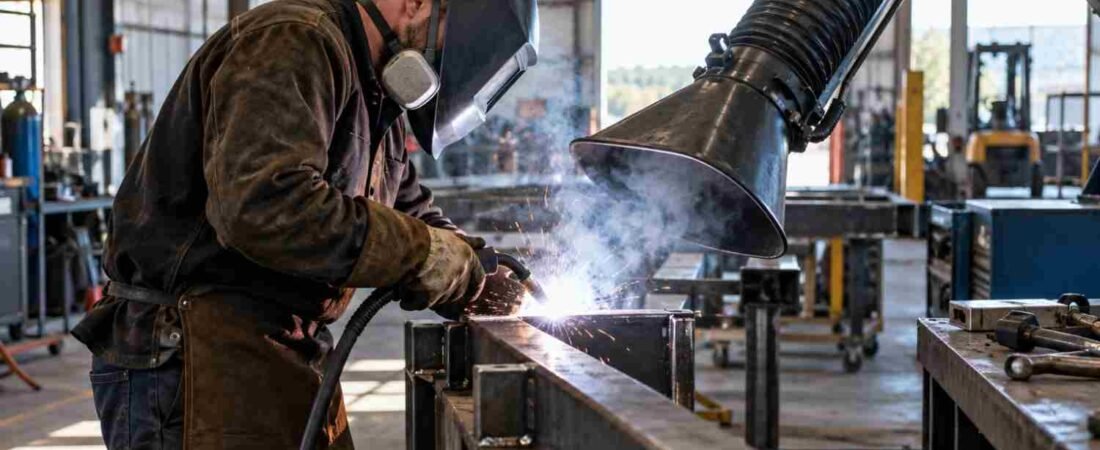
I noticed how easy it is to treat welding fumes as part of the job, especially when a shop has fans running. Once you spend hours welding, though, that haze around the hood becomes a different concern. The material, coatings, process, and ventilation all affect what reaches your breathing zone.
I also realized that choosing respiratory protection is not as simple as grabbing a disposable mask. A respirator has to match the hazard, fit correctly, and work alongside ventilation and other controls. That matters when the job moves between different work areas.
Why Welding Fumes Deserve Serious Attention
Welding fumes are a mixture of fine particles and gases produced by the welding process and materials involved. Exposure can involve metal oxides, manganese, chromium compounds, nickel, ozone, carbon monoxide, or other contaminants. Short-term exposure can irritate the eyes, nose, and throat.
The metal itself is only part of the equation. Filler metals, electrodes, paints, primers, plating, and coatings can change the hazard. Stainless steel, for example, can create exposure to hexavalent chromium during hot work. OSHA identifies hexavalent chromium as a carcinogen and notes that welding stainless and other chromium-containing metals can be an important source of occupational exposure.
That is why respiratory protection for welding fumes should begin with identifying what is being welded. A respirator selected for ordinary particulate exposure may not address every gas or vapor present during a particular operation.
Ventilation Comes Before the Respirator
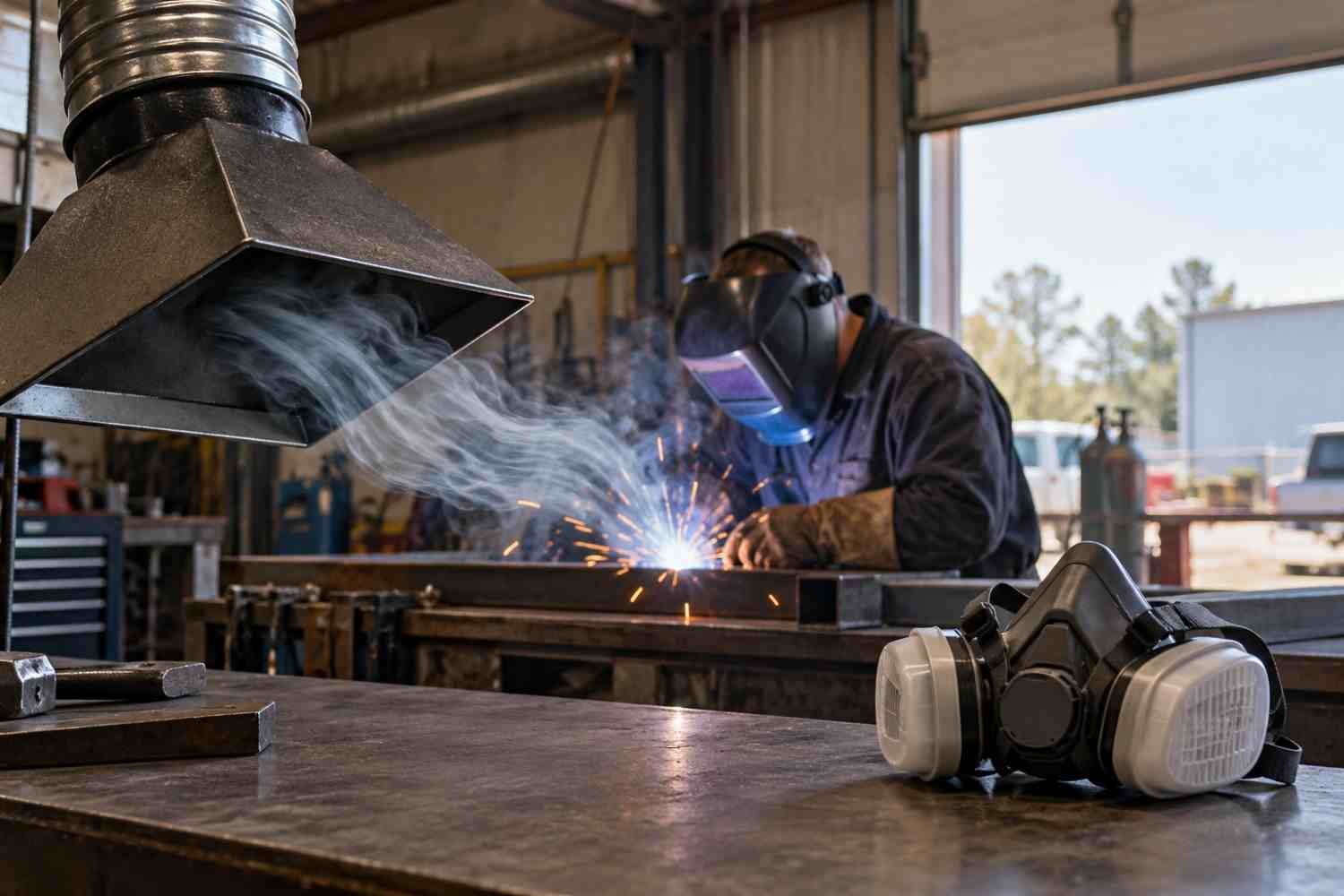
A respirator should not replace ventilation. OSHA emphasizes preventing atmospheric contamination through feasible engineering controls, including local and general ventilation.
Local exhaust ventilation can capture fumes near where they are generated. If the hood is too far away, fumes can pass through the welder’s breathing zone before being captured. NIOSH also identifies source capture as an important control for welding fumes and gases.
Outdoor welding deserves caution. Fresh air helps dilute contaminants, but wind, nearby structures, welding position, and fume production can still affect exposure. Enclosed spaces create additional concerns because gases can accumulate.
Understanding these controls also opens career paths beyond traditional welding jobs, including safety and inspection.
Choosing the Right Respirator
There is no single universal welding respirator. Selection should consider the contaminants, concentration, process, work environment, and required protection. Where respirators are required, OSHA calls for a respiratory protection program covering hazard evaluation, respirator selection, medical evaluation, training, maintenance, and fit testing where applicable.
A filtering facepiece can provide particulate protection, but it should not automatically be assumed to protect against gases. P100 filters are highly efficient against airborne particulates, but they do not remove every gas or vapor. Combination cartridges may be needed when the hazard assessment identifies gases or vapors they are designed to control.
Tight-fitting respirators rely on a seal against the face. Powered air-purifying respirators, or PAPRs, use a blower to move filtered air into the breathing zone. Some loose-fitting PAPR configurations can help workers who cannot use tight-fitting facepieces because of facial hair.
A respirator must be NIOSH-certified for its intended use. Never mix cartridges, filters, facepieces, or configurations simply because they appear compatible. Follow the manufacturer’s instructions.
Fit Is Part of the Protection
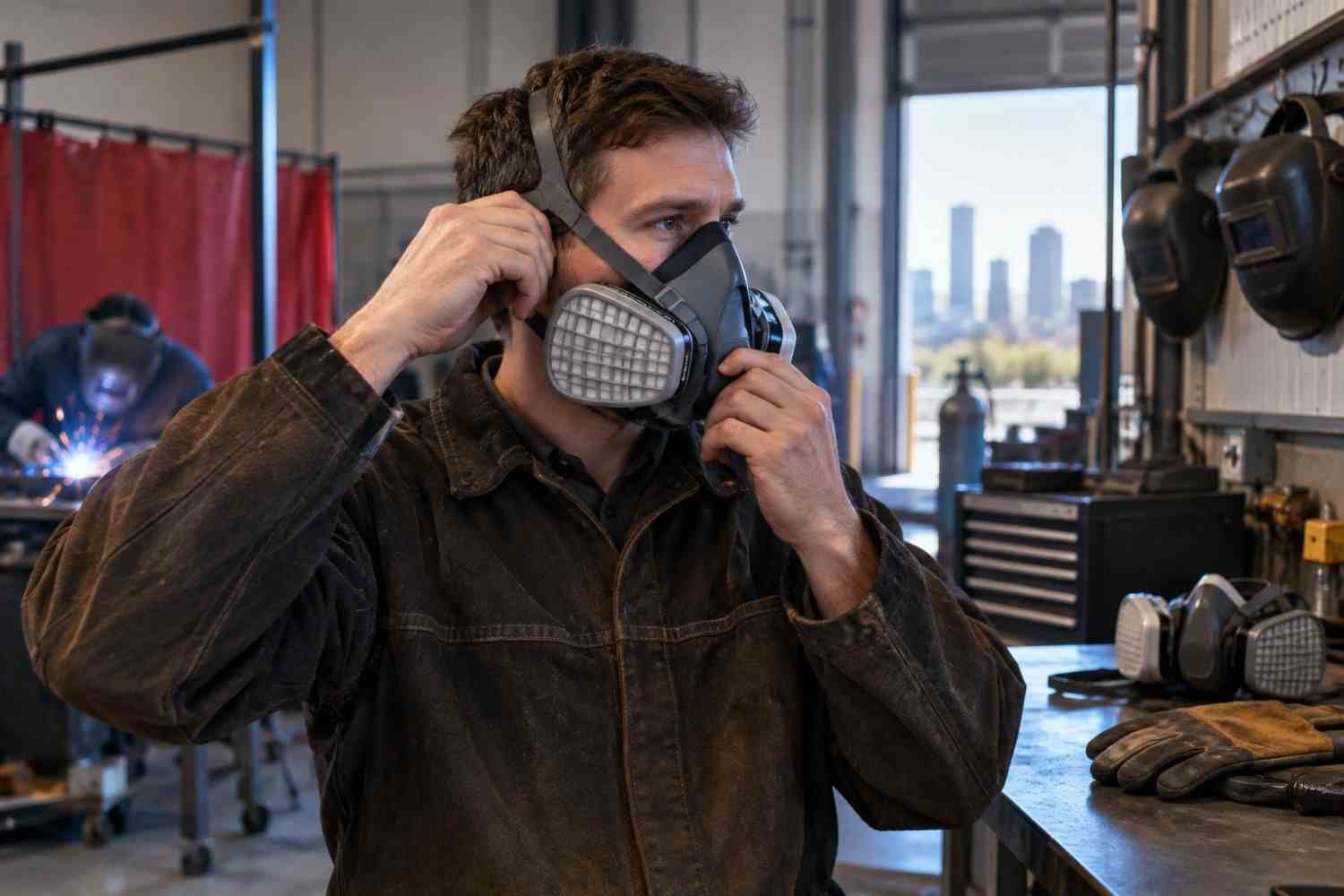
A high-quality respirator can perform poorly if it does not fit. OSHA requires fit testing before use of tight-fitting respirators, when a different facepiece is selected, and at least annually thereafter.
Facial hair crossing the sealing surface can prevent a tight-fitting respirator from sealing. Other PPE and the welding helmet can also affect comfort or fit.
A user seal check is performed each time a tight-fitting respirator is put on. It does not replace formal fit testing.
Match Protection to the Material
Different welding jobs can produce very different respiratory hazards. Stainless steel can generate hexavalent chromium. Galvanized steel can produce zinc oxide fume, associated with metal fume fever. Aluminum welding can involve ozone, while painted or coated surfaces may introduce contaminants unrelated to the base metal.
Surface preparation matters. Remove coatings and residues when the work procedure permits, and never assume an old coating is harmless.
If a job involves lead, cadmium, beryllium, or an unknown material, have the hazard evaluated before welding. Some situations require controls beyond a particulate respirator.
Habits That Make Respirators Work Better
Good respiratory protection depends on consistent habits.
- Inspect the respirator, filters, cartridges, straps, valves, and facepiece before use. Replace damaged or expired components according to the manufacturer’s instructions.
- Keep the respirator clean and store it away from grinding dust, chemicals, moisture, and other contaminants. Follow the manufacturer’s cleaning and storage procedures.
- Perform the required user seal check every time a tight-fitting respirator is donned, and stop working if the seal is obviously compromised.
Respirators also need maintenance. Replace filters according to the manufacturer’s schedule rather than guesswork. If you detect a contaminant through a respirator, leave the area and reassess the protection.
Field welders should also think beyond the respirator. Job-site conditions can change quickly around cylinders, temporary enclosures, fuel-powered equipment, or unfamiliar coatings. Good welding gas cylinder safety on job sites belongs in the same safety mindset because respiratory and hot-work hazards often appear together.
FAQs: Respiratory Protection for Welding Fumes: What Welders Need to Know
1. Is an N95 enough for welding fumes?
An N95 can filter certain airborne particles, but it does not protect against every contaminant associated with welding. Protection depends on the specific hazards and exposure conditions.
2. Are P100 filters good for welding?
P100 filters provide highly efficient particulate filtration and can be appropriate for many particulate welding-fume hazards. They do not automatically protect against gases or vapors.
3. Do welders need fit testing?
If a worker is required to use a tight-fitting respirator under OSHA’s respiratory protection standard, fit testing is required before use and at least annually, along with other program requirements.
4. Can you weld outdoors without a respirator?
Outdoor work does not automatically eliminate exposure. Wind, positioning, materials, coatings, and process determine how much fume reaches the breathing zone.
Protection Is Bigger Than the Mask
The best respiratory protection strategy is rarely a single piece of equipment alone. It is a chain of decisions: identify the material, control fumes at the source, improve ventilation, select an approved respirator when needed, and make sure the equipment fits and is maintained. That approach becomes especially valuable when a welder moves between metals, processes, shops, and job sites, because the hazard can change faster than the PPE hanging on the wall.
A respirator is the last line of defense. Know the fume, control the source, and make the protection fit the job.