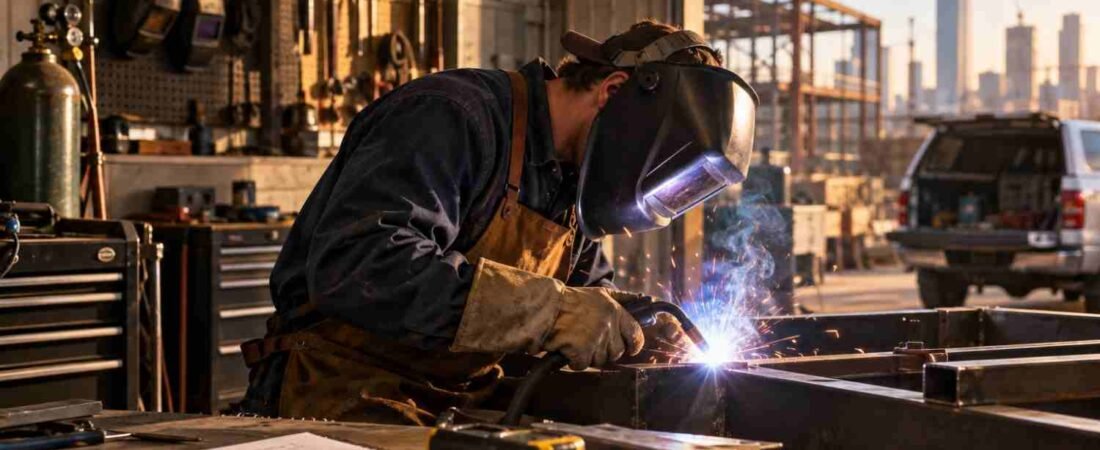
I used to think becoming a professional welder was about learning the right settings, understanding the equipment, and producing a clean bead. Once I looked closer at the trade, I realized that confidence comes from repetition. You learn how metal reacts, how your hand moves, and how quickly you can spot a problem by doing the work.
I also found that useful experience is not always the most impressive job. A small fabrication task, difficult position, or afternoon fixing a setup can teach something valuable. The goal is to build enough range that real work feels familiar, even when the project is new.
Start With a Strong Technical Foundation
Hands-on work matters, but it works best when it has a solid technical base. A welding program at a trade school, community college, or vocational school can help you understand processes, materials, joint preparation, shop math, blueprint reading, and basic equipment operation.
That foundation makes practice more productive. Instead of running beads, you begin to understand why a weld succeeds or fails. You can spot problems with travel speed, heat input, fit-up, contamination, or shielding and make deliberate corrections.
Training also gives beginners a controlled place to make mistakes. Welding skill develops through imperfect attempts before consistency arrives.
Get Into a Shop and Work Around Experienced Welders
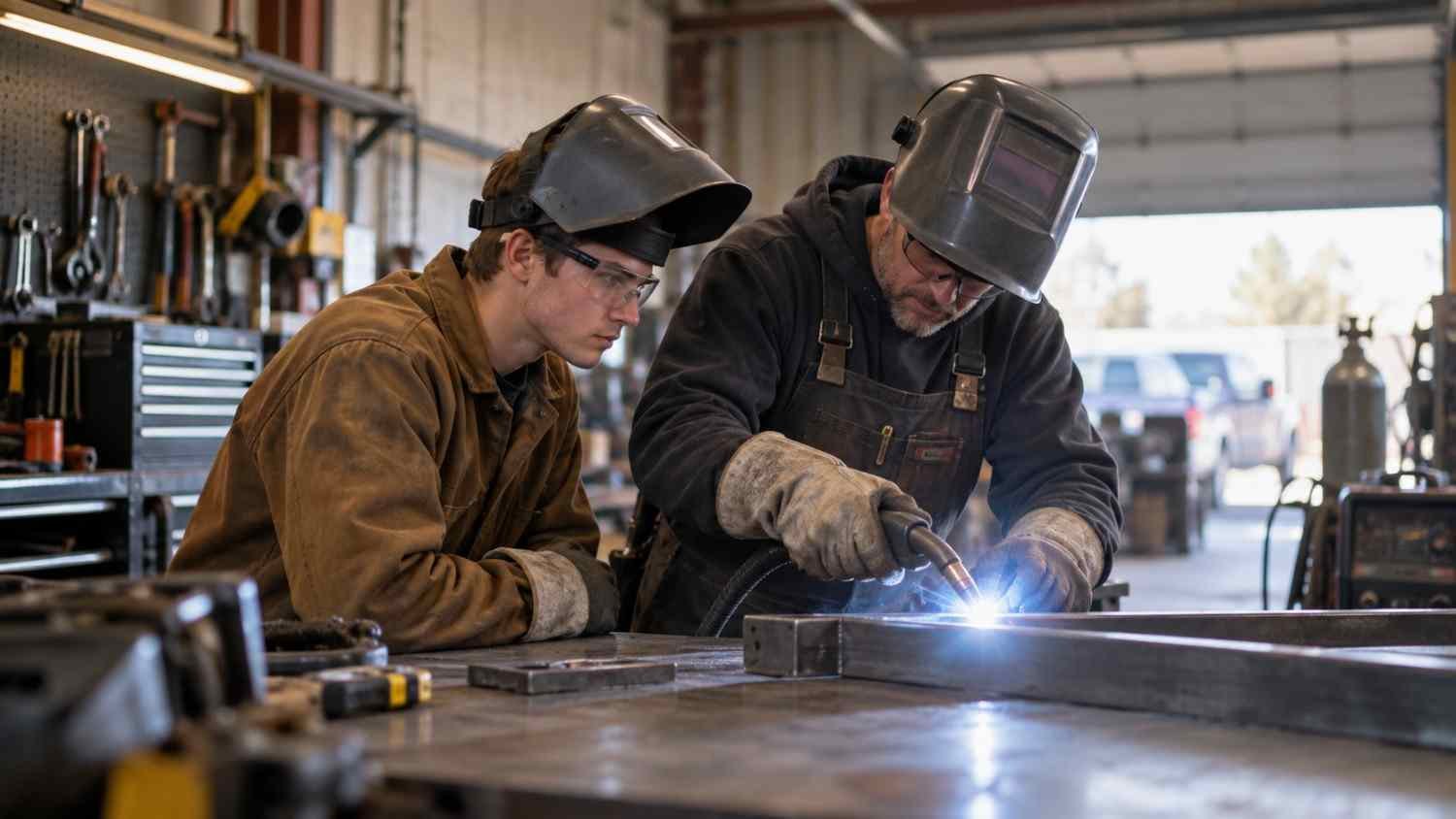
For many beginners, an entry-level helper position can be a turning point. Fabrication shops, manufacturers, construction contractors, and repair businesses provide exposure to professional expectations.
The first tasks may involve cutting, cleaning joints, moving parts, grinding, measuring, or preparing equipment. They teach how a project moves from a drawing to a finished product.
An experienced welder can teach details that are difficult to learn in class. Watch how they prepare joints, position workpieces, troubleshoot machines, inspect welds, and decide when work needs to be redone. Ask useful questions and pay attention to the reasoning behind each decision.
Turn Practice Into Deliberate Skill Building
Spending hours at a welding machine does not guarantee progress. Each practice session should have a purpose.
Work on different positions, joint types, material thicknesses, and welding processes. If you only practice flat-position welds, your experience can look stronger than it is. Vertical and overhead work demand different control, while thin materials punish excessive heat and poor travel speed.
Learn to set up your own equipment. Understanding amperage, voltage, wire feed speed, gas flow, polarity, consumables, and basic troubleshooting makes you more independent.
Keep notes on what worked and what did not. This can reveal patterns and recurring problems.
Build Fabrication Skills Alongside Welding
Professional welders often need to do much more than deposit metal. Measuring, cutting, fitting, tacking, grinding, and interpreting drawings can determine whether a finished assembly is accurate.
Small projects force you to manage the entire process. Build a frame, bracket, table, cart, or similar project from measurement through finishing. The point is to learn how decisions made before welding affect the final result.
This broader skill set can improve job opportunities. Employers need people who understand the work around a weld, not only operate a torch or gun.
Develop Safe Professional Habits
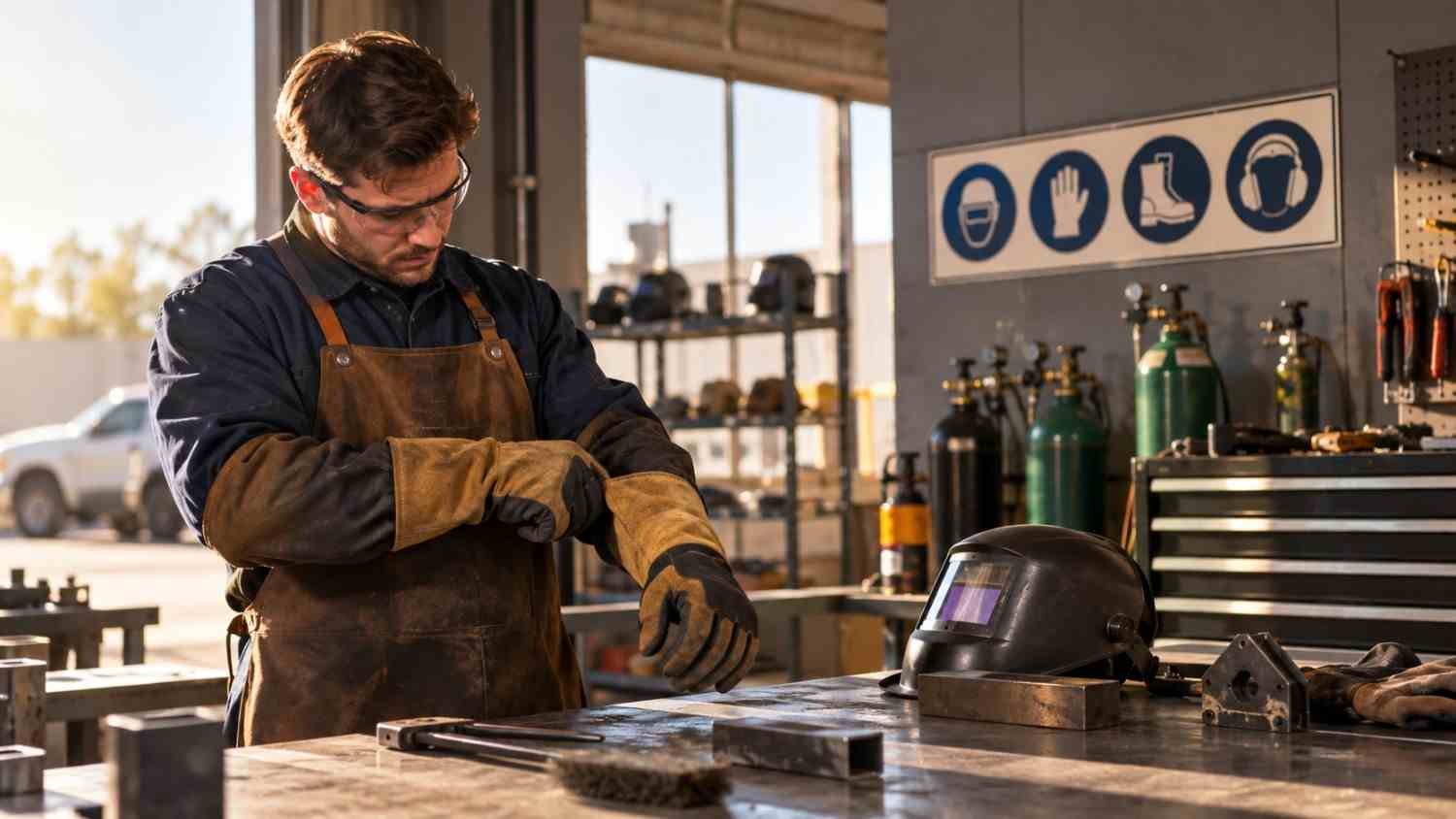
Safety should become part of your routine before you ever consider yourself experienced. Welding can expose workers to fumes, ultraviolet radiation, burns, electrical hazards, fire, and eye injuries, so professional habits matter every time equipment is used.
Learn how to inspect leads, torches, regulators, cables, PPE, and work areas. Understand ventilation and the hazards associated with the materials being welded. Before taking on field work, learn how risk assessment before mobile welding jobs can identify hazards related to the location, nearby materials, weather, access, and equipment.
Good safety habits also affect how experienced coworkers and employers see you. Someone who consistently prepares a safe workspace, follows procedures, and stops when conditions are unsafe demonstrates judgment, not just technical ability.
Use Certifications to Prove Your Ability
Experience becomes easier to evaluate when supported by relevant credentials. Requirements vary by job, employer, location, process, and code, so choose credentials that match the work you want.
Performance-based testing is especially relevant to welding because it demonstrates practical ability. Preparing for a test can also expose weaknesses in your technique and give your practice a clear target.
Do not treat certification as a replacement for experience. A certificate can open a door, but consistent work, sound judgment, and quality welds help you stay valuable after you walk through it.
FAQs: How to Build Experience as a Professional Welder Through Hands-On Work
1. How can a beginner get welding experience?
Start with a trade program, apprenticeship, helper role, or supervised shop position. Look for opportunities where you can practice safely and learn from experienced welders. Even basic shop duties can build familiarity with tools, materials, measurements, and professional routines.
2. Is welding school required to become a professional welder?
Not always. Many welders enter through on-the-job training or apprenticeships, although technical education can provide valuable fundamentals and structured practice. Requirements also vary by employer, job, and location.
3. Which welding processes should I learn first?
MIG is often a practical starting point, but the best choice depends on your target industry. Adding stick, TIG, or flux-cored welding later can broaden your opportunities. The goal is useful versatility, not rushing through every process.
4. How long does it take to become an experienced welder?
There is no fixed timeline. Progress depends on practice frequency, job exposure, training quality, the processes you learn, and how consistently you work on weaknesses. Someone practicing deliberately can progress faster than someone simply accumulating hours.
The Experience That Stays With You
Building a welding career is less about collecting hours and more about making those hours count. Every joint can teach you something about preparation, control, accuracy, safety, or problem-solving. The more varied the work becomes, the better you understand how those skills connect. Over time, difficult tasks that once required constant attention can become routine, leaving you ready to focus on quality rather than simply getting through the job.
The strongest experience is the kind you can demonstrate. Keep practicing, take on work that stretches your abilities, learn from people who know the trade, and build a record of what you can do. As field work grows, understand safe storage and handling of welding gases and jobsite requirements. That is how hands-on time becomes professional credibility.