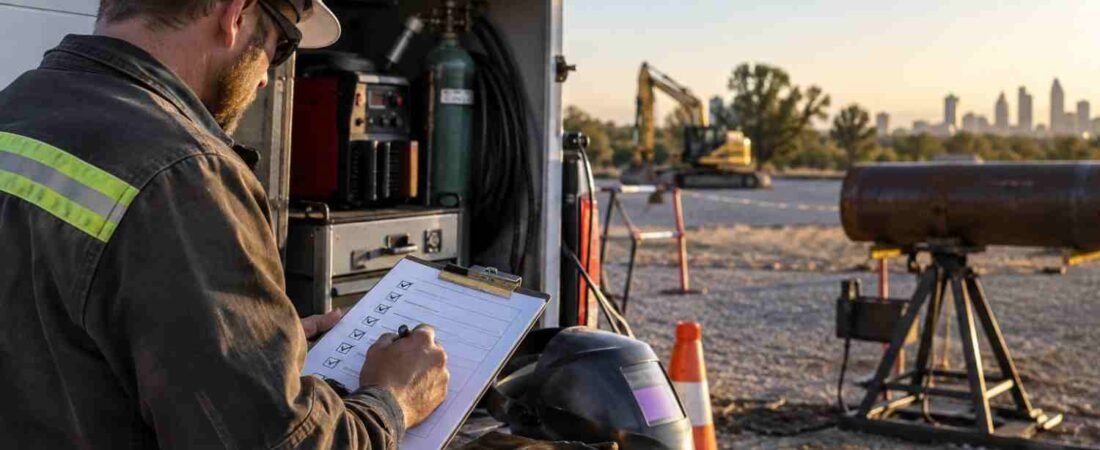
I noticed that mobile welding rarely gives you the predictability of a shop floor. The equipment may be familiar, but the surroundings are not. That can change the risks before work begins.
I realized that a useful risk assessment is less about filling out a form and more about making practical decisions before work starts. Looking at the ground, materials, ventilation, gas cylinders, people, weather, and emergency access can reveal problems that are easy to miss.
Start With the Work Area
A mobile welding risk assessment should begin with the site, not the welding machine. Sparks and hot slag can travel beyond the immediate work surface.
Pay attention to wood, cardboard, paper, insulation, dry vegetation, fuels, coatings, and other materials that could ignite. OSHA uses 35 feet as an important benchmark for combustible materials around welding and cutting. Materials that cannot be removed may need shielding, and a fire watch may be required.
Wet areas can increase electrical risk, while unstable ground can make equipment harder to position safely.
Check What Is Being Welded
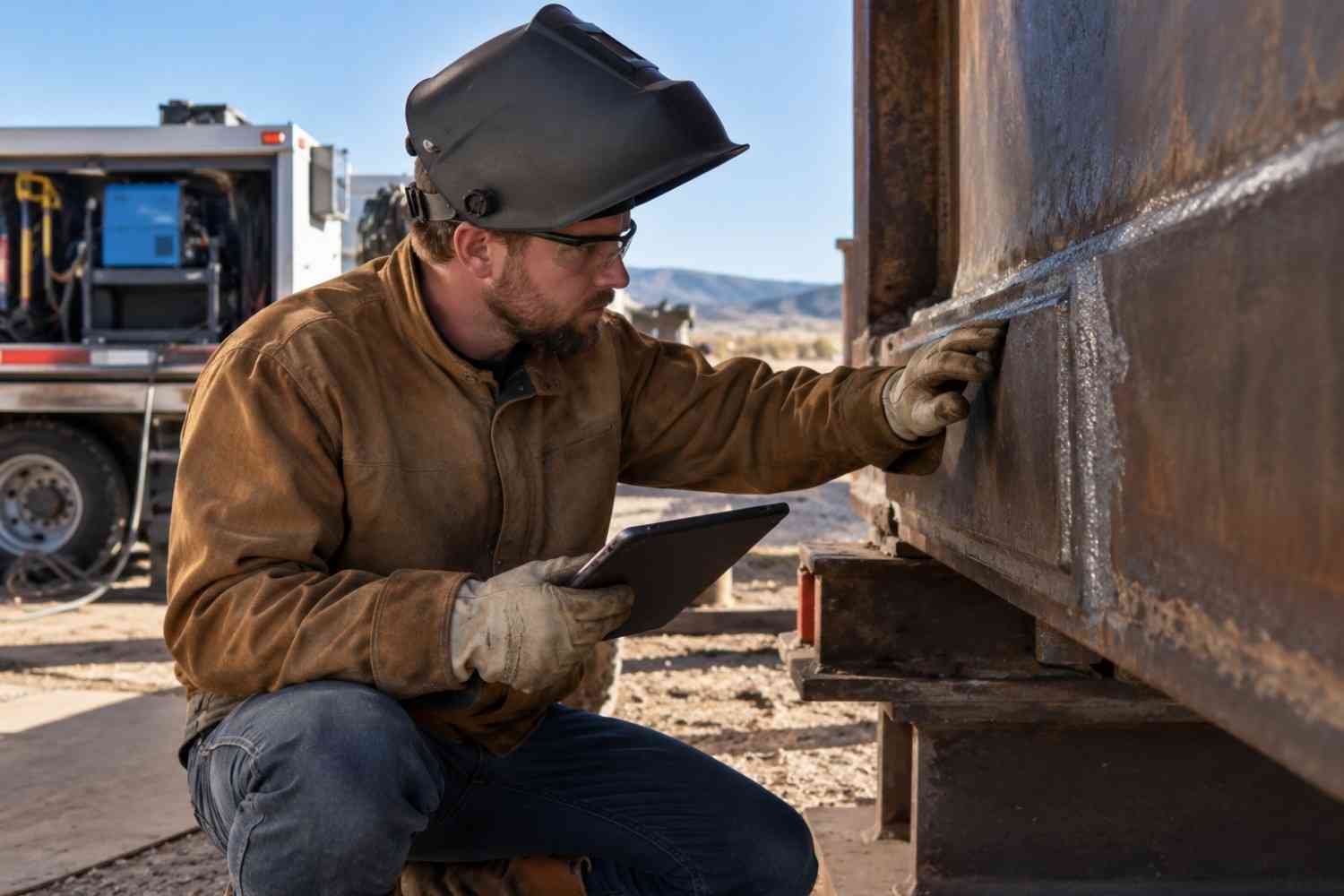
Before welding a tank, drum, pipe, vessel, or hollow structure, find out what it previously contained. Residues from flammable or combustible substances can create a serious fire or explosion hazard even when a container appears empty.
Consider paint, coatings, plating, insulation, and other treatments that can produce hazardous fumes when heated. If the contents or coating are unknown, stopping to obtain information is safer than guessing.
Location changes the assessment too. A repair inside a small utility room has different ventilation and access concerns than fabrication in an open yard. If the work involves a confined space, additional entry, atmospheric testing, ventilation, rescue, and permit requirements may apply.
Identify the Main Hazards
Grade hazards by considering likelihood and severity. This helps focus attention where harm could be greatest.
Fume exposure deserves particular attention. Welding fumes can contain metals and other substances that are harmful when inhaled. A tight area may need local exhaust ventilation or other controls, along with appropriate respiratory protection.
Electrical hazards deserve attention too. Inspect welding leads, electrode holders, plugs, extension cords, and connections before use. Check that the power source is suitable and grounding is appropriate. Damaged equipment should not be treated as a minor inconvenience.
Others may not recognize the danger from arc radiation, sparks, noise, or hot metal. Welding screens, barriers, controlled access, and clear communication can keep people outside the exposure zone.
Control Hazards Before Welding
After identifying hazards, use the hierarchy of controls rather than relying on PPE alone. First, eliminate or reduce the hazard where possible. Move combustible materials, relocate the work, isolate the area, or change the process when practical.
Use engineering controls. Portable welding screens can protect nearby people from arc radiation, while suitable extraction can capture fumes at the source. Fire-resistant blankets or shields can contain sparks and slag when materials cannot be moved.
Administrative controls matter too. Everyone affected should know where welding will occur and which areas must remain clear.
PPE provides another layer of protection. Depending on the task, this can include a welding helmet, flame-resistant clothing, gloves, hearing protection, and respiratory protection. PPE should match the hazards identified rather than come from a generic checklist.
Treat Welding Gases as a Separate Risk
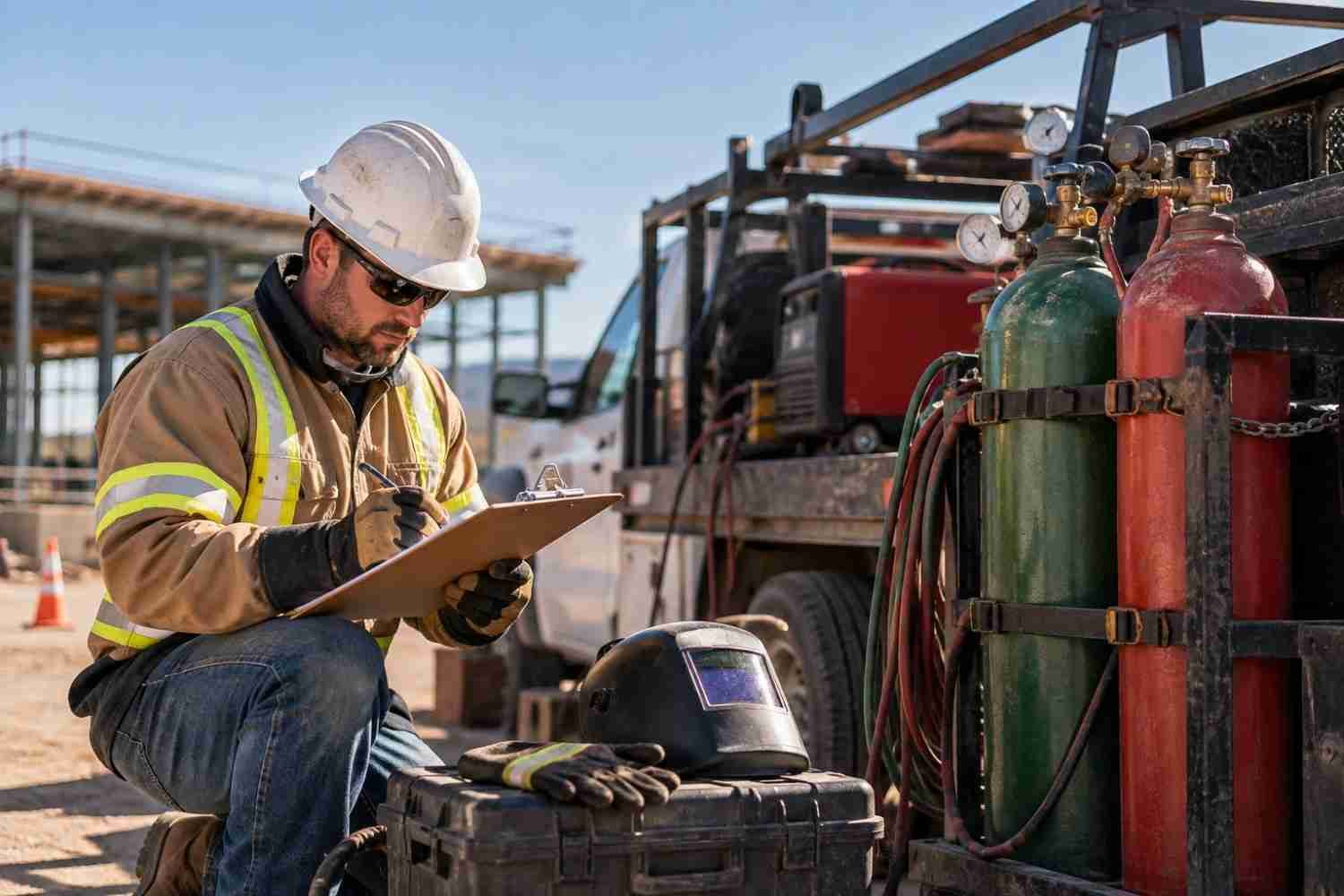
Gas cylinders deserve their own check because they combine pressure, stored energy, and, in some cases, flammable or oxidizing gases. Inspect cylinders, valves, hoses, regulators, and connections. Cylinders should be secured so they cannot fall, kept away from heat and ignition sources, and positioned so sparks or hot slag cannot reach them.
During transportation, cylinders need appropriate protection. Oxygen and fuel-gas cylinders also have specific separation and storage requirements.
This is where safe storage and handling of welding gases becomes part of the risk assessment. A good cylinder can still become hazardous if unsecured, exposed to heat, or vulnerable to impact.
Prepare for Fire and Emergencies
Before work begins, a mobile welder should know what happens if something goes wrong. Keep suitable fire extinguishing equipment accessible, make sure emergency routes are clear, and confirm how help can be contacted.
Fire watch arrangements need careful consideration. OSHA requires a fire watch in specified situations where more than a minor fire could develop, including circumstances involving nearby combustibles. Where required, the person should understand the job, have suitable extinguishing equipment, and know how to raise an alarm. OSHA’s general industry rule calls for the watch to continue for at least 30 minutes after welding or cutting ends.
For isolated jobs, consider how emergency responders would reach the location.
Reassess When Conditions Change
A risk assessment is not finished because the paperwork is complete. Mobile worksites change. A contractor may move into the area, wind may carry sparks toward dry material, ventilation may become restricted, or equipment may be repositioned.
If conditions change, pause and reassess. Keeping a written or digital record also helps. A simple assessment can document hazards, controls, responsible people, and conditions that must be corrected before work starts.
Why Good Preparation Makes Mobile Welding Safer
A good risk assessment should be practical enough for a real jobsite. It should help a welder decide where to position equipment, what needs protection, how fumes will be controlled, where people can safely stand, and what to do if conditions change. It also creates a clear point at which work should stop.
Mobile welding will always involve some uncertainty because every location brings different materials, people, access points, and environmental conditions. It makes those hazards visible early enough to control them.
FAQs: How to Complete a Risk Assessment Before Mobile Welding Jobs
1. What should be checked first?
Start with the work area. Check combustibles, surfaces, access, ventilation, nearby people, weather, and potential ignition or electrical hazards before unloading equipment.
2. Is 35 feet always a required clearance?
OSHA uses 35 feet as an important benchmark for combustible materials around hot work. Controls depend on the circumstances, and materials may need removal, shielding, or monitoring.
3. When is a fire watch needed?
A fire watch is required in specified conditions where welding could create more than a minor fire, including situations involving appreciable combustible materials.
4. Should every mobile welding job use the same assessment?
No. A reusable checklist can help, but every site should be assessed individually. Different materials, locations, weather, ventilation, and nearby activities can create different hazards.