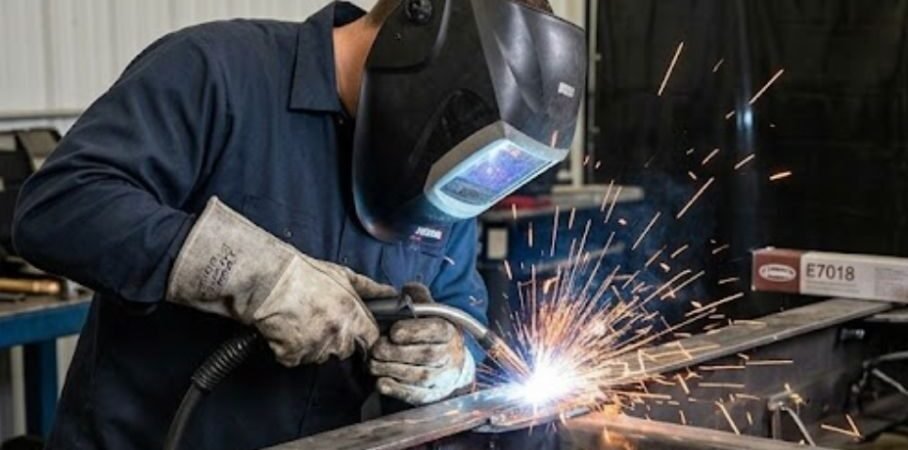
An unexpected bump on a haul or years of rust standardly leads to the same dreaded discovery in the shop: a crack running through your truck’s frame. The immediate knee-jerk reaction for most mechanics and owners is to grab a torch, but melting metal back together isn’t always that simple.
Yes, can a truck frame be welded? Absolute yes, but doing it safely requires navigating precise metallurgy, strict load dynamics, and federal transportation compliance. One wrong pass with a MIG welder can permanently compromise the structural integrity of your rig.
Here is what actually happens when you heat up modern frame steel, how professionals repair these structural backbone failures, and when you should skip the shop and replace the rails entirely.
Metallurgy 101: Why Modern Truck Frames Aren’t Simple Iron
Older pickup trucks relied on heavy, mild steel channels that were forgiving to weld. Modern light, medium, and heavy-duty trucks are engineered differently.
Automakers build current frames using High-Strength Low-Alloy (HSLA) or heat-treated steel to reduce curb weight while maximizing payload capacities. These metals achieve their strength through controlled heating and cooling cycles during manufacturing.
| Frame Steel Type | Heat Sensitivity | Repair Approach |
| Mild Steel | Low – forgiving to torch heat | Standard ARC/MIG welding |
| HSLA Steel | Moderate – susceptible to grain changes | Controlled heat input; fishplates |
| Heat-Treated (High Yield) | Severe – weakens dramatically if overheated | Cold repairs preferred; strict OEM bodybuilder protocols required |
When you hit heat-treated frame rails with standard repair heat, you alter the metal’s grain structure. The steel around the joint transforms into a localized “heat-affected zone” (HAZ) that loses a massive portion of its tensile strength.
Unless heat input is managed strictly to OEM specifications, the frame will likely snap right next to the new weld under heavy torque or dynamic road shock.
The Core Risks of Unqualified Frame Repair
Welding a dynamic load-bearing structure isn’t like fixing a broken utility trailer. The frame flexes, twists, and absorbs road feedback thousands of times per mile.
Similar structural-welding challenges can arise when repairing farm equipment, where cyclic loading, high-strength steels, and field conditions require careful control of heat and weld preparation.
- Severe Structural Warping: Concentrated arc heat causes localized expansion. As the puddle cools, it contracts faster than the surrounding cold metal, permanently pulling the frame rails out of alignment and causing dog-tracking or premature tire wear.
- Stress Riser Creation: Square edges, open holes, or abrupt weld beads focus bending force directly onto a tiny area. Over time, these points yield under normal operating stress, creating fresh stress cracks.
- Electronics Damage: High-voltage arc welding grounds through the chassis. If the vehicle electrical system isn’t completely isolated, the voltage spike can instantly fry expensive engine control modules (ECMs) and sensors.
Professional Best Practices: How to Safely Weld a Frame Rail
Properly repairing a truck frame isn’t just about melting metal—it’s a strict step-by-step engineering process.
A mobile welder can perform many repairs directly at the jobsite, making on-site welding practical when transporting large or damaged equipment to a shop isn’t feasible.
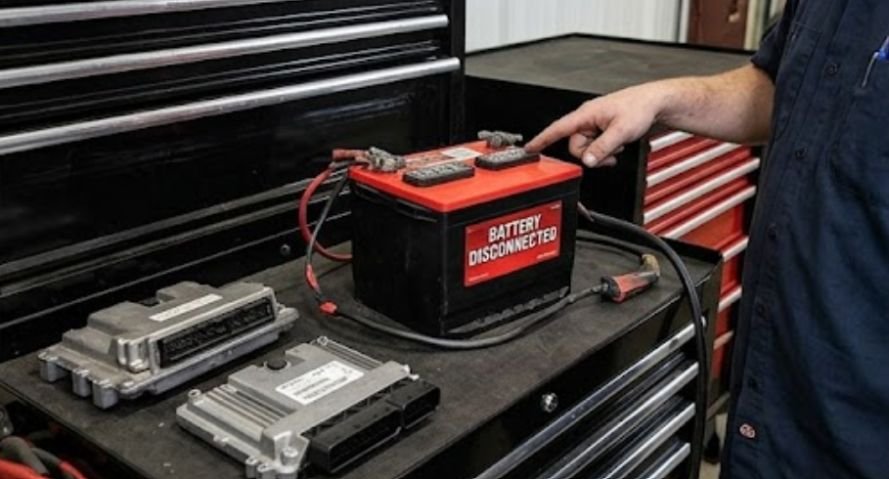
Step 1: Disconnect Power and Protect Electrical Systems
Unplug all battery grounds directly from the battery posts before touching an electrode to the frame. For modern trucks packed with microprocessors, disconnecting the ECM harness directly provides an extra layer of protection against transient current spikes.
Step 2: Surface Preparation
You cannot weld over rust, paint, or frame undercoating. Grinder discs must take the steel down to bare, shiny metal at least 3–4 inches away from the failure point on all sides. Contaminants trapped in the weld pool create porosity, weakening the joint internally.
Step 3: Edge Beveling and Root Passes
Never lay a surface bead over a flat crack. Grind a V-groove (or double V-groove for thick channels) along the split at a 30- to 45-degree bevel. This allows the root pass of the weld to sink completely through the material thickness, achieving 100% joint penetration.
Step 4: Reinforce with Diamond Fishplates
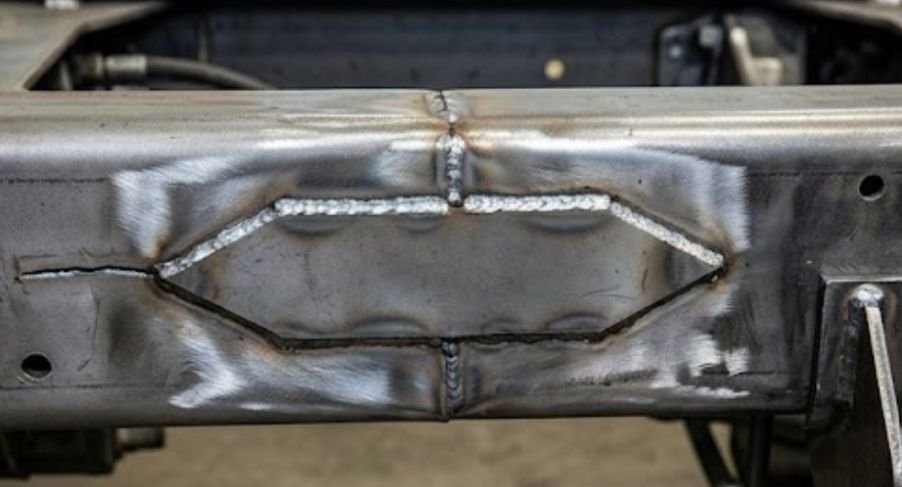
Never weld a straight vertical line around a frame rail and call it a day—vertical welds create a failure hinge. Certified techs always install a “fishplate” (reinforcement backing plate) over the repair zone.
To properly distribute load stress:
- Cut the fishplate ends into diamond points or rounded shapes rather than 90-degree square edges.
- Stitch-weld the top and bottom horizontally, avoiding vertical welds across the web of the channel whenever possible.
- Match the fishplate material thickness and yield strength closely to the base frame metal.
Step 5: Choose the Right Filler Material
Low-hydrogen electrodes are non-negotiable for structural frame work. Welders commonly use E7018 stick electrodes or ER70S-6 wire for MIG applications, keeping the weld pool ductile enough to absorb road vibration without fracturing.
Legal Rules, DOT Compliance, and OEM Guidelines
In the commercial hauling world, an improper weld can take a truck off the road permanently.
The Federal Motor Carrier Safety Administration (FMCSA) enforces rigid inspection standards under 49 CFR Part 396. Commercial vehicles with cracked, improperly modified, or sagging frame rails automatically fail annual DOT safety inspections.
Before striking an arc on any commercial chassis, technicians consult the truck manufacturer’s official Bodybuilder Guide. These engineering documents dictate:
- Approved “no-weld” zones (typically flanges and high-stress crossmember attachment points).
- Specific heat thresholds for that specific model year.
- Where frame splicing or shortening is legally permitted.
If a repair violates OEM bodybuilder rules, commercial insurers can deny liability coverage following an accident. For complex alignment or severe structural cracks, outsourcing the work to a certified frame shop with specialized hydraulic rack equipment is the safest path forward.
When Welding Isn’t Enough: Knowing When to Scrap the Rail
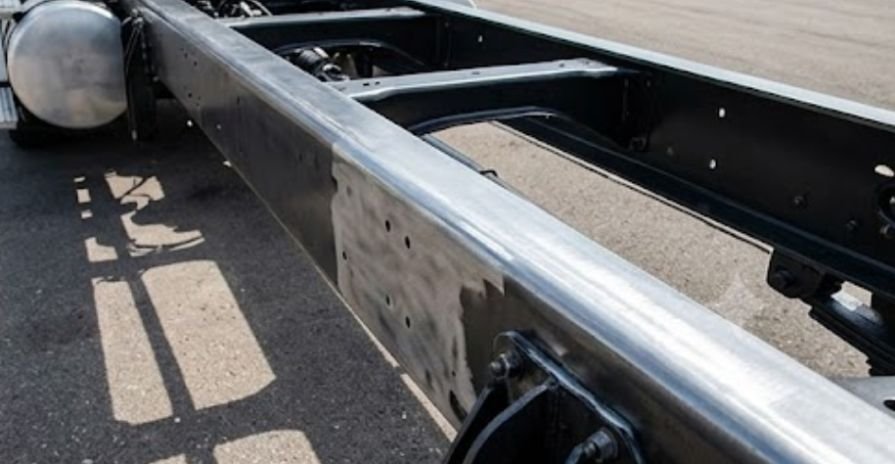
Welding isn’t a silver bullet for every frame defect. Attempting to weld under the following conditions poses severe safety risks:
- Flange Cracks: Cracks extending through the top or bottom horizontal flanges carry the bulk of bending loads. Splicing flanges requires expert engineering approvals that standard shops cannot provide.
- Heavy Internal Corrosion (Scaly Rust): When rust eats away internal channel thickness from the inside out, there isn’t enough clean base metal left to handle arc heat.
- Buckled or Kinked Channels: If the frame steel has stretched beyond its elastic limit in a collision, welding over the bend will not restore its original load capacity. The rail must be replaced.
Frequently Asked Questions
1. Can you weld a truck frame without removing the bed or cab?
It depends on crack location. Minor outer channel repairs might be accessible from underneath, but full repairs—including grinding V-grooves and attaching diamond fishplates—usually require removing the truck bed or cab to reach all sides cleanly.
2. What welding rod is best for fixing a truck frame?
E7018 low-hydrogen stick electrodes are the industry standard for manual frame rail repairs. Their chemical makeup prevents hydrogen-induced cracking in high-tensile steel while maintaining excellent fatigue resistance under heavy loads.
3. Is it legal to weld a commercial truck frame?
Yes, but repairs must strictly follow OEM bodybuilder guidelines and pass vehicle safety standards. Improperly welded frames or unauthorized modifications in restricted zones will cause a commercial vehicle to fail safety inspections.
4. Can MIG welding be used on a frame rail?
Yes, provided you use an industrial-grade MIG welder with sufficient amperage (typically 220V+) and ER70S-6 wire with shielding gas. Small 110V hobbyist welders cannot deliver the heat penetration required for heavy structural steel.
Doing It Right
Welding a truck frame is entirely possible, but it demands an respect for metallurgy that goes far beyond basic garage fabrication. Understanding steel heat treatment, cleaning base metals thoroughly, beveling joints for full penetration, and placing stress-distributing fishplates are what separate a safe, long-lasting structural repair from a catastrophe waiting to happen on the highway.
When faced with structural frame damage, review your vehicle’s OEM bodybuilder guide first. If the repair falls into a high-stress or heat-sensitive zone, trust the job to a certified professional frame repair shop to keep your truck safe, legal, and ready for the long haul.