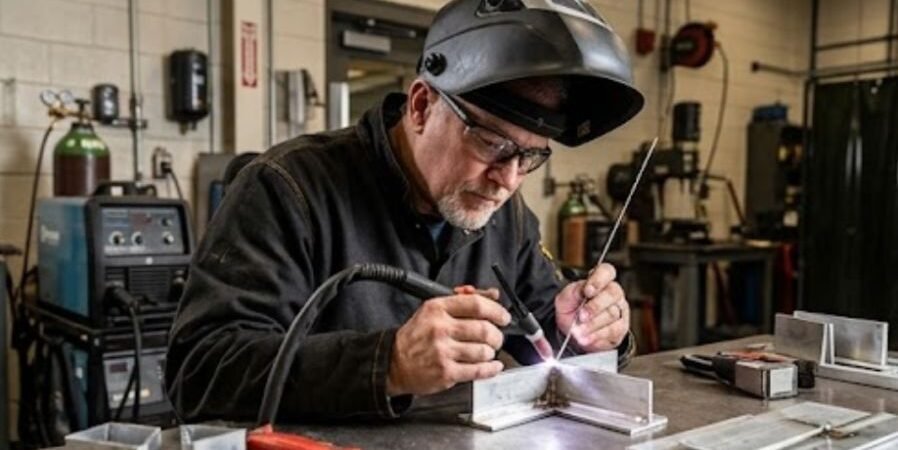
An elite structural welder can throw a flawless 7018 bead in a climate-controlled shop, yet watch that same weld fail visual inspection when executed off the back of a truck in a 30 mph crosswind.
Field welding transforms standard metallurgy into an unpredictable game of environmental management, customer relations, and regulatory compliance. Moving your rig out of the fabrication shop and onto the highway shifts your role immediately—you are no longer just a skilled tradesperson, but a walking, self-contained contractor.
Securing the right mobile welder qualifications bridges the gap between someone who simply owns a generator-driven rig and a licensed professional capable of landing high-paying commercial contracts.
Technical Foundations: Education and Process Mastery
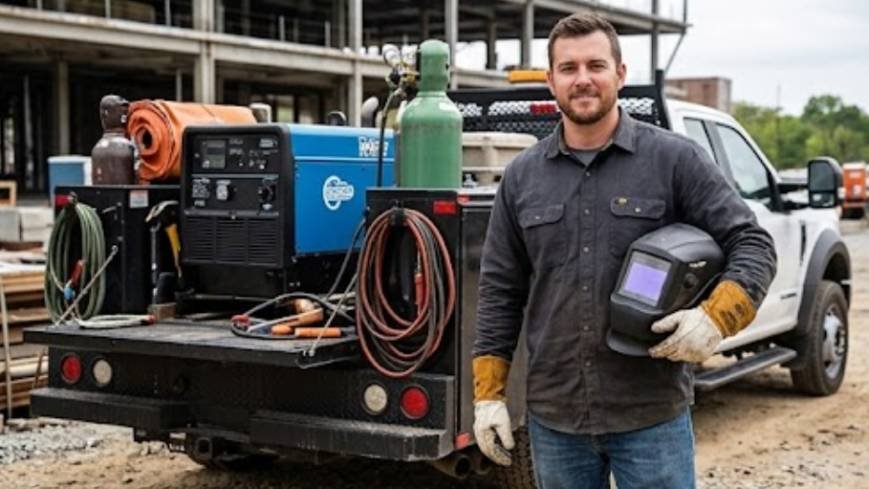
Operating independently means working without a shop foreman or quality control manager overseeing your shoulder. Establishing core qualifications begins with rigorous technical instruction through a dedicated trade program, vocational school, or union apprenticeship.
+———————————————————————–+
| TECHNICAL TRAINING & APPRENTICESHIP |
| (Fundamentals, Metallurgy, Blueprint Reading, Safety Protocols) |
+———————————————————————–+
|
v
+———————————————————————–+
| CERTIFICATION TESTING |
| (Performance Benchmarks via AWS D1.1, ASME Sec IX, etc.) |
+———————————————————————–+
|
v
+———————————————————————–+
| STATE & LOCAL CONTRACTOR LICENSING |
| (Trade Exams, Business Law, State Registration e.g., C-60) |
+———————————————————————–+
|
v
+———————————————————————–+
| COMMERCIAL RISK MANAGEMENT |
| (General Liability, Commercial Auto, Inland Marine Rider) |
+———————————————————————–+
A comprehensive background requires deep proficiency across three primary thermal joining processes, each carrying distinct field applications:
- Shielded Metal Arc Welding (SMAW / Stick): The indisputable backbone of field operations. Stick welding remains relatively immune to surface contaminants like rust or paint and tolerates outdoor wind conditions that blow away shielding gas.
- Gas Tungsten Arc Welding (GTAW / TIG): Essential for high-precision field repairs, stainless steel food-grade piping, architectural aluminum, and exotic alloys.
- Gas Metal Arc Welding & Flux-Cored Arc Welding (GMAW / FCAW): Critical for rapid production work, heavy equipment hardfacing, and structural connections where deposition rate directly impacts profit margins.
Beyond striking an arc, formal education ensures you can reliably interpret structural blueprints, calculate material takeoffs, and select filler metals based on base-metal chemistry.
Code Certifications: Proving Performance Under Pressure
Having years of unverified shop experience will not clear a commercial job site. General contractors and project engineers require third-party evidence of competency governed by recognized standards organizations like the American Welding Society (AWS).
Passing a performance test at an Accredited Testing Facility (ATF) results in a Welder Performance Qualification (WPQ). Certification is not a generic, blanket approval; it is precise and tied directly to essential variables including position, material thickness, and process.
| Certification Standard | Primary Application | Key Testing Focus |
| AWS D1.1 (Structural Steel) | Buildings, bridges, structural retrofits | Multi-position groove/fillet welds on carbon steel using SMAW or FCAW. |
| ASME Section IX (Boiler & Pressure Vessel) | Pressure piping, boilers, high-pressure vessels | Open-root pipe welding (typically 6G position) utilizing GTAW and SMAW. |
| AWS D1.2 (Structural Aluminum) | Marine, transport, and lightweight framing | Managing thermal conductivity and oxide layers using GTAW or GMAW. |
| API 1104 (Pipeline Facilities) | Cross-country and distribution pipelines | Downhill pipe welding techniques, root penetration, and defect tolerances. |
Maintain your continuity log meticulously. Most structural codes require a qualified individual to log a certified weld using the specific process at least once every six months to keep credentials active without retesting.
Licensing, Business Setup, and Legal Compliance
A common pitfall for emerging mobile operators is equating a personal AWS card with a license to run a business. Certification proves trade ability; licensing grants legal authority to operate.
State regulations vary widely across the U.S. For instance, states like California enforce strict contractor licensing through bodies like the Contractors State License Board (CSLB), requiring a dedicated C-60 Specialty Welding License for jobs exceeding $1,000 in labor and materials. Check local regulatory requirements through state resources such as the U.S. Small Business Administration (SBA) to ensure full operational compliance.
To operate legally and protect personal assets:
- Register a Business Entity: Establish an LLC or S-Corporation to insulate personal finances from business liabilities.
- Obtain General Liability Insurance: Commercial job sites typically demand a minimum of $1,000,000 to $2,000,000 in coverage before your truck touches their gravel.
- Secure Commercial Auto & Rigger/Tool Coverage: Standard auto insurance will not cover a commercial truck outfitted with a $15,000 welder-generator, gas cylinders, and specialized tooling. Add an “inland marine” rider to protect mobile tools in transit.
- Local Municipal Permits: Verify vendor permits, tax certificates, and environmental waste-disposal guidelines with city or county clerk offices.
Essential Mobile Capabilities: Field-Ready Tooling and Soft Skills
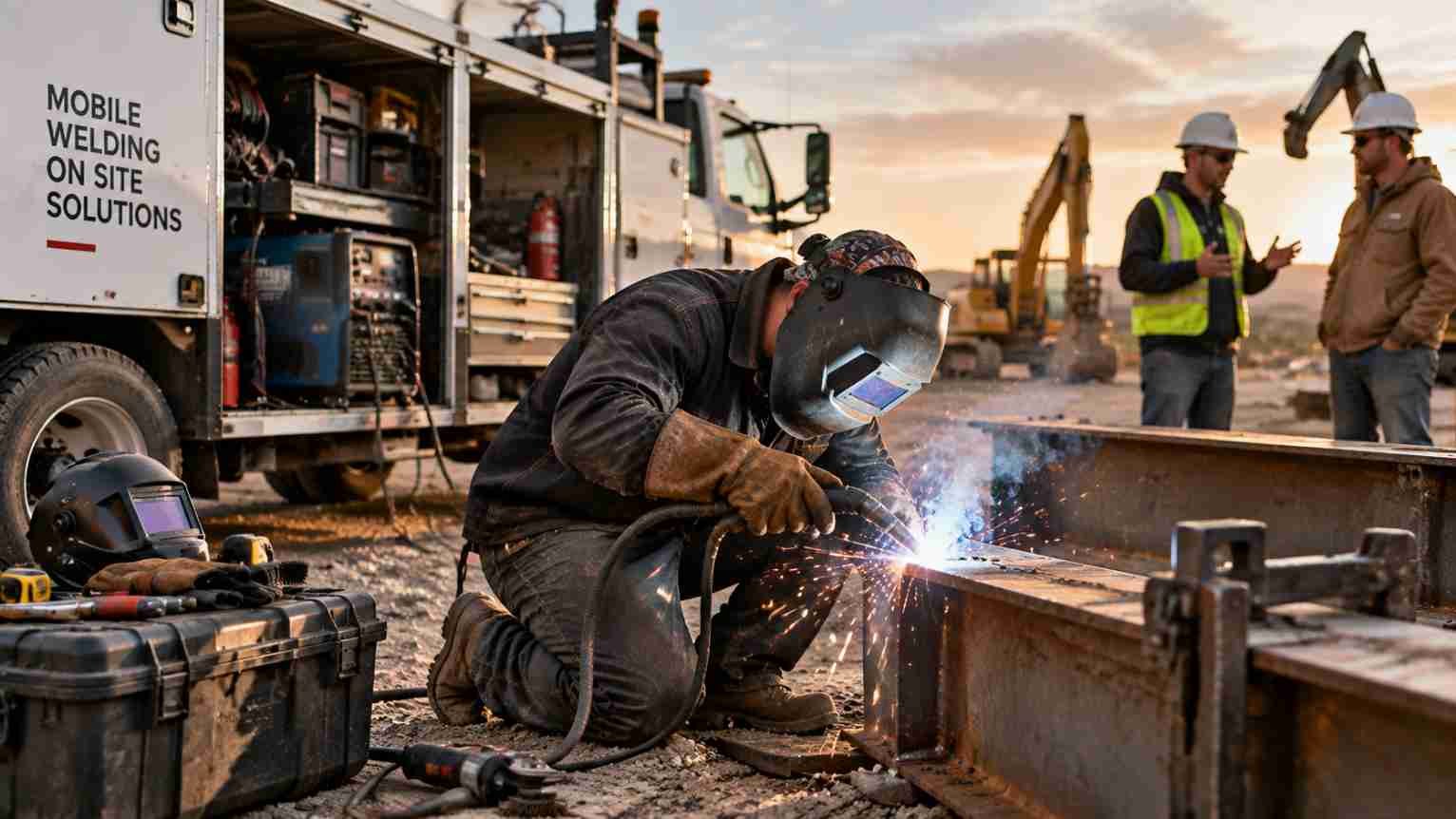
Mobile welding demands distinct practical capabilities compared to fixed-location shop work. Your rig acts as a self-contained power plant and workshop that must perform reliably anywhere.
Field Equipment Proficiency
- Power & Auxiliary Output: Mastery over dual-variable engine-driven welders (diesel, gas, or LP) capable of delivering clean auxiliary power for grinders, plasma cutters, and site lighting simultaneously.
- Gas Handling & Safety: Safe transport, upright securing, and regulatory compliance for compressed shielding gases and oxy-fuel rigs per OSHA standards. You can reference specific site safety mandates directly through the Occupational Safety and Health Administration (OSHA).
-
When field work involves galvanized steel, welders must also account for the hazardous fumes produced when the zinc coating is heated, making proper ventilation, respiratory protection, and surface preparation essential.
- Rig Mechanics: Basic diesel engine repair, electrical troubleshooting, and lead-maintenance skills to prevent unexpected downtime miles away from a service shop.
Essential Soft Skills
Unlike shop welders insulated by sales teams and managers, a mobile welder interacts directly with property owners, structural engineers, and site superintendents. Clear verbal communication, transparent billing, and creative spatial problem-solving are just as vital as clean bead deposition.
The Mobile Readiness Checklist
Before taking on your first independent commercial service call, work through this operational checklist:
- Education/Apprenticeship: Completed accredited technical training or equivalent journeyman-level field experience.
- Valid Code Certification: Possess an active AWS D1.1 or ASME IX coupon test record certified by an ATF.
- Business Registration & IRS EIN: Business entity formed and federal employer ID active.
- State Contractor’s License: Compliant with state-level trade board requirements.
- Insurance Policies Active: General liability, commercial auto, and inland marine tool coverage bound.
- Continuity Record Updated: Signed documentation verifying active process use within the last six months.
- Safety Gear & Site PPE: Fire-retardant clothing, respiratory protection, hard hat, safety glasses, and site containment blankets ready.
Real-World Limits and Misconceptions
Mobile welding offers freedom and high hourly rates, but false expectations can sabotage a new operation.
- Myth: “Certifications automatically land big contracts.”
Reality: Credentials only get you past the front gate. Bidding accuracy, insurance limits, track record, and scheduling reliability win commercial contracts.
- Myth: “You can weld anything anywhere.”
Reality: Weather dictates field parameters. Low temperatures require pre-heating procedures under structural codes, high winds render gas-shielded processes useless without containment tents, and active rain halts electrical operations entirely due to shock hazards.
Even seemingly straightforward structural repairs, such as fixing a cracked trailer frame, require an assessment of the crack, surrounding metal, and appropriate repair method before welding begins.
- Exception Handling: Structural certifications do not qualify you for pressure piping, and a pipe credential does not automatically permit you to weld high-rise structural connections without meeting specific code clauses. Match your qualifications strictly to the scope of work.
Frequently Asked Questions
1. Do I need a high school diploma to become a mobile welder?
Yes, most technical colleges, union apprenticeships, and testing facilities require a high school diploma or GED as an entry baseline for program admission and reading complex blueprints.
2. How much does an AWS welder certification test cost?
Performance tests at an Accredited Testing Facility typically range from $200 to $600 per process and position, depending on material, destructive testing requirements, and facility fees.
3. Is an AWS certification valid in every state?
AWS performance certifications are recognized nationally. However, local contractor licensing, business registration, and municipal building codes still vary by state and city.
4. Can I run a mobile welding business with only shop experience?
While possible, it is risky. Shop environments lack the weather variables, field logistics, safety hazards, and direct client interactions inherent to mobile operations.
Final take
Building a career as a certified mobile welder requires balancing precise trade mechanics with systematic business management. The sparks flying from your stingers are only the visible output of a structure supported by code compliance, formal training, robust liability coverage, and absolute operational readiness. When you align verified technical performance with legitimate business credentials, your mobile rig transitions from a simple utility vehicle into a highly profitable, scalable trade enterprise.