A welding cylinder sitting beside your workbench may seem harmless after you finish a project, but the way you store it between jobs matters just as much as how you use it. A small mistake, such as leaving a cylinder unsecured, placing it near heat, or keeping it in a poorly ventilated area, can turn a routine home welding setup into a serious safety concern.
Before I organized my own welding space, I focused mainly on machines, consumables, and protective equipment. However, I learned that planning the storage area was equally important. Knowing where to store welding gas cylinders at home helps protect your workshop, your equipment, and everyone around your workspace.
Whether you use argon for TIG welding, C25 gas for MIG welding, or oxygen and acetylene for cutting applications, proper cylinder storage starts with choosing the right location. In this guide, I’ll cover the safest storage options, securing methods, separation requirements, and common mistakes US home welders should avoid.
What Is the Safest Place to Store Welding Gas Cylinders?
For a residential welding setup, I prefer storing gas cylinders outside or inside a detached structure rather than inside the home. A detached welding shed, covered cylinder rack, or open-air storage area provides better ventilation and keeps potential leaks away from occupied areas.
A good storage location should protect cylinders from:
- Direct sunlight
- Rain and snow
- Physical impact
- Welding sparks
- Open flames
- Excessive heat
- Combustible materials
A simple covered outdoor cylinder rack can work well for many home welders. The goal is not just keeping cylinders out of sight; it is creating a location where gas can safely disperse if a leak occurs.
I avoid storing cylinders in basements, closets, cabinets, or enclosed rooms because poor airflow can allow gases to collect.
Can You Store Welding Gas Cylinders in a Garage?
Many DIY welders use their garage as a home welding shop, but cylinder storage requires careful planning. An attached garage connected to your home is not the ideal location because any gas leak occurs closer to living areas.
If a garage is used for cylinder storage, it should have excellent ventilation, enough space around the cylinders, and protection from vehicles, tools, and other hazards. A detached garage or workshop is generally a better choice because it separates compressed gases from the house.
I never place cylinders near water heaters, furnaces, electrical equipment, gasoline containers, paint, solvents, or piles of oily rags. These materials can increase the danger if a leak or fire occurs.
Inside storage areas should be dry, well-ventilated, and positioned where cylinders cannot be knocked over or damaged. OSHA also requires compressed gas cylinders stored inside buildings to be kept in assigned locations away from hazards.
How Should Welding Gas Cylinders Be Stored Outdoors?
Outdoor storage does not mean leaving cylinders exposed to harsh weather. I always use a roof, canopy, or covered rack to protect cylinders from rain and direct sunlight.
Extreme temperatures can affect cylinder pressure. A good practice is keeping storage areas below approximately 125°F (52°C) and away from flames or artificial heat sources.
The storage area should also have enough airflow around each cylinder. Natural ventilation helps prevent dangerous gas accumulation if a valve develops a slow leak.
For a home welding shop, a properly designed outdoor storage area usually includes:
- A stable base or concrete pad
- A cylinder rack or cage
- Weather protection
- Good airflow
- Clear access for moving cylinders
Should Welding Cylinders Be Stored Upright?
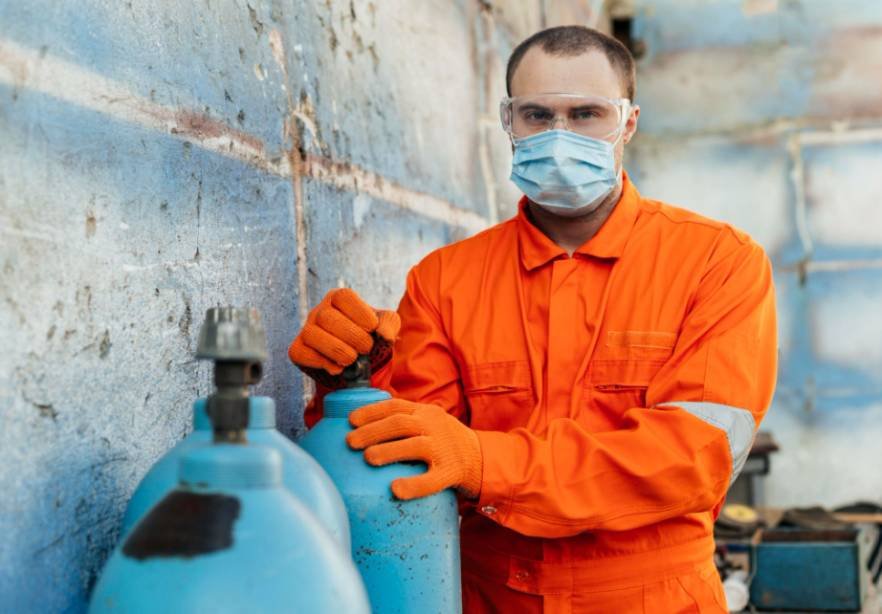
Yes. I always store welding cylinders in a vertical position and secure them so they cannot fall. A falling cylinder can damage the valve, and a broken valve can release compressed gas rapidly.
Every cylinder should be secured using a chain, heavy-duty strap, wall bracket, or cylinder cage. A cylinder leaning against a wall may appear stable, but it can easily fall when bumped.
Valve protection caps should remain installed whenever cylinders are not connected for use. These caps protect the valve assembly during storage and movement.
OSHA requires compressed gas cylinders to be secured upright except during short periods of handling or transport.
How Should Oxygen, Acetylene, Argon, and CO₂ Cylinders Be Stored?
Different welding gases have different hazards, but all cylinders require careful handling.
MIG welders commonly store argon and CO₂ mixtures such as C25 shielding gas. TIG welders often use pure argon. These gases are not flammable, but they are still stored under high pressure and can create oxygen-deficient environments if released in an enclosed area.
Oxygen and acetylene cylinders require additional attention because oxygen accelerates combustion and acetylene is a fuel gas. Oxygen cylinders should be separated from fuel gas cylinders and combustible materials.
OSHA specifies that oxygen cylinders in storage should be separated from fuel gas cylinders or combustible materials by at least 20 feet, or by a suitable noncombustible barrier at least 5 feet high with an appropriate fire resistance rating.
Acetylene cylinders must remain upright because the gas is stored dissolved in acetone inside the cylinder. Keeping them vertical helps prevent acetone from being carried into the gas system.
What Should Never Be Stored Near Welding Gas Cylinders?
One of the easiest ways to improve welding safety is keeping the cylinder storage area free from unnecessary hazards.
I never store cylinders near:
- Gasoline or fuel containers
- Oil and grease
- Paint thinner
- Cleaning chemicals
- Paper or wood piles
- Welding sparks
- Open flames
- Hot equipment
Oxygen cylinders, especially, must be kept away from oil and grease because oxygen can intensify combustion.
The storage area should also be away from the actual welding workspace whenever possible. If sparks, hot metal, or slag can reach stored cylinders, the location needs better separation or protective shielding.
Before working with older or corroded metal around the storage area, it is important to assess whether the material can be safely repaired. Knowing whether rusted metal can be welded helps determine when cleaning and welding are appropriate and when damaged metal should be replaced.
How Can I Create a Safe Home Welding Cylinder Storage Setup?
Creating a safe cylinder storage area does not require an expensive fabrication shop. Even a small home welding setup can be improved with a few simple steps.
However, mobile welding setups can have different practical constraints because equipment, gas cylinders, and other supplies may need to be transported and positioned at different job sites. Understanding the limitations of mobile welding can help welders decide whether a portable setup is suitable for their projects.
I start by choosing a dedicated storage location, installing a secure cylinder rack, and keeping the surrounding area clean. I check cylinders regularly for rust, damage, missing caps, or signs of leaks.
For US homeowners, I also check local fire codes because requirements can vary by location. Following manufacturer recommendations and recognized compressed gas safety practices provides a reliable foundation for safe welding.
Frequently Asked Questions
1. Can I keep welding gas cylinders inside my house?
No. Welding gas cylinders should not be stored inside living spaces. Outdoor or detached, well-ventilated storage is a safer choice because it reduces risks from leaks and poor airflow.
2. Can I store argon cylinders outside?
Yes. Argon cylinders can be stored outdoors when they are protected from weather, secured upright, and kept away from impact or heat sources.
3. Do welding cylinders need to be chained?
Yes. Cylinders should be secured with chains, straps, or approved racks to prevent tipping and valve damage.
4. How far should oxygen cylinders be from acetylene cylinders?
Oxygen cylinders should be separated from fuel gas cylinders by at least 20 feet or by an approved fire-resistant barrier.
Final Thoughts
Choosing where to store welding gas cylinders at home is about more than convenience. A safe storage location protects your family, your workshop, and your welding equipment.
I recommend using outdoor or detached storage whenever possible, keeping cylinders upright, securing them properly, and maintaining clear separation from heat sources and combustible materials. A few simple storage habits can prevent serious problems and make every welding project safer.