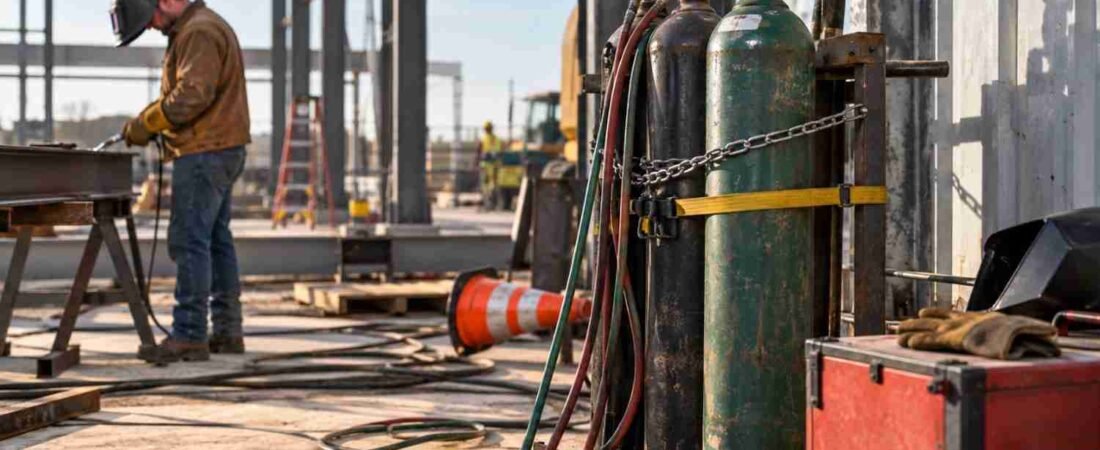
I used to think of welding gas cylinders as background equipment, something that stayed beside the welding area while the real work happened. The more I paid attention to job-site routines, though, the more obvious it became that a cylinder can create a serious hazard when a small shortcut turns into a bad situation.
I also noticed how quickly a busy site can change. A cylinder that was safely positioned in the morning can end up beside a walkway, exposed to sparks, or unsecured when crews move equipment around it. Those changes are why welding gas cylinder safety on job sites needs attention throughout the daily workday, not just during setup on site.
Why Welding Gas Cylinders Create Serious Job-Site Risks
A compressed gas cylinder combines stored pressure with gases that may be flammable, oxidizing, or capable of displacing oxygen. That combination makes poor handling more than an equipment issue. A damaged cylinder, broken valve, or uncontrolled gas release can create fire, explosion, impact, or breathing hazards.
The safest approach is to treat every cylinder as hazardous equipment, even when it is empty. Empty does not mean harmless. Residual gas can remain inside, so valves still need to be closed and cylinders handled carefully.
Common Risks to Watch on a Welding Site
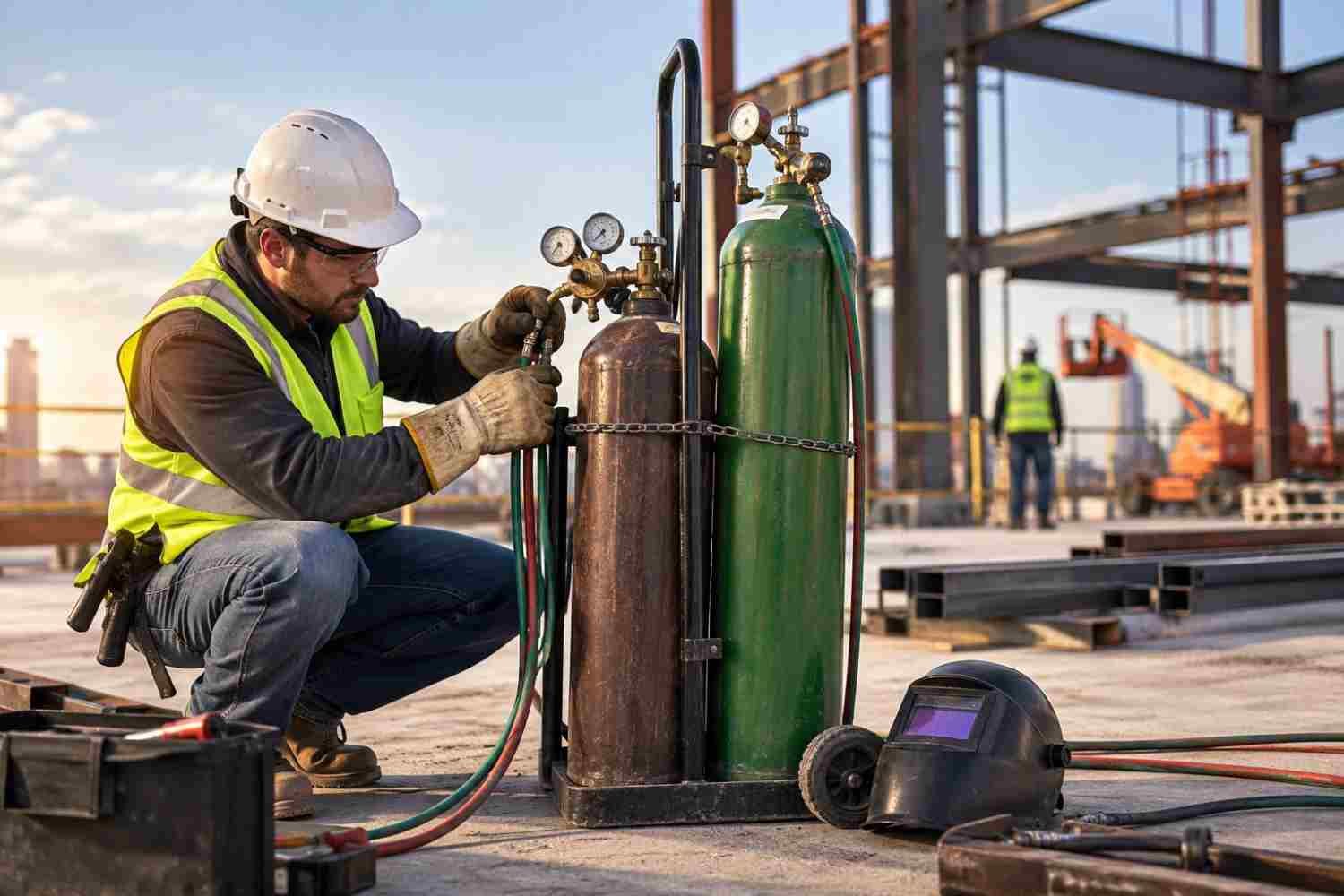
Unsecured or poorly positioned cylinders
A cylinder should not simply be leaned against a wall, welding table, truck, or piece of equipment. It needs to remain upright and secured with an appropriate chain, strap, rack, or cylinder cart.
Heat, sparks, and electrical contact
Welding produces sparks, hot slag, flame, and intense heat. Cylinders need enough distance from the operation to prevent those hazards from reaching them, or a suitable fire-resistant shield should be used.
Poor separation and storage
Oxygen and fuel gases should not be stored together without the required separation. OSHA requires oxygen cylinders in storage to be separated from fuel-gas cylinders or combustible materials by at least 20 feet, or by a qualifying noncombustible barrier.
Storage areas should also be dry, ventilated, protected from damage, and away from combustible materials. Cylinders should never be tucked into an unventilated locker where leaking gas can accumulate.
Handling Cylinders Before and During Work
Moving a cylinder deserves the same attention as using it. Do not lift one by its valve protection cap, drop it, or allow cylinders to strike each other. For hoisting, OSHA calls for a suitable cradle, slingboard, or pallet rather than magnets or choker slings.
When cylinders are moved, valves should be closed and regulators removed unless the cylinder is secured on a carrier specifically designed for that purpose. A suitable cylinder truck or hand truck with restraints is safer than trying to carry or roll a cylinder manually.
Before connecting equipment, inspect the cylinder, valve, regulator, hose, and connections. A damaged or defective cylinder should not be put into service. Never attempt to repair a valve yourself. Report problems to the gas supplier or responsible qualified person.
Operational Mistakes That Can Escalate Quickly
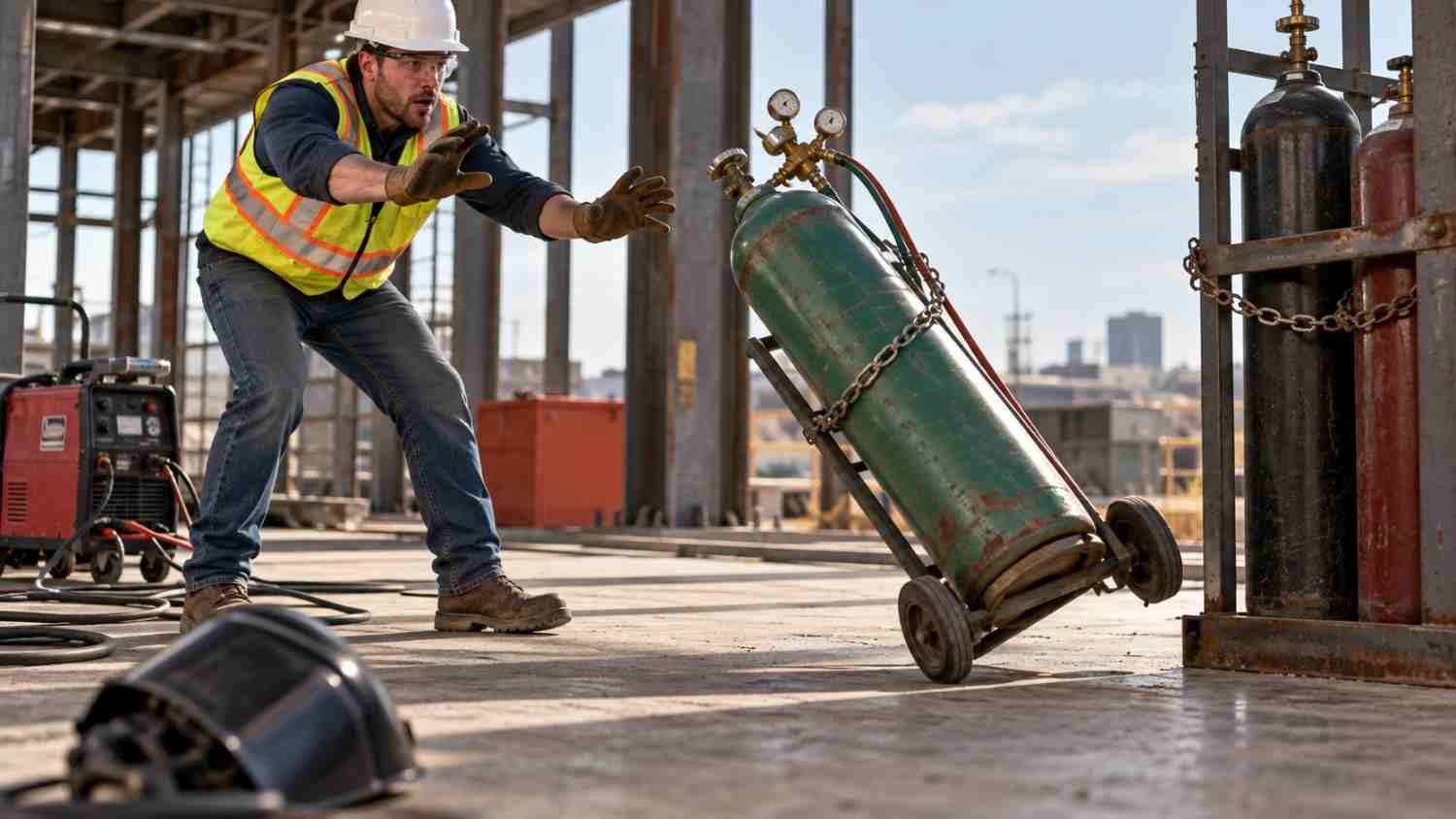
A safe cylinder setup can still become dangerous when torch and gas equipment are connected incorrectly. Approved regulators, hoses, torches, and manifolds should be used, with connections that match the gas and equipment.
Gas cylinders also need protection from oil and grease, especially oxygen equipment. Contamination can create a serious fire hazard. Keep oily gloves, tools, and materials away from oxygen cylinders, valves, and fittings.
Ventilation matters when gases are used indoors or in enclosed areas. Argon, carbon dioxide, and other gases can displace oxygen without an obvious warning. A leak in a poorly ventilated space can therefore become a breathing emergency.
Building Better Daily Habits
Good cylinder safety is less about memorizing rules and more about making a few checks routine. Before starting work, confirm that cylinders are upright, secured, correctly identified, protected from heat and sparks, and positioned where they cannot be struck.
That awareness is part of becoming a stronger welding professional. As construction practices change, workers can also explore career paths beyond traditional welding jobs that build on technical knowledge while opening opportunities across fabrication, inspection, coordination, and industrial work.
At the end of a job, close cylinder valves and return equipment to an appropriate storage arrangement. Do not leave cylinders wherever the crew happened to stop working. A few extra minutes can prevent the next shift from inheriting a hidden hazard.
Digital systems can also help organize inspections, maintenance records, training, and job-site communication. Learning about digital tools for modern welding professionals can help workers connect hands-on safety habits with better documentation and more consistent work practices.
FAQs: Welding Gas Cylinder Safety on Job Sites: Common Risks to Avoid
1. Should welding gas cylinders always be secured?
Yes. Cylinders should generally remain upright and secured with a suitable chain, strap, rack, or cylinder cart so they cannot be knocked over. OSHA requires compressed gas cylinders to be secured upright except during necessary short periods of hoisting or carrying.
2. How far should oxygen cylinders be from fuel gases?
For cylinders in storage, OSHA requires oxygen cylinders to be separated from fuel-gas cylinders or combustible materials by at least 20 feet, or by a qualifying noncombustible barrier with the required height and fire resistance.
3. Can a damaged cylinder still be used?
No. A damaged or defective cylinder should be removed from service and handled according to the supplier’s instructions. Workers should never attempt to repair a cylinder valve or tamper with safety devices.
4. Can cylinders be kept in an enclosed storage area?
Cylinders should not be kept in unventilated enclosures because leaking gas can accumulate and create fire, explosion, or oxygen-deficiency hazards. Storage areas should meet applicable workplace requirements for ventilation and protection.
The Habits That Keep the Job Site Safer
Cylinder safety rarely depends on one dramatic decision. It comes from repeated choices: securing equipment before work begins, keeping heat and electrical hazards away, checking connections, maintaining separation, and noticing when a changing work area creates a new risk. Those habits protect more than the cylinder itself. They protect the welder, nearby crews, equipment, and everyone who enters the site later.
The strongest safety routine is usually the least complicated one. Treat every cylinder with respect, slow down when moving it, and never let a busy shift turn a basic precaution into an optional step.