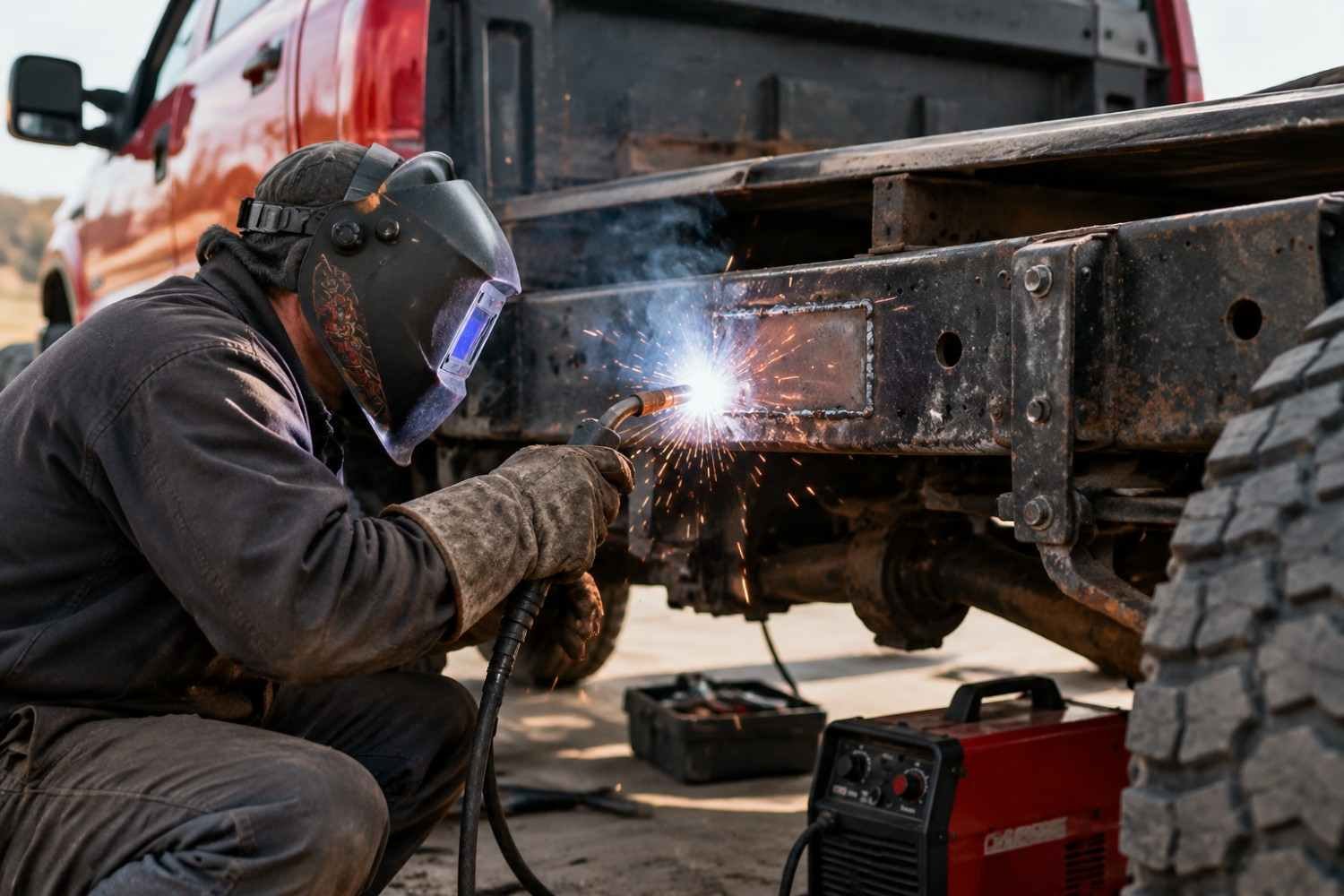

The first time I heard my flux core welder making sharp popping sounds, I thought the machine was failing. The arc was inconsistent, sparks were flying everywhere, and the weld bead looked rough instead of clean. After checking the setup, I realized the problem was not the welder itself. It was a combination of incorrect settings, poor wire feeding, and an unstable electrical connection.
When a flux core welder keeps popping, spitting, or stubbing, it usually means the arc is not burning consistently. The wire may be hitting the puddle before melting, the polarity may be incorrect, or the machine may not be receiving a steady electrical connection.
Flux-cored arc welding (FCAW) depends on several factors working together, including wire feed speed, arc voltage, electrode extension, and correct polarity.
Instead of randomly adjusting knobs, I troubleshoot the problem in a specific order. Checking the simple issues first can often restore a smooth “bacon sizzling” welding sound without replacing any expensive parts.
Why Does My Flux Core Welder Keep Popping and Spitting?
A flux core welder creates an arc when the continuously fed tubular wire electrode melts into the base metal. If the wire feed, voltage, or electrical path becomes inconsistent, the arc repeatedly breaks and restarts. This creates the popping sound many beginners experience.
Some crackling is normal with flux core welding because the flux inside the wire produces shielding gases and slag during the welding process. However, loud popping combined with excessive spatter, wire sticking, or poor weld appearance usually indicates a setup problem.
The most common causes include incorrect polarity, mismatched voltage and wire speed, poor grounding, damaged contact tips, incorrect stickout, and wire feeding problems.
Check Your Flux Core Welding Polarity First
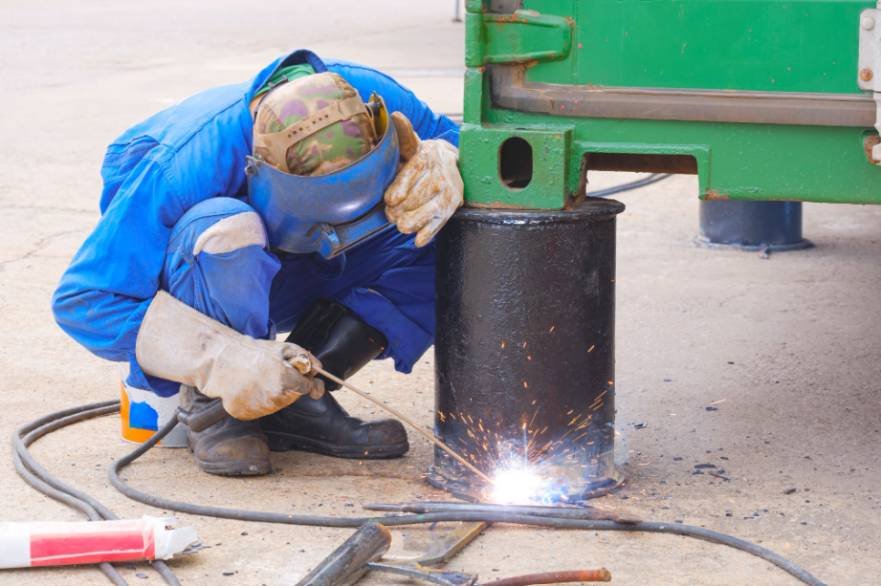
One of the biggest mistakes I see with gasless flux core welding is using the wrong polarity.
Many home welders are shipped configured for solid MIG wire, which commonly uses DCEP (electrode positive). However, many self-shielded flux core wires require DCEN (electrode negative), also called straight polarity.
With the wrong polarity, the arc becomes aggressive and unstable. The wire can melt too quickly, creating violent popping, excessive spatter, and poor penetration.
For most gasless flux core setups, I check that the welding gun is connected to the negative (-) terminal and the work clamp is connected to the positive (+) terminal. However, always confirm the polarity requirements printed on your specific wire because gas-shielded flux core wires can use different settings.
Adjust Wire Feed Speed and Voltage Together
Another common reason for a bad arc is an incorrect relationship between wire feed speed and voltage.
If the popping sounds fast and harsh, the wire feed speed is often too high or the voltage is too low. The wire pushes into the weld puddle before it has enough time to melt, causing the wire to short against the metal. This is known as stubbing.
The fix is usually reducing wire speed slightly or increasing voltage in small adjustments.
If the popping is slower and the wire keeps sticking back into the contact tip, the problem may be burnback. This often happens when wire speed is too slow or voltage is too high. Increasing wire feed speed or reducing voltage can help stabilize the arc.
I always make small changes and test on scrap steel instead of adjusting multiple settings at once.
Proper control of the weld puddle also depends on how the arc and wire feed interact. For welders using pulsed MIG, understanding the pulse MIG puddle manipulation technique can help maintain better control of the puddle while making small adjustments to welding settings.
Inspect the Contact Tip and Maintain Proper Stickout
A worn or damaged contact tip can easily create an unstable flux core welding arc.
The copper contact tip transfers electrical current to the wire. If the opening becomes worn, oversized, clogged with spatter, or does not match the wire diameter, the current transfer becomes inconsistent.
For example, a .030-inch flux core wire should use the correct matching contact tip size. A loose or damaged tip can create popping, inconsistent feeding, and poor weld quality.
Stickout is another important factor. Flux core welding generally requires a longer contact tip-to-work distance compared with standard MIG welding. Keeping approximately 1/2 inch to 3/4 inch of wire extension helps maintain a stable arc in many self-shielded FCAW applications.
Holding the gun too close can cause overheating and burnback, while excessive distance can create poor penetration and more spatter. Proper electrode extension is one of the key variables in controlling FCAW weld quality.
Clean Your Metal and Improve the Ground Connection

Even a properly adjusted machine can struggle when the electrical path is poor.
I always clean away rust, paint, oil, grease, and heavy mill scale before welding. Contaminants interfere with the arc and can trap gases inside the weld, creating porosity and inconsistent results.
The ground clamp is equally important. Attaching it to rusty or painted metal increases electrical resistance and can make the arc unstable.
A reliable ground connection requires:
- Clean bare metal at the clamp location
- A secure connection
- A clamp with good contact surfaces
Before changing machine settings, I check the ground because a poor connection can make a good welder behave like it has a serious problem.
Check Drive Rolls and Wire Feeding Problems
Flux core wire is softer than solid MIG wire because it has a hollow tubular design. Using the wrong drive roll can cause slipping, crushing, or inconsistent feeding.
For many flux core applications, knurled V-groove or U-groove drive rolls provide better grip than smooth rolls designed for solid wire. Incorrect tension can also flatten the wire and create feeding problems.
If the wire feed stops and starts, I inspect:
- Drive roll type
- Drive roll tension
- Liner condition
- Wire spool movement
- Contact tip condition
Wire feeding problems are a major cause of arc interruptions, burnback, and poor FCAW welds.
Your Welding Technique Can Also Cause Popping
Sometimes the machine setup is correct, but technique creates instability.
I maintain a consistent travel speed, steady gun angle, and proper distance from the workpiece.
A stable welding setup also depends on having a work surface that allows the workpiece to be positioned and secured properly. Choosing the right welding table hole size for clamps can make it easier to hold parts securely while maintaining consistent gun movement.
Dragging the gun at the correct angle usually provides better control with self-shielded flux core welding.
Moving too quickly can reduce penetration, while moving too slowly can create excessive heat and a wide weld bead.
Keeping the arc focused on the leading edge of the puddle and maintaining a steady motion helps produce a smoother weld.
My Troubleshooting Order for a Popping Flux Core Welder
When my machine starts popping, I avoid changing everything at once. I check the basics first:
- Confirm the wire polarity.
- Verify wire speed and voltage settings.
- Clean the metal and ground connection.
- Inspect the contact tip.
- Check stickout distance.
- Examine drive rolls and wire feeding.
- Adjust welding technique.
This approach saves time because it identifies whether the problem is electrical, mechanical, or related to operator technique.
Frequently Asked Questions
1. Why does my flux core welder pop and spit?
A flux core welder usually pops and spits because of incorrect polarity, poor wire feed settings, dirty metal, weak grounding, or inconsistent stickout. Checking these areas usually restores a stable arc.
2. Should flux core welding sound like popping?
A soft crackling sound can be normal, but loud popping with heavy spatter usually means the settings or setup need adjustment. A smooth sizzling sound is typically a better indication of a stable arc.
3. Why does my flux core wire keep burning back?
Burnback happens when the wire melts back into the contact tip. Common causes include slow wire feed speed, excessive voltage, or holding the gun too close to the workpiece.
4. How do I reduce spatter when flux core welding?
I reduce spatter by using the correct polarity, matching voltage with wire speed, cleaning the metal, maintaining proper stickout, and keeping the wire feed system working smoothly.
Final Thoughts
When a flux core welder keeps popping, the problem is usually not a damaged machine. Most issues come from incorrect setup, poor electrical connections, worn consumables, or inconsistent feeding.
By checking polarity, adjusting voltage and wire speed, cleaning the workpiece, and inspecting the wire path, I can usually bring the arc back to a smooth and controlled condition. Flux core welding is a powerful process for garage projects, repairs, and fabrication work, but it performs best when every part of the setup works together.