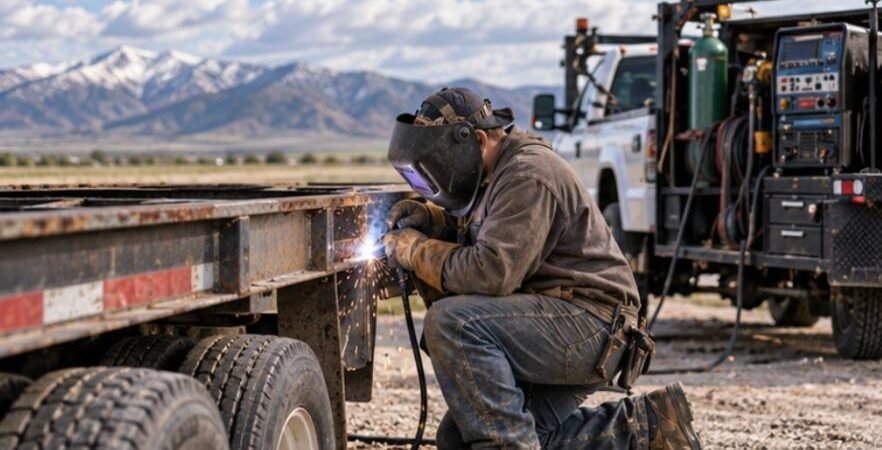
A cracked equipment bracket can stop a jobsite even when the repair itself takes less than an hour. The expensive part may be towing a machine, dismantling a gate, or hauling an oversized steel component to a shop. That is why mobile welding exists. If you are asking what does a mobile welder do, the short answer is: they bring welding, cutting, repair, and fabrication capability directly to the work.
The arc is only part of the job. A capable mobile welder also diagnoses damage, measures and prepares metal, chooses the right process, controls hazards, and checks whether the repair suits its intended use.
A Welder Who Works Where the Metal Is
The U.S. Bureau of Labor Statistics says welders read blueprints, inspect materials, measure parts, join or cut metal, and maintain equipment. It counted about 437,700 U.S. welding jobs in 2025. Mobile welders perform those core tasks outside a fixed shop. BLS Occupational Outlook Handbook
Their truck or trailer may carry an engine-driven welder/generator, leads, electrodes or wire, shielding gas, grinders, clamps, cutting tools, fire extinguishers, and PPE. A farm-repair rig may look very different from a mobile stainless-fabrication setup.
Mobility matters because the workpiece often cannot reasonably travel: a gate may be set in concrete, a machine disabled in a field, or steel already installed in a building.
What Mobile Welders Actually Do
Repair Failed Metal
Mobile welders repair cracked brackets, broken hinges, railings, gates, fences, trailer components, agricultural equipment, machinery, and other metal assemblies.
The best repair begins before welding. A professional should ask why the part failed. Welding over a crack without correcting fatigue, corrosion, poor fit-up, overloading, or a defective previous repair can make the problem return.
Fabricate or Modify Parts On-Site
Field welding also includes fabrication. Welders may build or alter supports, frames, guards, posts, handrails, equipment mounts, or replacement sections at the customer’s location.
On-site fitting can also prevent rework when existing construction is not perfectly square.
Cut and Prepare Steel
A field repair may involve more cutting and grinding than welding. Damaged metal may need removal, edges may need beveling, and rust or paint may need cleaning before a sound joint can be made.
Preparation matters because coatings, contamination, poor joint geometry, and limited access can affect weld quality as much as machine settings.
Restore Equipment During Downtime
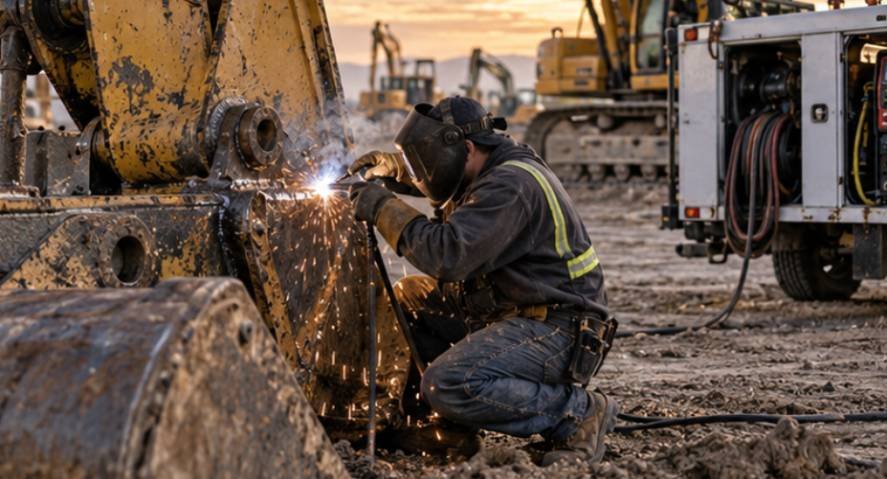
Construction crews, farms, repair yards, and industrial operations often hire mobile welders because downtime costs more than the metal repair itself.
Urgency does not remove the need to consider material, load, access, and whether a temporary repair is acceptable.
Mobile Welder vs. Welding Shop
| Factor | Mobile welder | Fixed welding shop |
| Work location | Client site | Controlled facility |
| Best use | Fixed, disabled, or hard-to-transport items | Precision or equipment-heavy fabrication |
| Equipment access | Limited to the rig | Broader machines and fixtures |
| Conditions | Weather, access, fire risk | More predictable |
| Main advantage | Avoids moving the workpiece | Better control and repeatability |
Mobile service is strongest when transportation is difficult or downtime is costly. Shop work may be better for high-volume fabrication, machining, large fixtures, or specialized equipment.
Safety Is Part of the Service
A mobile welder may be working beside lumber, fuel, insulation, vegetation, vehicles, or occupied buildings rather than inside a welding bay.
OSHA requires precautions against sparks, slag, heat, and combustible materials. Its general-industry welding rule addresses combustible hazards within 35 feet under specified conditions and requires fire-watch measures where the risk warrants them.
Fumes matter too. NIOSH explains that welding fumes contain metals and that exposure changes with the process, filler material, base metal, coatings, and ventilation. Confined spaces can increase exposure.
Professional mobile welding therefore includes site inspection, ventilation, PPE, shielding, and fire protection. University of Maine Extension similarly emphasizes ventilation, maintained equipment, and a fire extinguisher at the welding site.
How a Field Call Usually Works
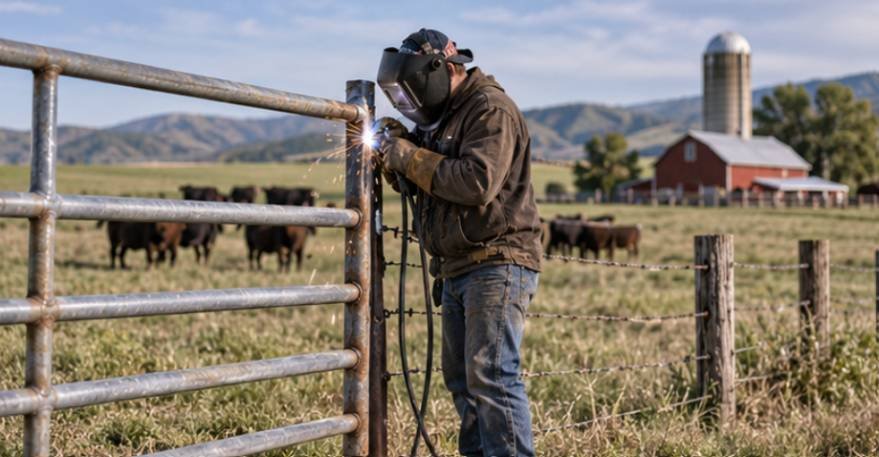
To understand what does a mobile welder do in practice, follow the job from arrival to completion.
First comes diagnosis: What metal is this? What failed? Is the component load-bearing? Can the damaged area be safely accessed? Next, the welder measures, decides whether to repair or replace, and prepares the joint by cleaning, cutting, beveling, aligning, and clamping.
Then comes process selection. Stick welding is often practical for heavy outdoor repair. MIG can be productive on clean steel when shielding gas is protected from wind. TIG offers high control for certain stainless, aluminum, and precision work.
After welding, the job may still require grinding, straightening, inspection, reinstalling parts, checking fit, and applying corrosion protection.
How to Decide Whether to Hire a Mobile Welder
A simple test helps. Mobile service usually makes sense when the item is fixed in place, expensive to transport, unsafe to move, or causing costly downtime.
Before hiring, describe the base metal, thickness if known, type of failure, location, access, and whether the part carries structural loads. Photos can help with estimating, but they do not replace an on-site inspection.
Ask whether the welder has experience with comparable work. If the project requires documented qualifications, ask what code, process, position, and material qualification applies.
If you want to understand what certification involves before hiring a welder, learning how to become a certified welder can clarify the training, testing, and qualification process behind those credentials.
The American Welding Society’s Certified Welder program is performance-based, but certification should match the work being performed.
For commercial or specialized projects, it is also worth understanding the broader mobile welder qualifications involved, including technical training, code certifications, contractor licensing, insurance, and field-safety requirements.
Also ask about travel charges, minimum fees, materials, cutting, fabrication, and finishing. The lowest hourly rate may not produce the lowest total cost.
Where Mobile Welding Has Limits
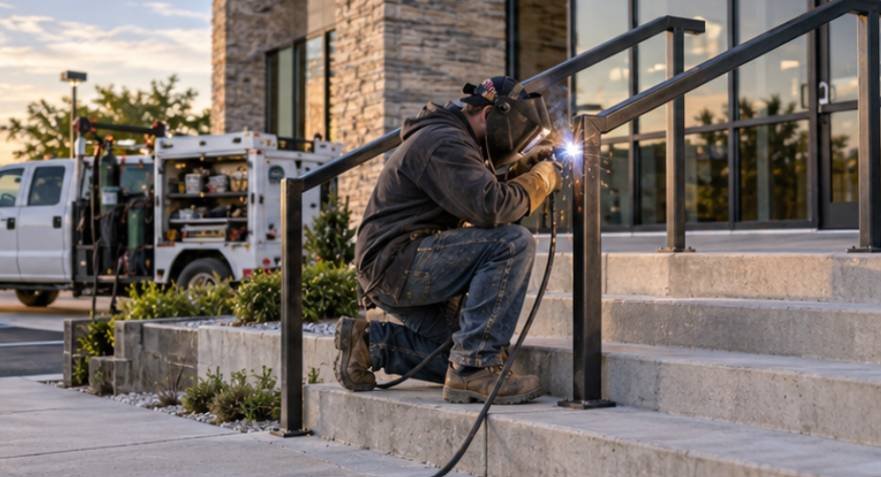
Mobile welding is not a substitute for engineering. A skilled welder can make a sound weld while an engineer, inspector, manufacturer, or code authority may still need to determine whether a structural repair is acceptable.
Some projects also belong in a shop. Extensive machining, delicate assemblies, large fixtures, specialized testing, or tightly controlled fabrication may be more reliable indoors.
Weather can be a limitation. Wind can disrupt shielding gas, rain introduces electrical hazards, and difficult temperatures may affect procedures. Knowing when not to weld is part of competent field work.
Frequently Asked Questions
1. Do Mobile Welders Bring Their Own Power?
Often. Many rigs use engine-driven welder/generators, although some jobs use suitable site power depending on equipment and circuit requirements.
2. Can a Mobile Welder Repair a Trailer?
Often, but frame damage can be safety-critical. Material, crack location, design, and load matter, and some repairs may need manufacturer or engineering guidance.
3. Are Mobile Welders Certified?
Some are. Certification requirements depend on the job, process, material, position, and governing code. Ask for qualifications relevant to your project.
4. Is Mobile Welding More Expensive Than Shop Welding?
The service-call rate may be higher, but mobile work can reduce towing, disassembly, transportation, and downtime costs.
The Real Value Is Moving the Skill, Not the Steel
The value of a mobile welder becomes obvious when the metal cannot easily come to the shop. The service combines welding ability with diagnosis, fabrication, logistics, safety, and judgment under real field conditions.
So when a trailer, gate, machine, railing, or installed steel component fails, do not judge the job only by how fast someone can strike an arc. Look for the person who can identify the failure, make the site safe, choose an appropriate repair, and leave the equipment or structure ready for what it has to do next.