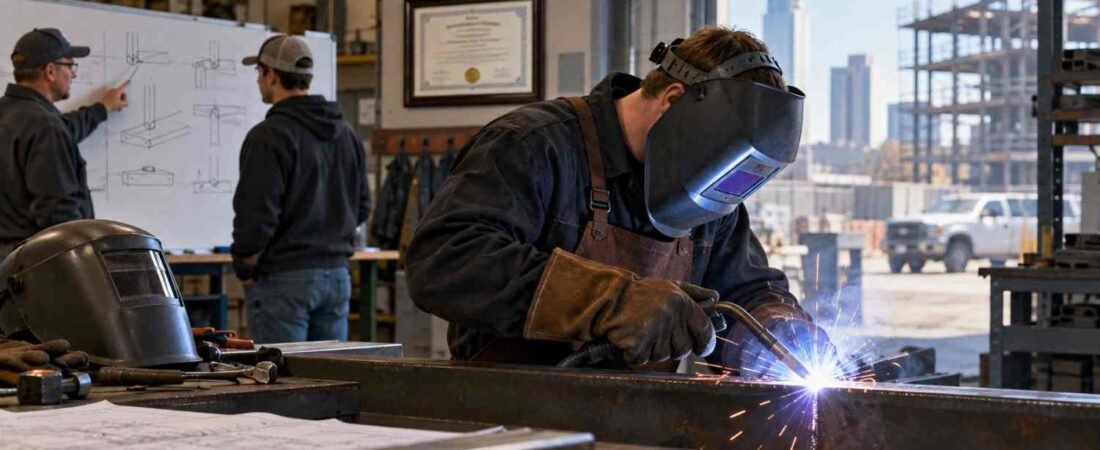
I noticed that people interested in welding often assume certification works like a school diploma: finish a course, receive a credential, and start applying. Welding certification is usually about proving that you can produce an acceptable weld using a specific process, position, material, and procedure.
I also found that this distinction makes the career path easier to understand. You do not need every credential before earning your first paycheck. You need solid fundamentals, enough practice to work consistently, and the right qualification for the work you want to pursue.
Start by Understanding What Welding Certification Means
Learning how to become a certified welder starts with understanding what “certified” actually covers. An AWS Certified Welder credential is performance-based. The basic program has no required courses or minimum experience.
That does not mean training is optional in practical terms. Certification also is not a universal license proving you can perform every type of welding. Qualifications relate to variables such as the welding process, position, base metal, thickness, and procedure being tested.
Choose a test with your intended work in mind.
Build Skills Before Chasing the Credential
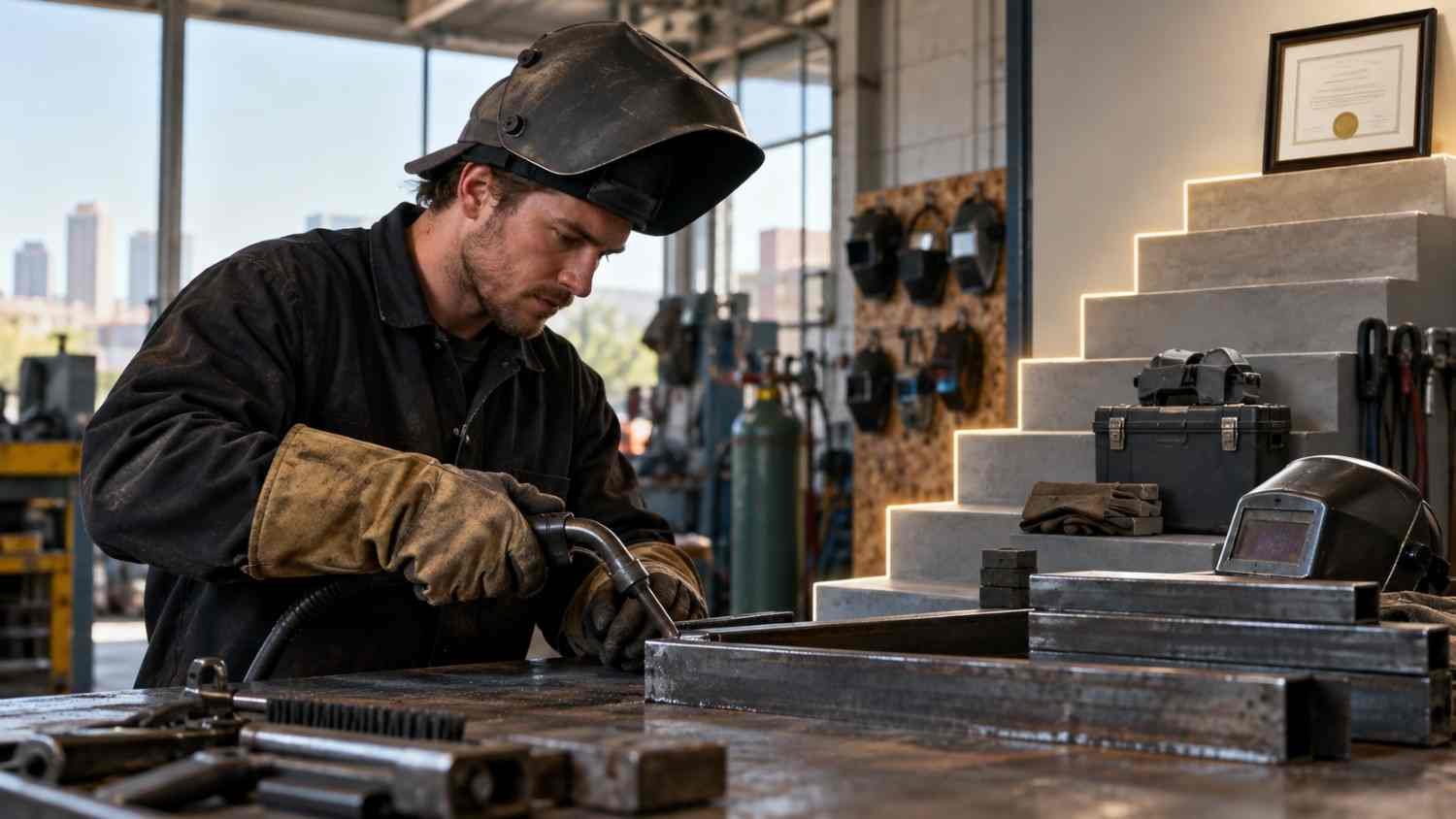
A high school diploma or equivalent is typical entry-level education, though AWS does not require one for this performance test.
Training should give you repeated booth time with common processes such as shielded metal arc welding (SMAW or stick), gas metal arc welding (GMAW or MIG), gas tungsten arc welding (GTAW or TIG), and flux-cored arc welding (FCAW).
Employers also value blueprint reading, measurement, joint preparation, fit-up, machine setup, and an understanding of welding symbols.
Choose a Training Route That Fits the Work
A welding program provides structured practice and feedback. An apprenticeship adds paid on-the-job learning and technical instruction.
Avoid choosing a school solely because it promises certification. Ask what processes you will practice, how much booth time students receive, what positions are taught, and whether training aligns with the jobs available in your region.
Learn how to inspect welding equipment before use. Leads, electrode holders, torches, regulators, grounding connections, cables, hoses, and protective equipment can affect both safety and weld quality.
Prepare for the Welding Certification Test
The test follows specified requirements, so understand the Welding Procedure Specification, or WPS, before striking an arc.
Practice in the actual position and process you expect to test on. Work on starts, stops, travel speed, arc length, electrode angle, tie-ins, and defect control.
During qualification, the weld is evaluated according to the applicable requirements. Depending on the test, evaluation may include visual inspection and mechanical testing such as bend tests.
Take the Performance Test and Maintain Your Qualification
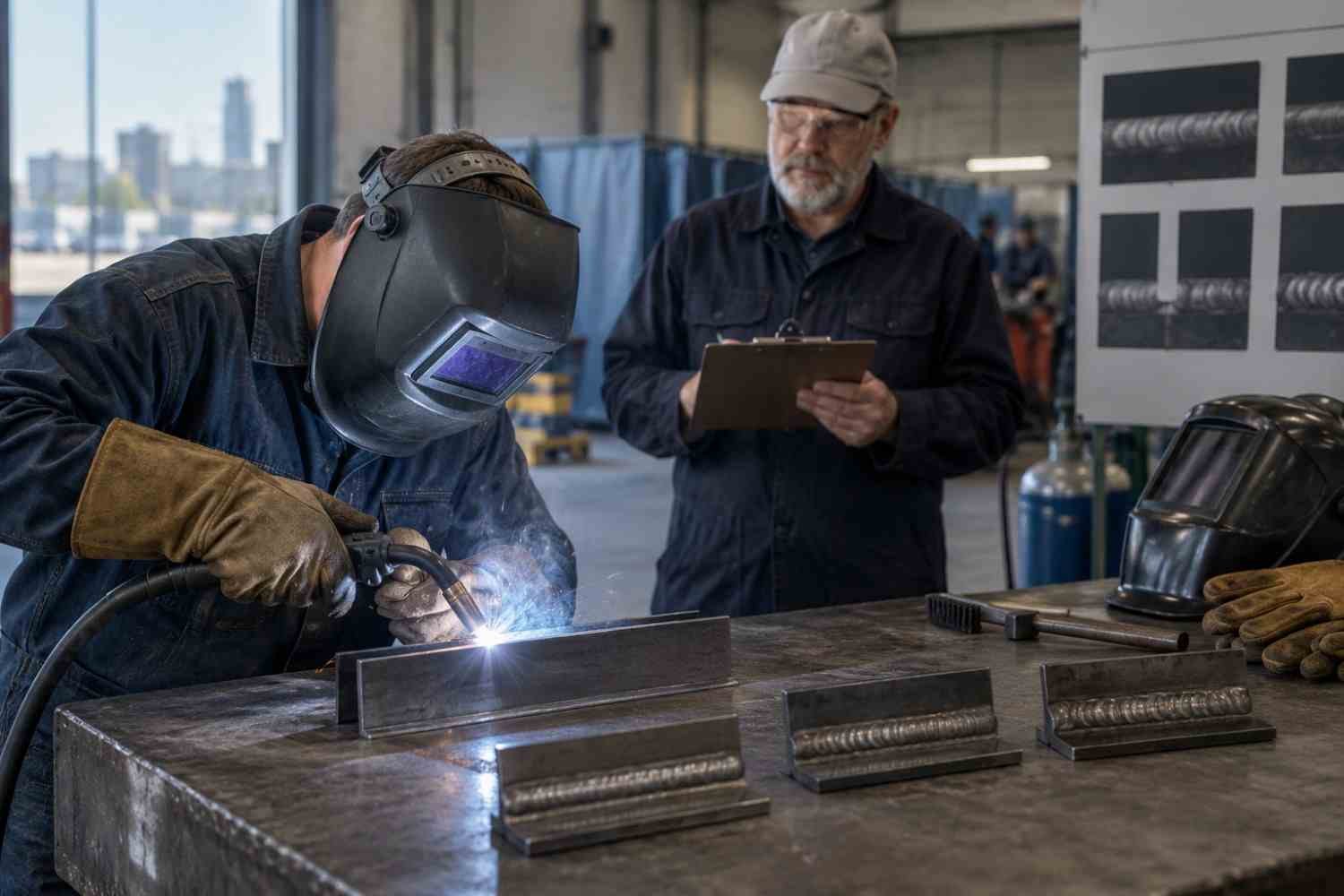
For the AWS Certified Welder program, candidates take the performance test through an AWS Accredited Test Facility. Testing fees can vary by facility, so confirm the total cost and test details beforehand.
AWS requires Certified Welder certifications to be maintained, and continuity matters. Keep accurate records, understand the maintenance requirements attached to your qualification, and do not assume a card remains current indefinitely.
Certification can expand over time. A welder may qualify for additional processes, positions, materials, or codes as career goals change.
Make Safety Part of Your Working Reputation
Arc radiation, hot metal, electrical hazards, fumes, compressed gases, sparks, and nearby combustible materials all demand attention. Proper PPE, ventilation, fire prevention, and equipment checks should become routine.
A practical welding safety checklist for job sites can help make those habits repeatable when the environment changes. Job sites add changing ventilation, weather, temporary power, other trades, and nearby combustibles.
Safety training such as OSHA 10 or OSHA 30 may be useful or requested for certain employers and construction environments, but it is separate from the AWS welding performance credential. Treat safety education as part of professional readiness, not a substitute for welding qualification.
Turn Certification Into Your First Welding Job
Fabrication shops, manufacturers, construction contractors, maintenance operations, and trade apprenticeships can provide starting points.
Early jobs are where classroom technique meets production pressure. You learn to manage time, communicate with fitters and supervisors, correct problems before they become expensive, and produce acceptable work repeatedly. Those habits can matter as much as adding a process to a skills list.
Keep your resume specific. Name processes you can perform, positions practiced, relevant certifications, materials handled, safety training, and shop experience.
As experience grows, you can pursue more demanding qualifications and move toward structural, pipe, industrial, or other specialized welding work.
FAQs: How to Become a Certified Welder and Start Your Welding Career
1. Do I need welding school to become certified?
Not necessarily. The AWS Certified Welder program does not require a specific education level or prior experience. However, most beginners need structured training and hands-on practice before they are ready to pass a performance test consistently.
2. How long does it take to become a certified welder?
There is no single timeline. Training length depends on your starting skill, program, chosen process, and certification goal. Some technical programs can be completed within a year, while apprenticeships and broader skill development take considerably longer.
3. Is an AWS certification enough to get a welding job?
It can strengthen your qualifications, but certification alone does not guarantee employment. Employers may require their own weld test, relevant experience, specific process qualifications, safety training, or the ability to read drawings and complete fabrication tasks.
4. Can a welder hold more than one certification?
Yes. Welders can earn qualifications covering different processes and applications. Additional credentials can make sense when moving into specialized work or when an employer requires qualification under a particular code or procedure.
The Skill Behind the Certificate
A welding credential matters because it verifies performance under defined conditions, but the habits built around that test carry further. Careful preparation, sound fit-up, steady technique, safe equipment use, and the willingness to keep learning are what turn a qualification into a career. The strongest path is not about rushing toward the first certificate available. It is about choosing work you want to do, practicing for its real demands, and proving your ability when the standard is clear.
Pass the test, then keep earning the reputation that makes the credential valuable.