If you weld in a home garage, can a 120v welder weld 1/4 inch steel is a practical question because 120V power is common across the US. The answer is yes for some machines, but quarter-inch mild steel is near the upper end of what many compact welders can handle. The real limit depends on rated output, process, duty cycle, branch circuit, joint design, and required penetration.
Miller rates its 120V Millermatic 142 for mild steel up to 3/16 inch, while Hobart lists the 115V Handler 140 for up to 1/4 inch in a single pass. Lincoln Electric also lists certain 120V WELD-PAK models for material up to 1/4 inch. I would never use input voltage alone as a thickness rating.
How Thick Can a 120V Welder Actually Weld?
Many 120V welders fall in the 90- to 140-amp class, but maximum amperage does not tell the whole story. Duty cycle, voltage output, arc characteristics, and the manufacturer’s material rating also matter.
For 1/4-inch steel, I start with the owner’s manual. If a machine is rated only to 3/16 inch, I would not assume beveling or extra passes automatically turn it into a quarter-inch welder. Lack of fusion or “cold lap” can occur when weld metal sits on the surface without properly fusing into the base steel.
Is Flux Core Better Than MIG for 1/4-Inch Steel on 120V?
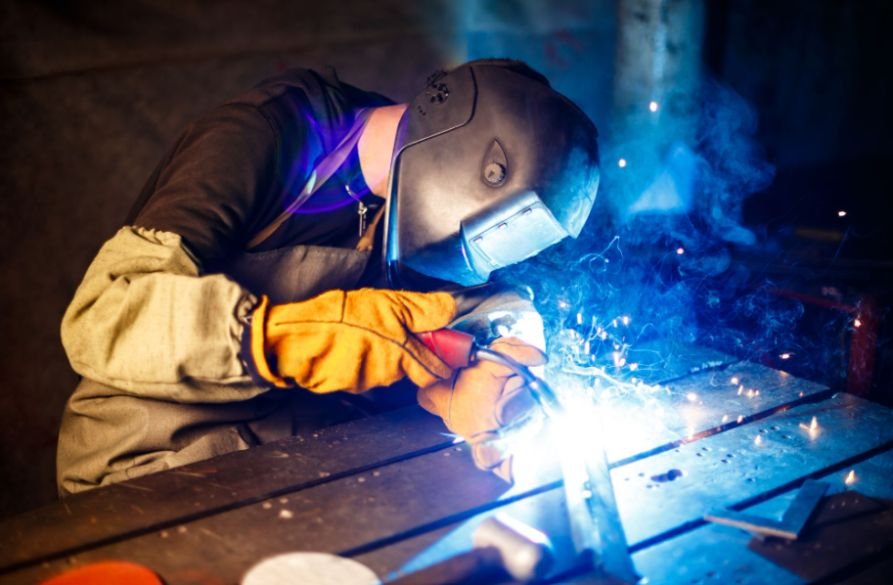
Flux-cored arc welding is often a strong choice near the upper thickness range of a compact 120V machine. Self-shielded flux-core wire can provide useful penetration, needs no external shielding-gas cylinder, and works outdoors where wind can disturb MIG shielding gas.
I would not simply crank every flux-core welder to maximum voltage and slow the travel speed.
Incorrect voltage, wire speed, polarity, or travel speed can create defects. Follow the manufacturer’s recommended settings.
Gas-shielded MIG should not be dismissed. Some 120V machines are rated for 1/4-inch material with MIG or flux-core capability. Shielding gas affects arc behavior and penetration, but it does not automatically prevent a 120V MIG welder from fusing quarter-inch steel.
Shielding gas affects arc behavior and penetration, but it does not automatically prevent a 120V MIG welder from fusing quarter-inch steel. Knowing how long an 80 CF welding tank lasts can also help when planning gas-shielded MIG work.
Lincoln Electric, for example, lists a 120V WELD-PAK model capable of both MIG and flux-core welding at material thicknesses up to 1/4 inch.
Can a 120V Stick Welder Handle Quarter-Inch Steel?
Some 120V stick welders can work on this thickness with suitable small electrodes and multiple passes. Depending on the machine and procedure, 3/32-inch E6011 or E7018 electrodes may be options. Electrode type, polarity, amperage, joint design, and machine rating still need to match.
How Should You Prepare 1/4-Inch Steel Before Welding?
Preparation becomes especially important near a small welder’s capacity. I clean away paint, rust, oil, heavy mill scale, and other contamination, then make sure the work clamp has a clean connection.
Beveling can improve access to the root on suitable groove joints. A 45-degree bevel may be used in some V-groove preparations, but it is not a universal rule. Groove angle, root opening, root face, and pass sequence should match the procedure.
Preheating also needs context. Moderate preheat can reduce heat loss into a heavy workpiece, but 250°F–300°F should not be treated as mandatory for every 1/4-inch mild-steel weld. Steel grade and the applicable welding procedure determine whether preheat is appropriate.
Do Multiple Passes Make a 120V Welder Strong Enough?
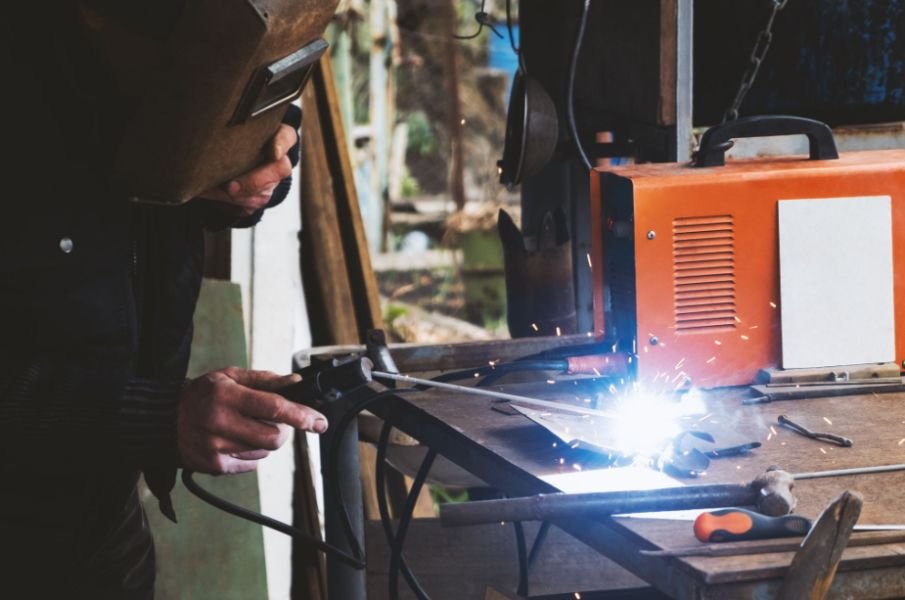
Multiple passes can help fill a prepared groove and build weld size. A root pass may be followed by filler and cover passes, and with flux core or stick I clean slag thoroughly between passes.
Extra passes cannot compensate for an incapable machine. The root still needs adequate fusion. If the welder cannot establish a sound root or maintain the required arc, adding more metal on top does not fix the problem.
That is why can a 120v welder can weld 1/4 inch steel should be answered by the machine’s rated capability and joint requirements, not voltage alone.
Does a 120V Welder Need a 20-Amp Circuit?
Electrical supply can determine whether a welder reaches rated output. A high-output 120V machine may perform poorly or trip a 15-amp household breaker near maximum load. Lincoln, for example, specifies a 20A branch circuit for rated output on its WELD-PAK 90i FC.
That does not mean you should install a 20A or 30A breaker on an existing circuit without checking the wiring. Breaker size, conductors, receptacle, plug, and welder requirements must be compatible with applicable US electrical requirements. When in doubt, use a qualified electrician.
Long or undersized extension cords can also cause voltage drop. Follow the cord gauge and maximum length specified in the machine manual. Lincoln’s manual, for example, specifies minimum extension-cord sizes and maximum lengths for its 120V machine.
Is 240V Better for Welding 1/4-Inch Steel?
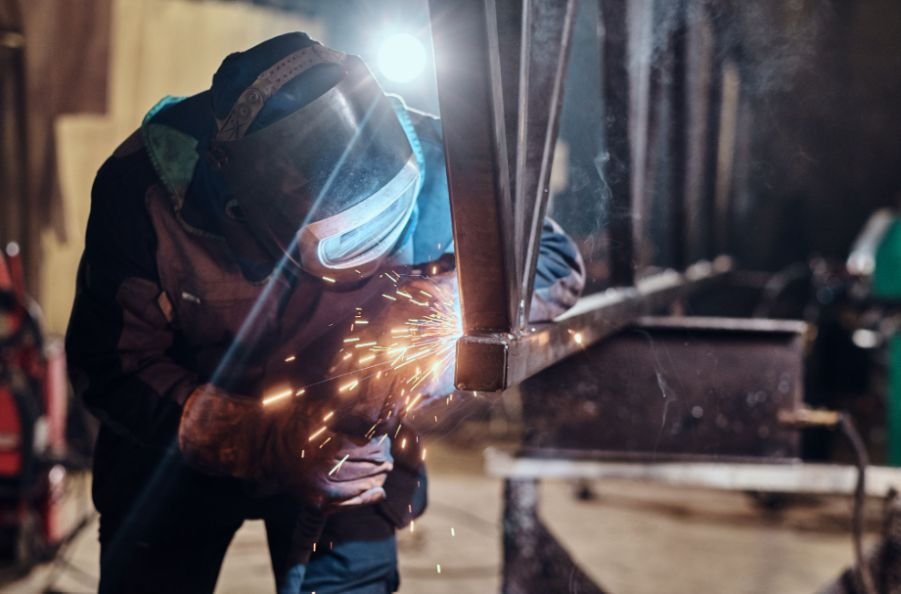
For occasional brackets, repairs, gates, farm maintenance, or garage projects, a manufacturer-rated 120V welder may be enough. A properly sized welding table for a one-car garage can also make these home welding projects easier to set up and work around.
For repeated quarter-inch welding, long beads, heavy fabrication, or production work, a suitable 240V welder generally provides more output and duty-cycle headroom.
I also would not choose equipment for safety-critical work based only on voltage. Automotive suspension, utility trailers, structural supports, lifting components, and similar work may require qualified procedures, specified filler metals, inspection, and trained or certified welders. A 240V machine provides more capacity, but it does not automatically guarantee a safe weld.
Frequently Asked Questions
1. Can a 140-Amp Welder Weld 1/4-Inch Steel?
Some can. Check the manufacturer’s thickness rating, welding process, recommended wire or electrode, input circuit, and duty cycle rather than assuming every 140-amp welder has identical capacity.
2. Is Flux Core Good for Quarter-Inch Mild Steel?
Yes. Flux core can be effective on thicker mild steel and is particularly convenient outdoors. Use the polarity, wire diameter, voltage, and wire-feed settings specified for the welder and consumable.
3. Can I Weld 1/4-Inch Steel From a Regular Household Outlet?
Possibly. Some 120V welders operate from common US household power, but achieving their rated output may require a specific branch circuit. Always follow the manufacturer’s input-power requirements.
Final Verdict
So, can a 120v welder weld 1/4 inch steel? Yes, if the specific machine is rated for that thickness and you provide the correct circuit, process, consumables, joint preparation, and technique. Other 120V welders are rated only to 3/16 inch, so there is no universal quarter-inch capability.
For home or mobile welding, I would treat the manufacturer’s rating as the baseline, watch carefully for lack of fusion, respect the duty cycle, and move to a suitable 240V machine when quarter-inch work becomes frequent or demanding.
Sources referenced: Hobart Handler 140 specifications, Miller Millermatic 142 specifications, Lincoln Electric WELD-PAK 90i FC literature, and Lincoln Electric WELD-PAK 90i FC owner documentation.