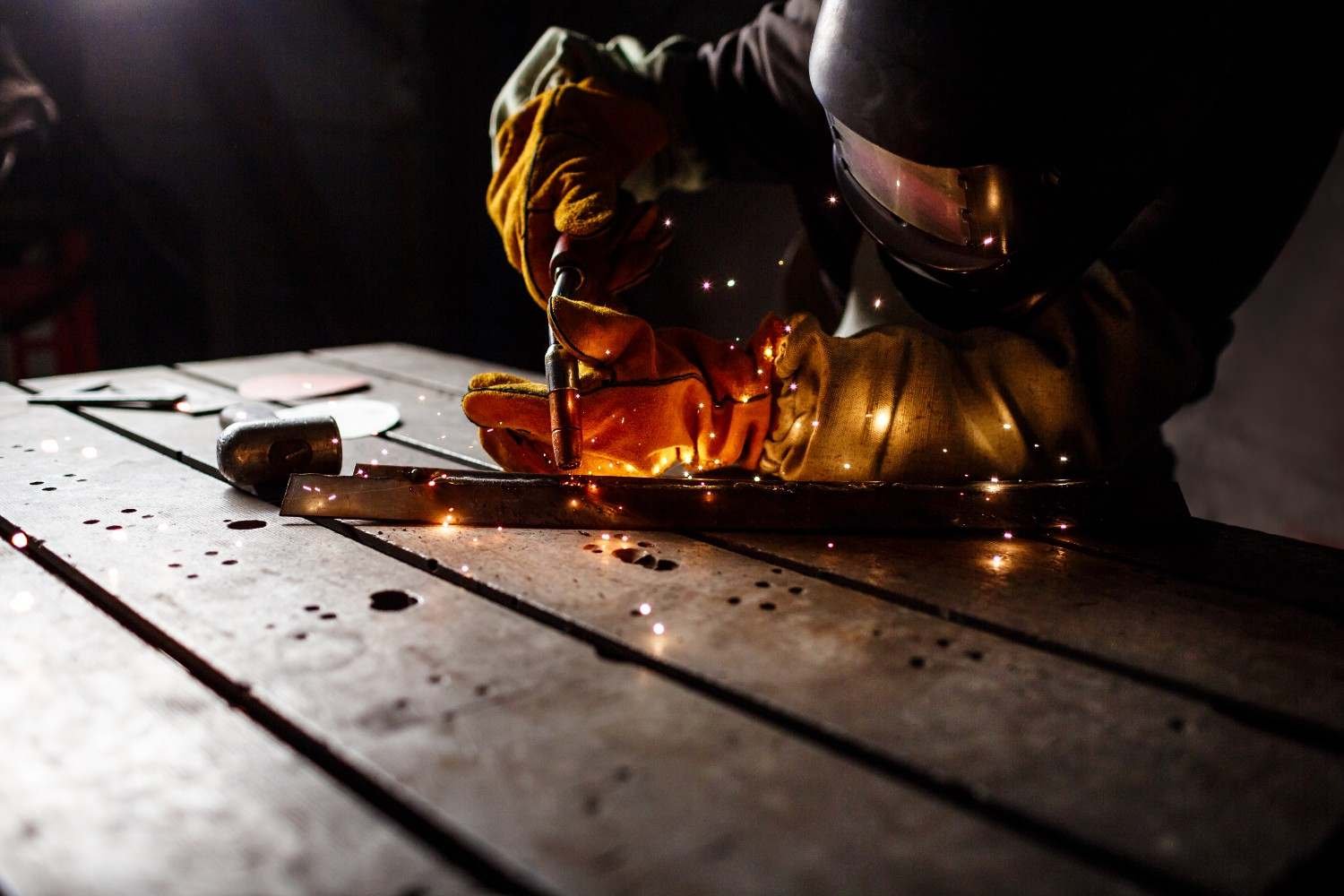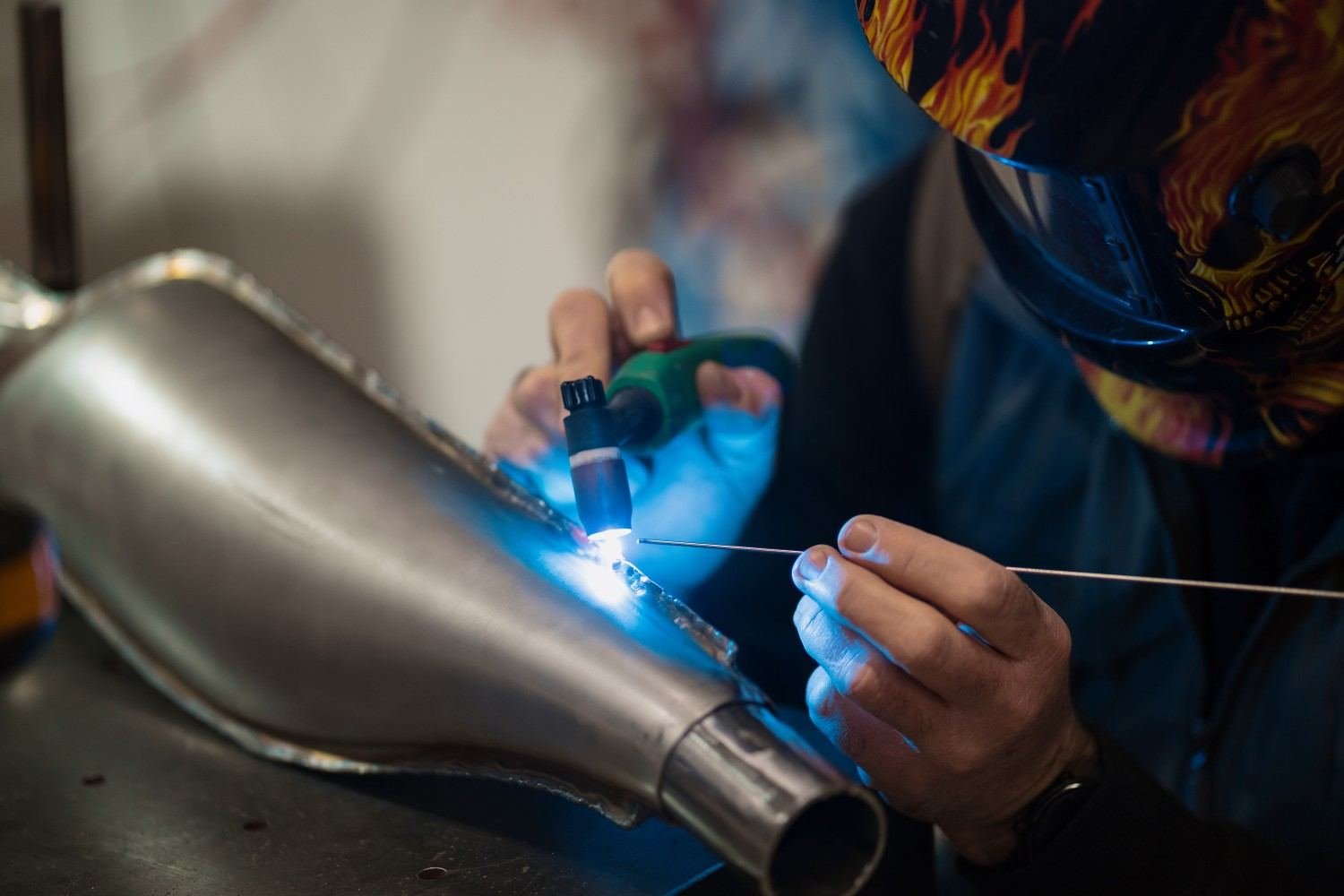
Setting up a welder in a home garage sounds simple until the electrical questions begin. One of the most common is: Can you run a welder on a 20-amp circuit without constantly tripping the breaker or creating an unsafe situation?
In many cases, yes. Small 120V MIG, flux-core, TIG, and stick welders may operate from a properly installed 20-amp circuit when the manufacturer allows it. However, that does not mean every 120V welder will run at full power from any household outlet. Input amperage, duty cycle, material thickness, shared electrical loads, and extension-cord use all affect real-world performance.
What Welders Can Run on a 20 Amp Circuit?
Compact 120V flux-core and MIG welders are among the most common machines used on 20-amp household circuits. Many portable welders marketed around the 125A to 140A output range are designed for garages, DIY repairs, automotive sheet metal, exhaust work, fencing, and light fabrication.
These machines often perform best on thinner materials when connected to 120V power. Around 1/8-inch steel is a useful reference point for many entry-level applications, although I would never treat it as a universal maximum.
Some 120V welders can handle thicker material, including 1/4-inch steel, when the specific machine is rated for it.
Joint design, welding process, wire or electrode size, machine specifications, number of passes, and operator technique all influence achievable thickness.
Larger industrial welders and machines that require 240V power cannot simply be plugged into a standard 120V 20-amp circuit.
Does a 140 Amp Welder Really Draw 140 Amps From the Outlet?
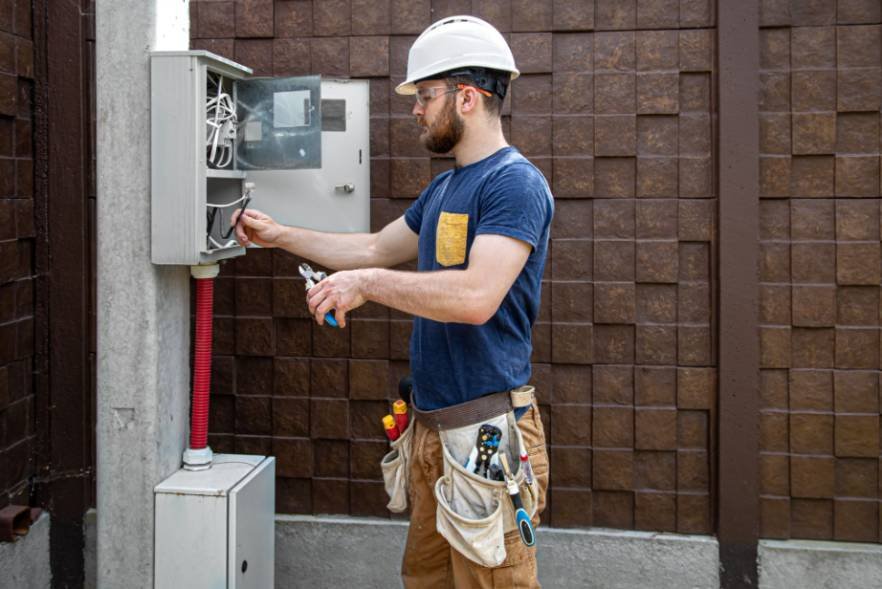
No, and this distinction is one of the most important things to understand.
A welder advertised as a 140-amp machine usually refers to its maximum welding output. That is not the same as the electrical current the welder pulls from the wall.
The specification that matters for your circuit is the welder’s input current. Manufacturers may list rated input current, maximum input current, input voltage, recommended breaker size, or similar information on the machine nameplate or in the owner’s manual.
A 140A output welder may therefore be compatible with a 120V 20-amp circuit if the manufacturer designed it that way.
I would not rely on a rule claiming that every welder above a certain output amperage will instantly trip a 20A breaker. Input requirements vary significantly between machines, especially between older transformer welders and modern inverter welders.
Does a Welder Need a Dedicated 20 Amp Circuit?
A dedicated circuit is often the most reliable arrangement for a compatible 120V welder.
If the same circuit also powers a refrigerator, air compressor, grinder, space heater, shop vacuum, or another high-draw tool, the combined electrical demand may exceed what the breaker can handle.
For a home welding setup, it is also important to keep welding gas cylinders stored safely in an appropriate location away from electrical and other workshop hazards.
For example, the welder may operate normally until an air compressor starts. The sudden additional load can cause nuisance tripping even though neither machine creates a problem when used alone.
For home welding, I prefer keeping heavy electrical loads separated whenever the manufacturer’s requirements and the home’s wiring configuration allow it.
Why Does My Welder Keep Tripping a 20 Amp Breaker?
Breaker trips usually indicate that the electrical demand has exceeded what the circuit or protective device can safely support.
A welder may trip a breaker when you increase output, start an arc, share the circuit with other equipment, or operate through an unsuitable extension cord. Excessive voltage drop, loose electrical connections, incorrect wiring, or a welder that simply requires a larger supply can also contribute.
Welding creates changing electrical loads, so occasional nuisance tripping may appear when a machine is pushed near the limits of a circuit.
What I would not do is repeatedly reset the breaker and continue welding without finding the cause. The breaker is there to protect the electrical system.
Does Duty Cycle Matter on a 20 Amp Welder Circuit?
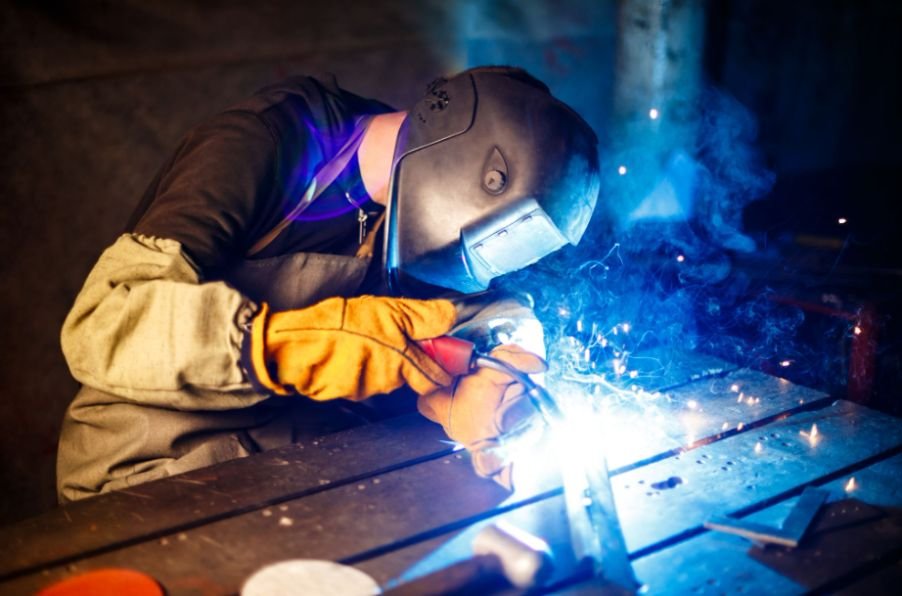
Duty cycle describes how long a welder can operate at a specified output within a defined time period before it must cool.
Running a small 120V machine close to its maximum output places greater demand on both the welder and the electrical supply. Long welds at high settings may therefore make breaker trips or thermal shutdowns more likely.
However, the circuit itself does not rewrite the manufacturer’s duty-cycle rating. The better way to think about it is that limited electrical supply can restrict how effectively you use the welder at its highest settings.
For occasional tack welds and light repairs, that may not matter much. For continuous fabrication or thicker steel, 240V power becomes much more attractive.
Can You Use an Extension Cord With a Welder?
You can use an extension cord only when the manufacturer permits it and the cord is properly sized.
Long or undersized cords create voltage drop. That can reduce arc performance, increase heating, and contribute to breaker trips.
I would avoid ordinary lightweight household extension cords for welding equipment. Follow the welder manufacturer’s wire-gauge and maximum-length recommendations, and keep the cord as short as practical.
Modern inverter welders can also behave differently from older transformer machines when supply voltage drops, which is another reason to follow model-specific instructions.
Is a 20 Amp Circuit Better Than a 15 Amp Circuit for Welding?
For many small 120V welders, a 20-amp circuit provides more usable capacity than a 15-amp circuit.
A machine that struggles on a 15A circuit may work more reliably on an approved 20A branch circuit. That does not mean you should replace a 15A breaker with a 20A breaker.
The wiring, receptacles, breaker, and overall branch circuit must be appropriately rated. Installing a larger breaker without verifying the wiring can create an overheating or fire hazard.
Any circuit upgrade should be evaluated by a qualified electrician.
When Should You Switch From 120V to 240V Welding?
A 120V welder is convenient for portable repairs and lighter fabrication because standard household power is widely available.
A 240V setup makes more sense when you regularly weld thicker steel, need higher amperage, want longer weld times, or need better performance at higher duty cycles.
Dual-voltage welders are particularly useful because they can provide portability on 120V while delivering greater performance when connected to an appropriate 240V circuit.
Frequently Asked Questions
1. Will a 120V Welder Work on a 20 Amp Breaker?
Many 120V welders can operate on a 20A breaker, but you should verify the required input voltage, input current, breaker rating, and circuit recommendations in the manufacturer’s manual.
2. Why Does My Welder Trip the Breaker When I Strike an Arc?
Arc starting can create a sudden electrical demand. High output settings, shared loads, voltage drop, undersized extension cords, or inadequate circuit capacity can also cause breaker trips.
3. Can I Weld 1/8-Inch Steel on a 20 Amp Circuit?
Many small 120V MIG and flux-core welders can handle approximately 1/8-inch material under suitable conditions. Actual capacity depends on the specific welder, process, joint preparation, settings, and manufacturer ratings.
4. Can I Replace a 15 Amp Breaker With a 20 Amp Breaker for My Welder?
Not without confirming that the wiring and other circuit components are designed for 20 amps. A qualified electrician should assess the branch circuit before any breaker upgrade.
Final Thoughts
So, can you run a welder on a 20-amp circuit? Yes, many small 120V machines can operate successfully on one, especially for light fabrication, sheet metal, repairs, and occasional garage welding.
The key is not the maximum welding amperage printed on the front of the machine. I always look at the input-current requirements, recommended breaker size, circuit configuration, duty cycle, and manufacturer instructions.
A dedicated circuit can reduce nuisance tripping, a properly sized extension cord can prevent excessive voltage drop, and 240V power may be the better choice when you regularly work at higher output.
If your electrical system does not meet the manufacturer’s requirements, do not increase the breaker size as a shortcut. Have the wiring evaluated instead. That is the safest way to answer: Can you run a welder on a 20-amp circuit for your particular garage and welding machine?