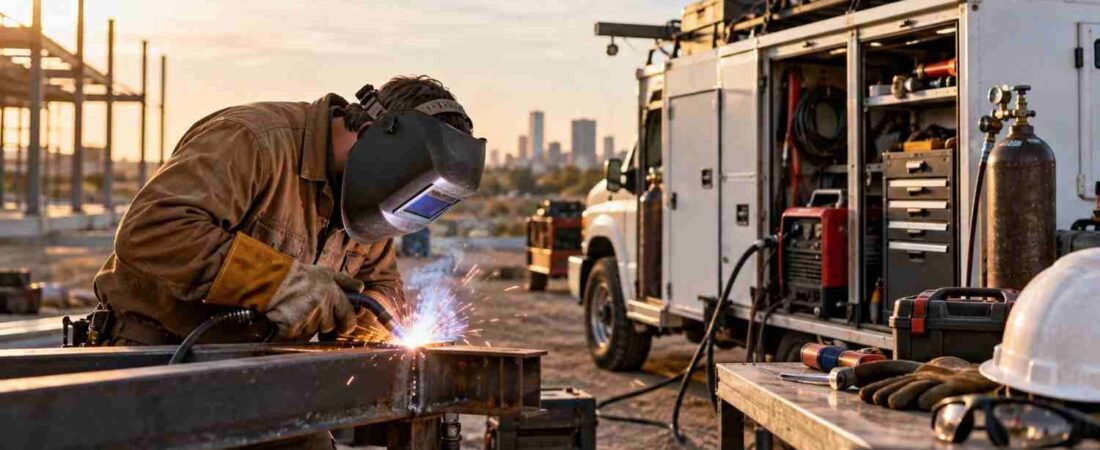
I started noticing how different field welding feels from shop welding when the surroundings became part of the job. In a workshop, many hazards are already controlled. On a mobile job, the surface, weather, traffic, nearby materials, and people can change from one location to the next. That makes a careful setup just as important as the weld itself.
Start With a Complete Jobsite Check
That preparation often matters more than speed.
Before welding, walk the area instead of immediately unloading the machine. Look above, below, and around the workpiece. Check for dry vegetation, paper, wood, fuel, solvents, vehicles, pressurized equipment, traffic, and anything else that could be affected by heat or sparks.
OSHA requires combustible hazards to be removed or otherwise protected during hot work, and the commonly used 35-foot separation is a useful benchmark for field planning. If something cannot be moved, cover it with a suitable fire-resistant blanket, pad, or curtain. Portable welding screens also help contain sparks and reduce other people’s exposure to arc radiation.
Do not treat the first inspection as the last one. Wind can carry sparks, another contractor can move materials into the area, or a vehicle can enter the work zone. Recheck conditions whenever the setup changes.
Build a Safer Mobile Welding Setup
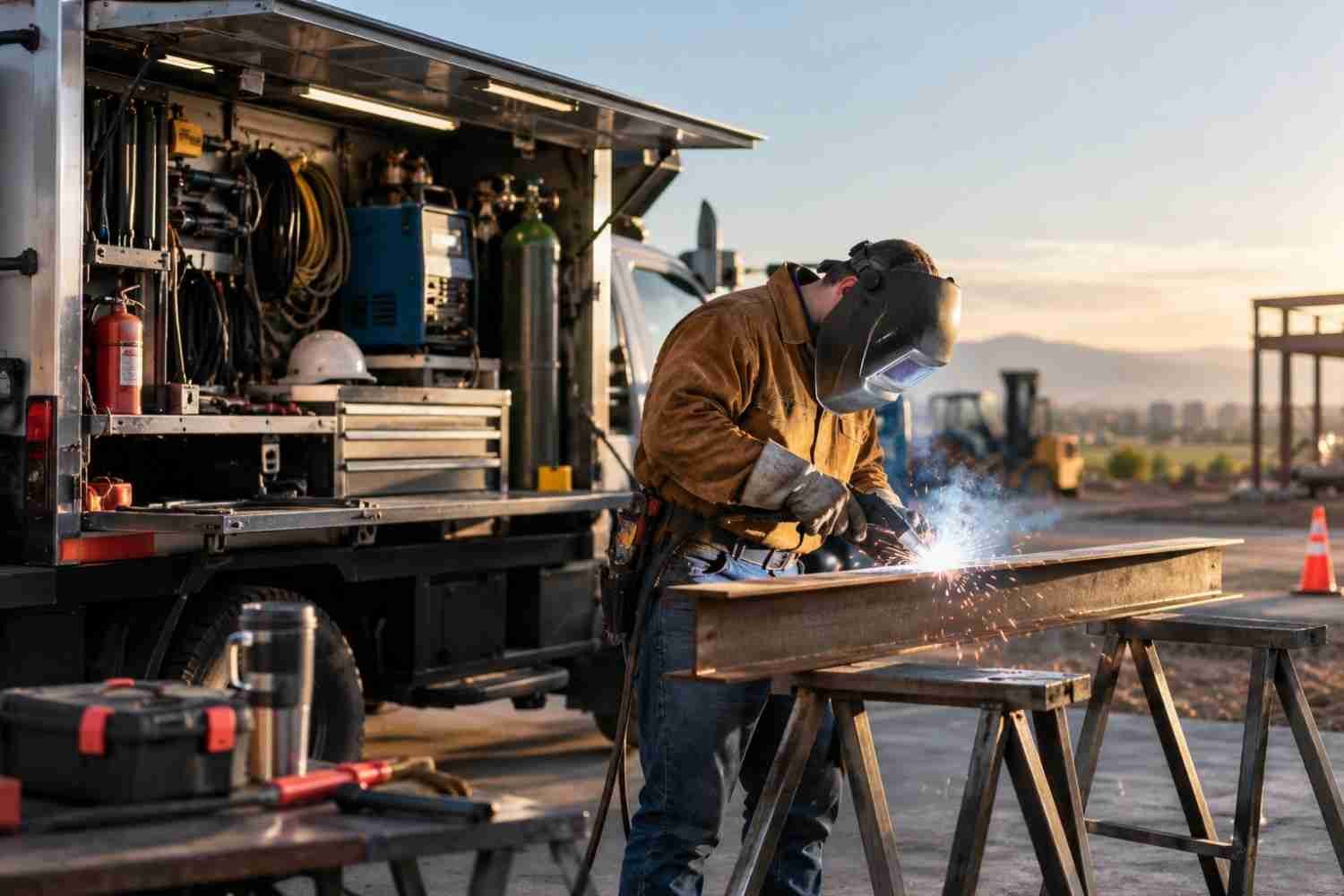
Before leaving for a job, inspect the welder, leads, electrode holder, work clamp, hoses, regulators, and power connections. Look for damaged insulation, exposed conductors, cracked hoses, loose fittings, or other defects. Damaged equipment should be repaired or removed from service rather than patched temporarily.
Route cables and hoses away from walking paths and vehicle routes. If they must cross a path, protect or reposition them so they cannot become trip hazards or get crushed.
Gas cylinders deserve special attention. Keep them secured upright using an appropriate restraint, protect valves as required during transport, and keep cylinders away from sparks, hot slag, flames, and electrical circuits. Close valves when cylinders are moved or work is finished.
Wear PPE That Matches the Hazard
PPE is not a substitute for controlling the work area, but it provides an essential final layer of protection. A welding helmet with the appropriate filter shade protects against intense visible light and ultraviolet and infrared radiation. Safety glasses should also be worn as appropriate, particularly when grinding, chipping, or handling debris.
Wear flame-resistant clothing that covers exposed skin, along with suitable welding gloves and sturdy work boots. Avoid clothing that can melt or easily trap sparks. When grinding or performing other tasks that create flying particles, use the additional face and eye protection required for that activity.
Control Fire Before It Starts
Welding creates sparks, molten metal, and hot slag, so fire prevention needs to happen before the first arc. Remove combustible materials from the work area whenever possible. Keep an appropriate, fully charged fire extinguisher immediately available and make sure workers know how to respond if a small fire starts.
The person assigned to watch should be able to see the affected area and respond quickly. OSHA guidance includes continued observation after hot work because materials can remain hot or smolder after welding stops.
Never weld on a container, tank, pipe, or other hollow structure that has held flammable or toxic substances without following the required cleaning, isolation, testing, and ventilation procedures. Heat can turn leftover residue or vapors into a serious fire or explosion hazard.
Protect Your Breathing Zone
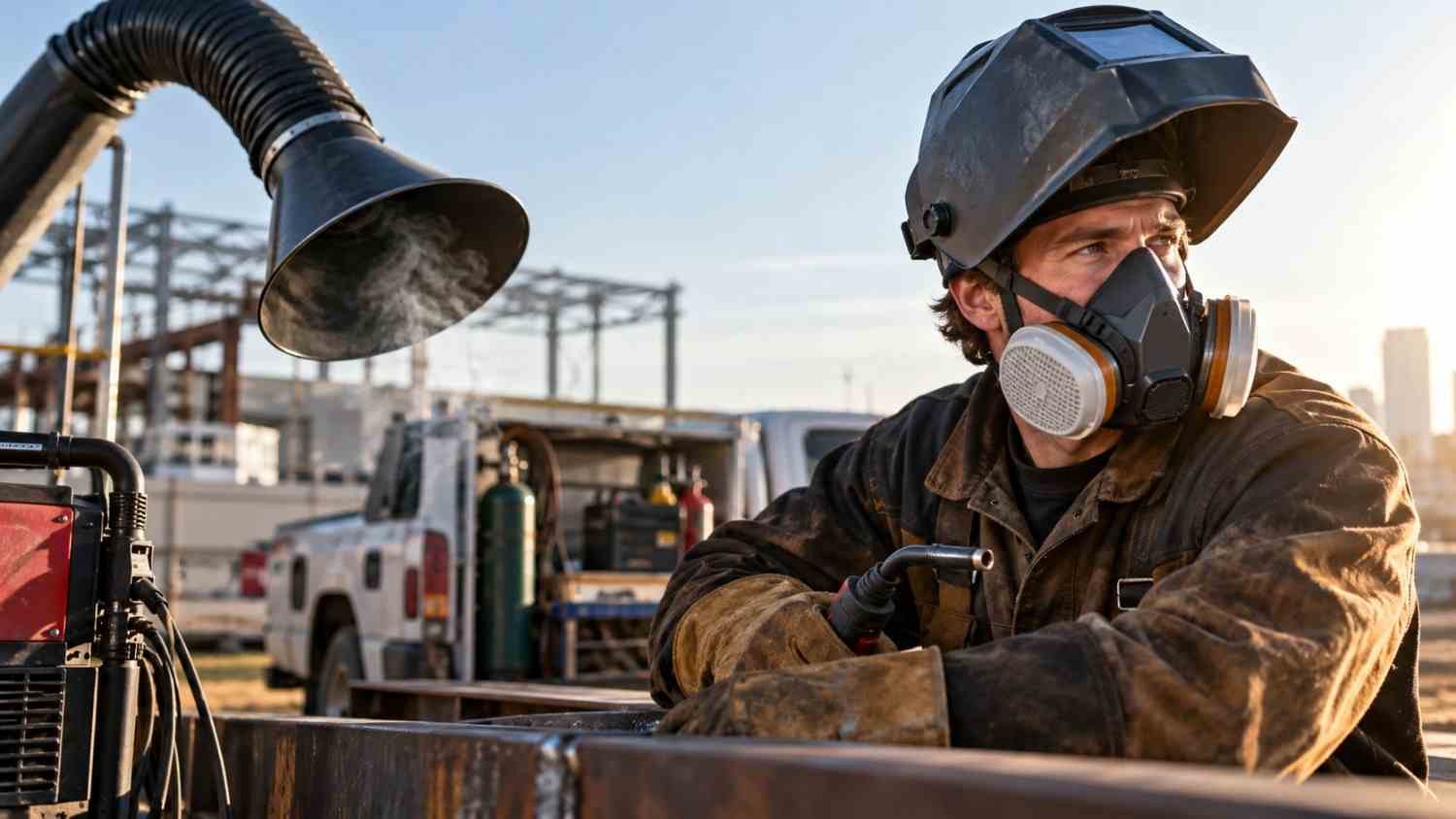
Welding fumes are more than an unpleasant smell. Their composition depends on the base metal, coatings, welding process, and consumables, and some fumes can contain hazardous metals or gases.
Position yourself so the plume does not travel directly through your breathing zone. Use local exhaust or portable fume extraction when appropriate, particularly when natural ventilation is poor. If respiratory protection is required, selection should be based on the specific hazard and an appropriate respiratory protection program, rather than simply choosing a disposable mask.
Take Electrical and Weather Risks Seriously
Electric shock becomes a greater concern when equipment, gloves, clothing, or work surfaces are wet. Avoid welding in rain or standing water and follow the equipment manufacturer’s requirements for environmental conditions. Keep connections protected and inspect cables before every job.
Weather also changes fire and visibility risks. Wind can move sparks beyond the expected area, while poor lighting can hide trip hazards. Stop and reassess when conditions become unsafe instead of trying to work around them.
Make a Pre-Weld Routine You Actually Use
A simple routine can make mobile welding safety procedures easier to follow consistently. Before starting, confirm that:
- The work area is clear, controlled, and properly screened.
- Combustibles and ignition hazards have been removed or protected.
- The machine, leads, hoses, cylinders, and connections have been inspected.
- PPE matches the welding and supporting tasks.
- Fire protection and emergency access are ready.
- Ventilation and fume controls are adequate.
- Cables and hoses are positioned safely.
FAQs: Mobile Welding Safety Procedures Every Welder Should Follow
1. What is the biggest mobile welding safety concern?
Fire is one of the major concerns because sparks and hot slag can travel into nearby combustible materials. Electrical shock, fumes, radiation, and changing site conditions also require active control.
2. How far should combustibles be kept from welding?
A 35-foot separation is a common OSHA benchmark for combustible materials during welding and cutting. If materials cannot be moved, suitable fire-resistant protection may be required.
3. Can you weld outside when it is raining?
Wet conditions can increase electrical shock risk. Welding should not proceed simply because the job is outdoors. Follow equipment requirements and stop work when weather creates unsafe conditions.
4. Do mobile welders need respiratory protection?
Not every job requires the same respiratory protection. Fume controls should begin with clean materials and effective ventilation or local exhaust, with respiratory protection selected when exposure hazards require it.
Safety Starts Before the First Arc
The strongest mobile welding safety procedures are not complicated tricks. They are repeatable habits that account for the environment, equipment, people, and materials surrounding the weld. A field welder who takes time to inspect the site, control ignition sources, protect the breathing zone, secure equipment, and prepare for changing conditions is reducing risk before an incident has a chance to develop. That discipline also makes the work more organized and easier to manage when a job becomes busy.
A safe weld starts long before the arc appears. The few minutes spent preparing the site can protect equipment, coworkers, customers, and the welder who has to return to the next job.