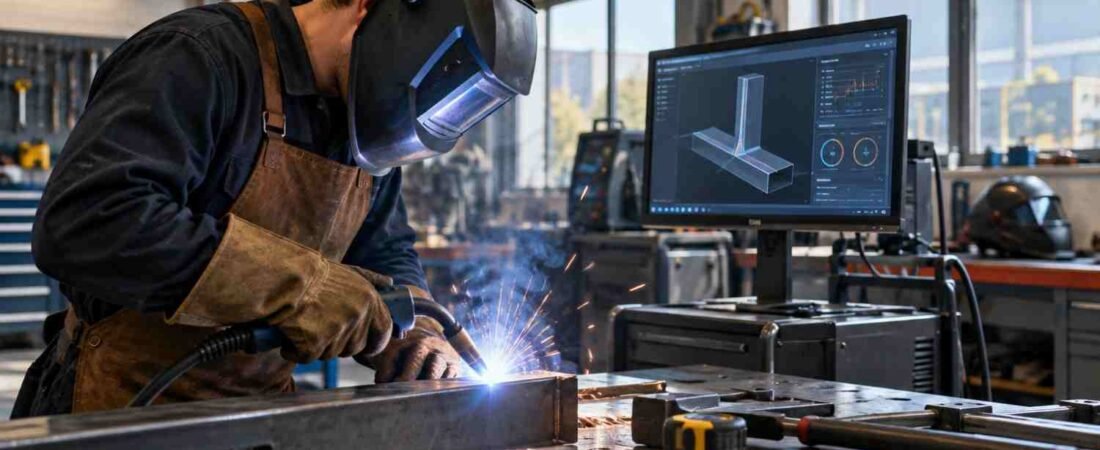
I have noticed how quickly a welding booth can change when a shop upgrades its equipment. A job that once depended mostly on hand control may now involve touchscreens, sensors, digital drawings, or a robotic arm. The welder still needs to understand the arc and puddle, but the work increasingly includes technology that can measure, repeat, and adjust the process.
I also realized that learning new technology does not mean leaving traditional welding skills behind. The strongest welders connect both worlds. They know why a parameter matters, can spot a bad bead, and understand what a machine or data screen is telling them. That combination is valuable as fabrication shops seek consistency, productivity, and quality.
Welding Fundamentals Still Come First
Technology works best when the person using it understands welding fundamentals. Knowing joint design, material behavior, heat input, travel speed, and welding procedures gives a welder context for good decisions.
A digital machine can suggest settings, and an automated cell can repeat a path, but neither understands every variation in a real workpiece. Fit-up can change, material can move, and an unexpected gap can appear. Technical knowledge helps the welder recognize when an automated result does not look right.
Robotic Welding and Cobot Skills
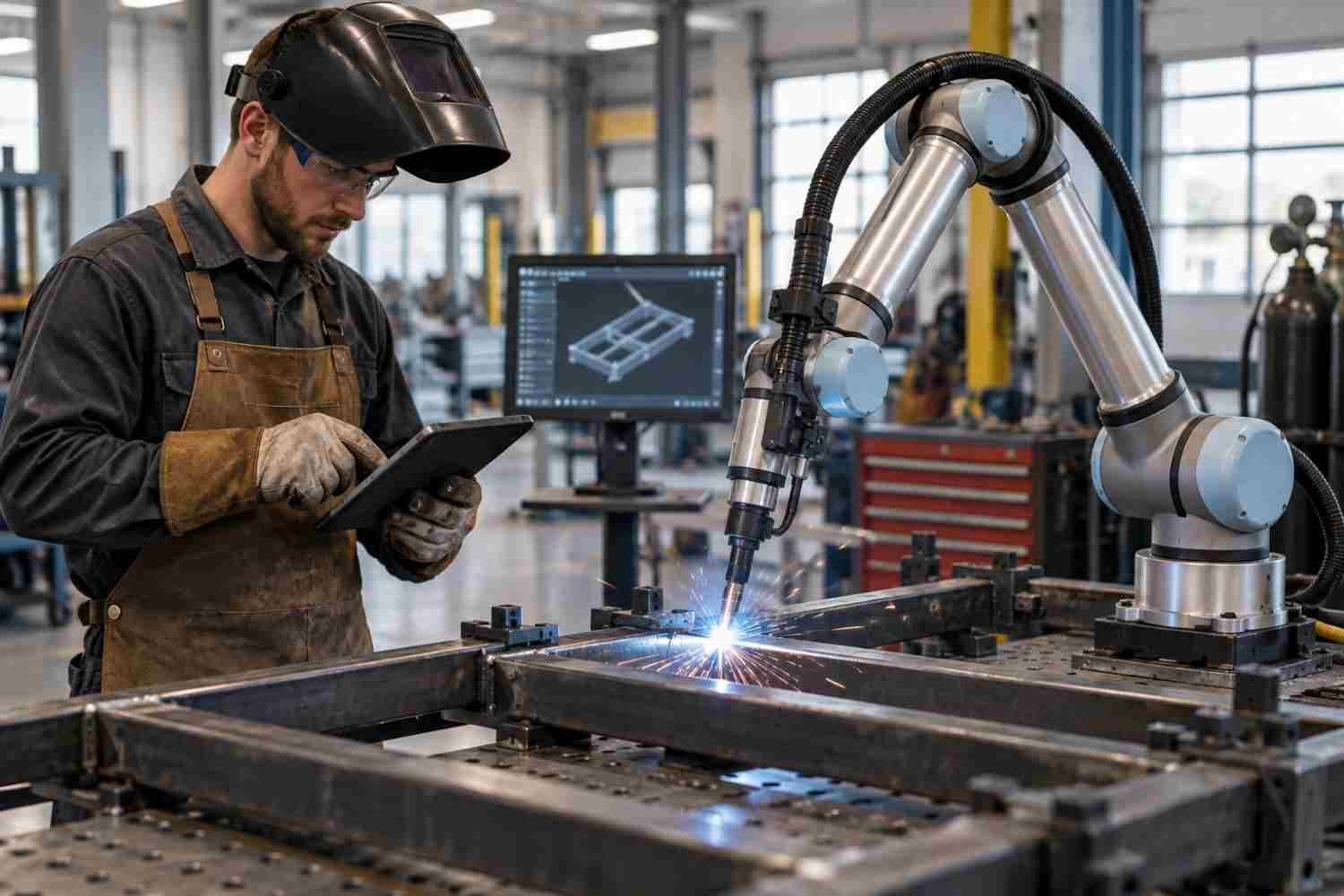
Robotic welding is a major reason technology skills matter. Modern welders may need to set up a cell, teach a robot, adjust a weld path, or monitor production changes. Cobots are also making automation practical for more fabrication environments.
Basic programming literacy helps. A welder does not need to become a robotics engineer, but understanding coordinates, motion, sequencing, touch sensing, and program adjustments makes automated work easier to manage.
Troubleshooting matters too. If a robot produces inconsistent beads because a part shifted, the operator needs to recognize the problem rather than simply restart the cycle.
Digital Welding Controls and Waveforms
Modern welding power sources offer much more control than older equipment. Digital interfaces can manage processes, waveform characteristics, wire feed speed, voltage, and other parameters with precision.
The useful skill is not simply knowing which button to press. Welders need to understand what changing a setting can do to the arc, penetration, spatter, deposition, or heat input. Pulse welding is a good example. A welder who understands droplet transfer can use digital controls to refine the process instead of relying entirely on presets.
Small adjustments can improve arc stability and reduce waste.
Reading Welding Data
Data is becoming another part of the welder’s toolbox. Connected equipment can record arc-on time, process parameters, gas flow, production cycles, and quality results. That information can reveal problems that are difficult to spot from appearance alone.
A modern welder should be comfortable reading basic dashboards and production records. If defects appear repeatedly, data can help connect the problem to a parameter change, machine condition, or production pattern. Digital records can also support traceability when documentation is required.
The goal is not to turn every welder into a data analyst. It is to make information useful. Reading a trend can help someone make a better adjustment.
CAD, Sensors, and Automated Inspection
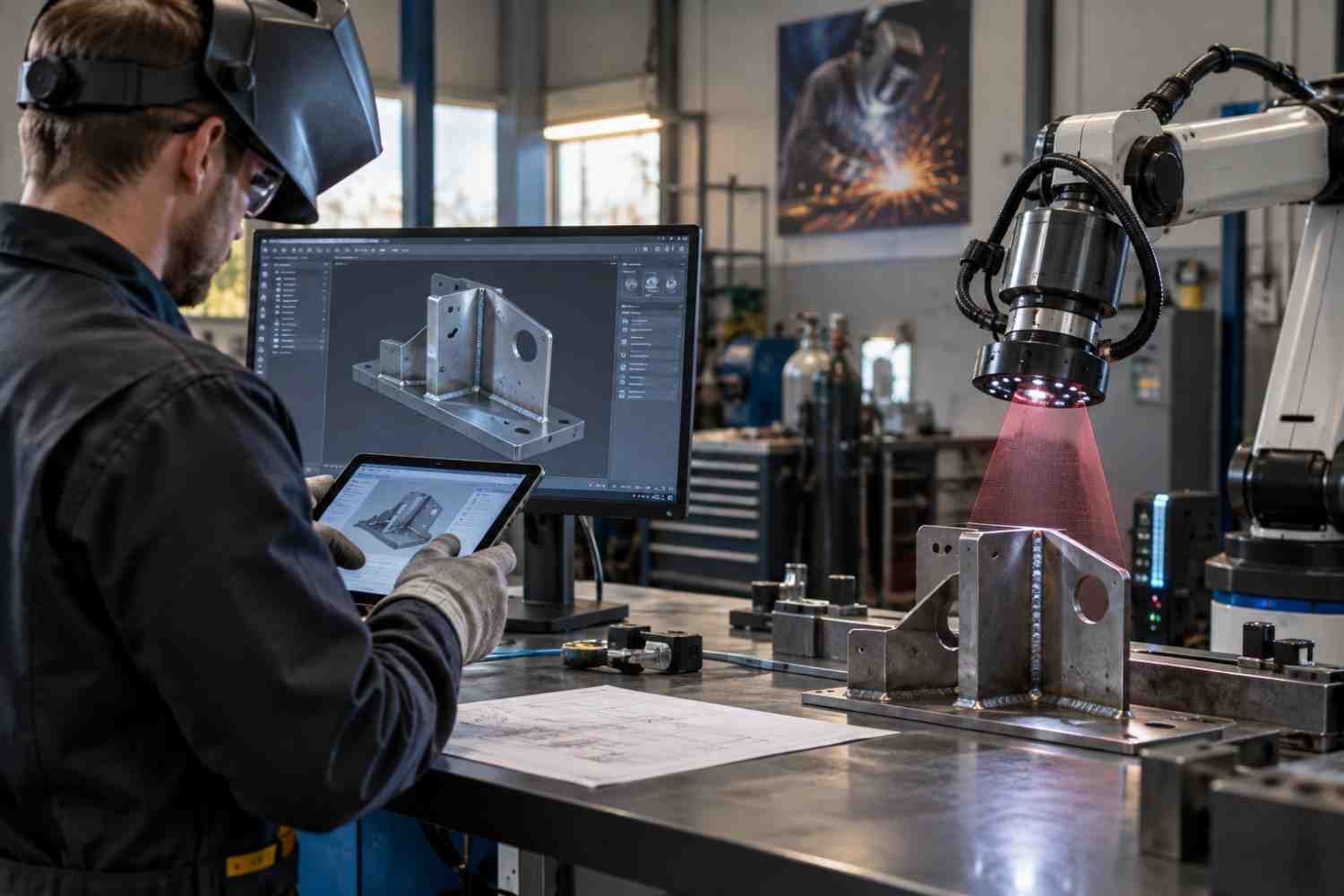
Digital drawings and 3D models are increasingly connected to fabrication. Welders who can read digital models, dimensions, tolerances, and weld symbols can move more comfortably between design information and the physical workpiece.
Sensors add another layer. Machine vision and seam-tracking systems can detect joint position and geometry, reducing manual correction. Automated inspection can measure weld geometry and create records for quality control.
These systems provide better information, but they do not eliminate human judgment. Someone still has to decide whether a measurement makes sense and what action should follow.
Safety Is Part of Technology Skills
New equipment can improve efficiency, but technology does not remove basic hazards. Digital controls, remote equipment, robotic cells, and advanced processes still require disciplined procedures.
Understanding welding fumes safety and ventilation is essential around processes that generate hazardous fumes or gases. Welders should understand how local exhaust ventilation, general ventilation, positioning, and respiratory protection fit into workplace controls.
Electrical awareness matters too. Modern power sources, wire feeders, remote controls, and automated cells create more equipment interfaces, making welding electrical safety practices an important part of technical competence. A welder should know how to identify energized equipment, follow shutdown procedures, and never treat sophisticated controls as a substitute for safe work practices.
Why Technology Makes Traditional Skill More Valuable
The best technology does not make welding knowledge irrelevant. It gives experienced welders more ways to apply it. A robot can repeat a path, but someone has to decide whether that path is appropriate. A digital power source can recommend parameters, but someone still needs to recognize when the result is wrong. A vision system can identify a defect, but a skilled professional must understand its likely cause.
That combination can reduce waste and rework. Better monitoring, repeatability, and faster adjustments can help shops catch problems earlier.
FAQs: Technology Skills Modern Welders Need for Better Results
1. Do welders need programming skills?
Basic programming and automation knowledge can help, especially in shops using robotic welding. Welders may need to modify paths, adjust sequences, or understand how a program controls the cell.
2. Is traditional welding knowledge still important?
Absolutely. Technology depends on knowledge of materials, welding processes, joint preparation, heat control, and weld quality. Digital tools work best when the operator understands the process behind the settings.
3. What technology should a welder learn first?
Start with equipment used in the workplace. Digital power-source controls, robotic interfaces, CAD drawings, measurement tools, and basic data monitoring are practical starting points.
4. Will automation replace skilled welders?
Automation is changing welding jobs, but it also creates demand for people who can program, monitor, troubleshoot, and improve automated systems. Human judgment remains important.
The Skills Worth Building Next
The welding profession is becoming broader rather than simply more automated. A capable welder may move between a manual torch, digital power source, computer screen, and robotic cell during the same career. Building technology skills alongside welding fundamentals creates a stronger foundation and makes it easier to adapt when equipment changes.
The goal is not to chase every new gadget. It is to understand the tools well enough to make better welds, solve problems faster, work safely, and keep learning as the trade moves forward.