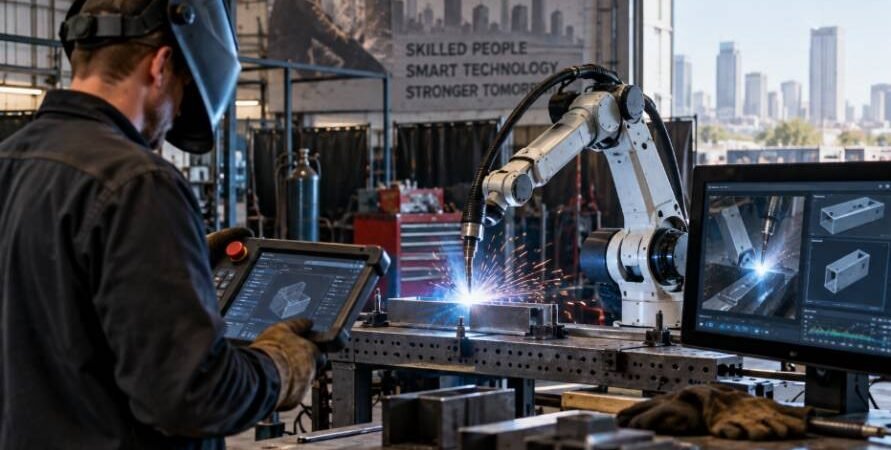
I’ve noticed how often conversations about welding automation begin with the same worry: robots will take the jobs. Looking closer at shops, I see something more practical. Welding still depends on people who understand fit-up, materials, joint preparation, heat control, and quality. What changes is where those skills are used as machines handle more repetitive work.
I’ve found that interesting opportunities sit between welding and technology. A welder who can troubleshoot a robotic cell, understand inspection data, or work with automated equipment brings useful judgment to the process. That makes AI and automation in welding careers less about disappearing jobs and more about learning how the trade is changing.
Why AI and Automation Are Moving Into Welding
Manufacturers have reasons to automate welding. Production environments need consistent quality, repeatable cycle times, productivity, and safer ways to handle repetitive tasks. Many employers also struggle to find enough experienced skilled workers.
Robotic welding can repeat predictable joints, while sensors and machine vision can help equipment follow a seam or respond to changes. Newer systems are becoming useful where every job is not identical. That matters because welding is rarely as simple as pressing a button. Someone still has to prepare the work, establish the process, verify results, and respond when conditions change.
AI adds another layer. Intelligent systems can use information from cameras, sensors, and previous welds to support decisions about paths, parameters, or quality. The technology works best when experienced people understand what the machine sees and why a process needs adjustment.
What AI Actually Changes for Welders
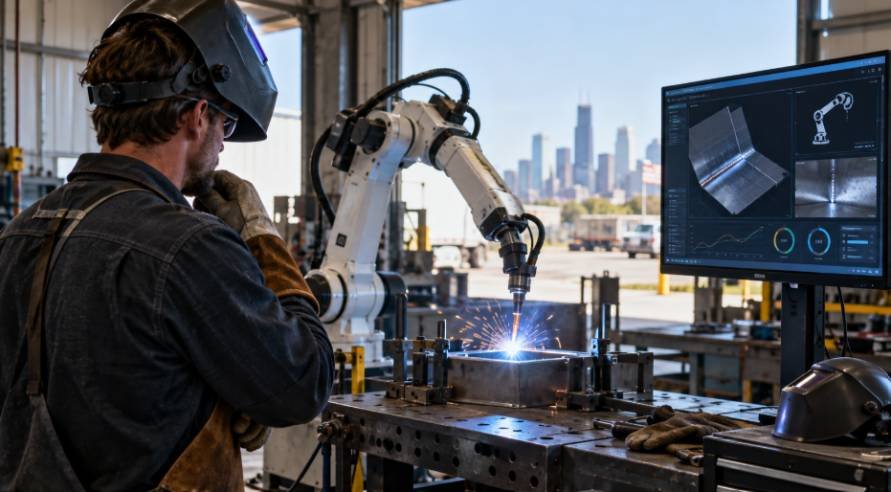
Automation changes tasks before it changes entire occupations. A production welder may spend less time repeating the same long weld and more time setting up equipment, checking fixtures, monitoring a robotic cell, or correcting problems.
That creates a distinction between operating technology and understanding it. A person who knows welding fundamentals can recognize when an automated process looks wrong. They can spot poor fit-up, distortion, contamination, or a parameter problem software might miss.
Augmented reality and real-time monitoring can add another layer of assistance. Digital systems may provide information about heat input, travel speed, or process conditions during a difficult weld. Virtual reality simulators can also give apprentices a controlled way to practice techniques before consuming material or entering production.
The trade increasingly rewards technical awareness alongside hand skills.
New Career Paths Are Emerging
One clear effect of automation is the growth of hybrid roles. Robotic welding technicians may set up cells, program equipment, monitor production, troubleshoot faults, and maintain consistent processes. Those jobs require welding knowledge plus robotics and manufacturing skills.
For welders considering a career move, robotic welding career opportunities can offer a natural next step rather than a complete departure from the trade. Experience with procedures, drawings, fixtures, and defects provides context when learning robot programming or cell operation.
Other paths include welding engineering, automation maintenance, production supervision, and quality control. Some positions focus on programming and process development, while others concentrate on keeping automated equipment running reliably. Technology knowledge becomes more valuable when paired with practical welding experience.
Welding Inspection Is Becoming More Digital
Inspection is another area where automation is changing daily work. Cameras, sensors, and software can help identify surface irregularities, measure weld characteristics, and collect production data. Consistent inspection data can also help manufacturers identify recurring process problems.
Human inspectors remain essential. Inspection involves context, standards, documentation, judgment, and decisions about whether a finding actually affects acceptance. Automated tools can flag issues, but qualified professionals still need to understand specifications and evaluate results.
This creates room for inspectors who are comfortable with digital systems and traditional quality practices. Workers exploring welding inspection career opportunities can benefit from learning how automated inspection and quality systems fit established methods.
Skills That Will Matter More
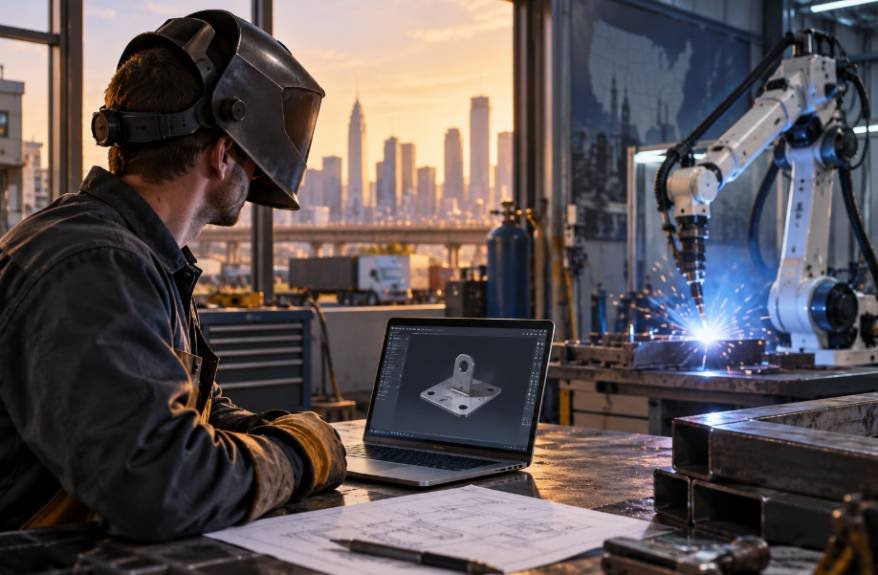
The strongest strategy is to keep welding fundamentals and build technical skills on top.
- Robotic welding and cell operation
- Basic robot programming and troubleshooting
- Blueprint and weld-symbol interpretation
- Welding inspection and quality control
- Sensors, machine vision, and process monitoring
- Computer and data skills
- Preventive maintenance and equipment diagnostics
Communication matters too. Automated production involves welders, engineers, programmers, maintenance technicians, inspectors, and supervisors. People who explain problems clearly and work across roles can become especially useful.
Credentials can support that transition, particularly when paired with hands-on experience. Technical training can help workers understand newer equipment while keeping welding codes, procedures, and safety in view.
How Welders Can Adapt Without Starting Over
A career transition does not require years of schooling. A working welder can start by learning how local automated equipment operates. Understanding a robotic cell, error messages, basic programming, or inspection technology can make existing experience more valuable.
Employers benefit from workers who understand both sides of the process. A programmer who knows welding may create better production solutions, while a welder who understands automation can communicate problems more effectively with engineering and maintenance teams.
The bigger opportunity is specialization. As machines handle predictable work, human value shifts toward setup, supervision, troubleshooting, quality, process improvement, and decisions when a job behaves unexpectedly.
Frequently Asked Questions
1. Will AI replace welding jobs?
AI is more likely to automate repetitive tasks than eliminate welding as a career. Skilled workers remain necessary for setup, judgment, troubleshooting, quality, and unusual work.
2. What should welders learn about automation?
Start with robotic cell operation, basic programming, troubleshooting, digital inspection, sensors, and process monitoring while continuing to strengthen core welding skills.
3. Are robotic welding jobs good career options?
They suit people who enjoy welding and technology. Technicians combine welding knowledge with programming, equipment operation, maintenance, and quality responsibilities.
4. Is welding inspection still a good career?
Yes. Standards knowledge, documentation, technical judgment, and experience remain important as inspection becomes more digital.
A Career That Evolves With the Technology
Welding has changed with equipment, materials, processes, and production demands. AI and automation represent another major shift, but they do not erase the value of knowing how metal behaves or recognizing when a weld is wrong. They change where that knowledge has the greatest impact. Workers who combine hands-on experience with digital tools may have more options, not fewer.
The smartest response to automation is curiosity. Learn what machines can do, understand where they struggle, and build skills connecting technology with sound welding judgment. That combination is likely to remain valuable long after today’s newest system becomes ordinary.